Stump pain
The stump itself hurts: from pressure and chafing of the socket, scars, or damaged nerves.
 Discuss your case
Amputation of an upper limb is the loss of part of the arm: hand, forearm, or shoulder — after injury, wound, or illness. After it, a person learns to live with or without a prosthesis, and a surgeon can help when the stump hurts, the prosthesis fits poorly, or the socket does not hold.
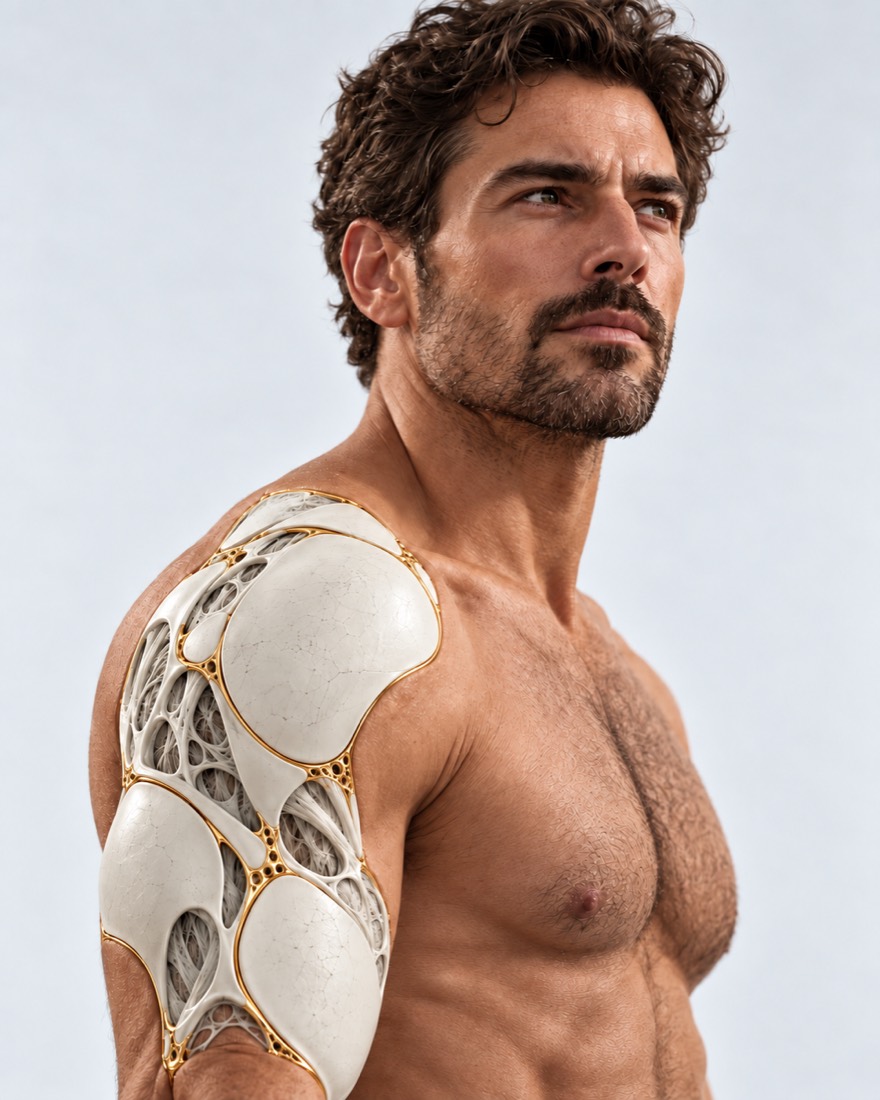 CONCEPTUAL VISUALIZATION
Amputation is the removal of a part of a limb. A hand can be lost at the level of the hand, forearm (below the elbow), upper arm (above the elbow), or along with the shoulder joint. The level determines how many muscles and nerves remain in the stump, and therefore — which prosthesis can be controlled and what surgeries are possible.
An arm amputation can significantly limit daily activities. According to the clinical guidelines of the U.S. Departments of Veterans Affairs and Defense (2022), a person requires comprehensive rehabilitation at all stages — from surgery to living with a prosthesis.
This page is about what happens after an amputation and how a surgeon can prepare the stump for a modern prosthesis: reduce pain, provide clearer signals for a bionic hand, or attach the prosthesis to the bone. The prosthesis itself is made by prosthetists. Both military personnel and civilians seek help — immediately after hospitalization, years later, or even before a planned amputation.
This is general information. The doctor will tell you what will suit you after the examination.
Most often, people are concerned about pain or a prosthesis that is difficult to use. These problems often occur together: a painful stump makes it difficult to wear a socket.
The stump itself hurts: from pressure and chafing of the socket, scars, or damaged nerves.
Sharp pain in a certain spot of the stump when touched or pressed with a sheath — this is often how a neuroma manifests.
Stump neuromaThe hand that is no longer there hurts: burning, shooting, cramps. These sensations are not imaginary, they are real.
Phantom painThe bionic hand confuses movements, and there are not enough muscle signals from the stump to control it.
Short stump, sweating, chafing; the prosthesis slips off or feels too heavy.
Ulcers, unstable scars, bone under thin skin — wearing a prosthesis is painful or impossible.
Problematic stumpThe condition of the stump tissues and the problems a person faces after amputation depend on the cause.
According to a systematic review of global data, trauma is the most common cause of hand amputation. Amputation can result, for example, from limb crushing.
A review of military surgery notes: the energy of an explosion often causes large soft tissue defects, a higher level of amputation, and stronger pain afterward.
Fire woundSevere limb infection, gangrene, or diabetic complications. According to the same review, among people with disabilities, diseases noticeably add to the causes of hand damage.
According to meta-analysis: prolonged pain before surgery, higher level of amputation, stump pain, and phantom sensations.
Old amputation, stump pain, or an uncomfortable prosthesis — a planned situation, usually does not require emergency care. But after a recent surgery and in the presence of signs of infection or clot, do not delay.
Immediately - to the surgeon who operated, and if it does not work - to the waiting room: after a recent surgery the stump is increasingly painful or swollen; the skin of the stump is warm, red, and painful; fluid or pus is coming from the wound. On the same day: pulsating pain or swelling in the leg or healthy arm (possible clot); coughing up blood; depressed mood or suicidal thoughts — tell your doctor, and if there is a danger that the person may harm themselves immediately, call 103. Planned: Pain in the residual limb or phantom pain that does not go away; the prosthesis fits poorly, the socket rubs; amputation is only planned — a consultation with a surgeon together with a prosthetist.
When and at what level the amputation was done, what surgeries have already been performed, what hurts, what type of prosthesis and what is wrong with it, what you expect from the prosthesis. Bring medical records and images.
The surgeon evaluates the skin and scars, painful points, whether there is enough soft tissue over the bone, and movements in the remaining joints.
X-rays or CT scans show the length and condition of the stump bone — this is important for osseointegration and reconstruction.
Together with the prosthetist, they assess which stump muscles can control a bionic prosthesis.
The surgeon and the prosthetist decide what operation is needed and whether it is needed at all.
Post-amputation treatment includes rehabilitation, a prosthesis, and, if needed, surgery on the stump. The VA/DoD guideline (2022) recognized that only 4 out of 18 of its recommendations for upper limb amputation rehabilitation have sufficient evidence: there is a lack of high-quality research in this field, so the plan is tailored for each individual.
Receiving a prosthesis is not enough — one needs to learn to live with it.
When the stump does not allow the prosthesis to function.
Upper limb amputation at the Dr. Valikhnovskyi Institute of Surgery is performed in the direction of "Bionic Limb Prosthetics." The clinic carries out the surgical part — operations on the stump, nerves, and bone. The prosthesis itself is selected and made by a partner prosthetist; the plan is created together.
Plastic surgeon, candidate of medical sciences, founder of Dr. Valikhnovskyi Institute of Surgery.
Short answers. What is right for you, the doctor will tell you during the consultation.
No. The clinic performs surgical stump preparation, and the prosthesis is selected and made by a partner prosthetist; the plan is made together.
Not always. During the evaluation, the surgeon and prosthetist decide whether surgery is needed at all. TMR is considered when the stump's muscle signals are insufficient for control or cause pain.
Yes, even years after an amputation. If the amputation is only being planned, TMR or RPNI can be performed during it — prophylactically.
It may decrease, but not in everyone and not always completely. In a review of 17 studies, phantom pain after TMR or RPNI decreased in 45–80% of patients. More details can be found on the page about phantom pain.
No general advantage has been found: each has its strengths. The choice depends on your needs and is made together with a prosthetist.
So far, mostly in research. According to a review, almost none of the solutions for restoring sensation in hand prostheses have reached clinical practice, although electrodes implanted near nerves partially restored sensitivity.
Yes, both military personnel and civilians seek help. The surgeon states the cost of the operation after an examination; the prosthesis is paid for separately to the prosthetist.
The figures on the page are from these sources.
Send a photo of the stump, medical records, and images. The doctor together with the prosthetist will tell whether surgery is needed and which type.
Leave your contact details and briefly describe the situation. A coordinator will contact you to agree on the next step.