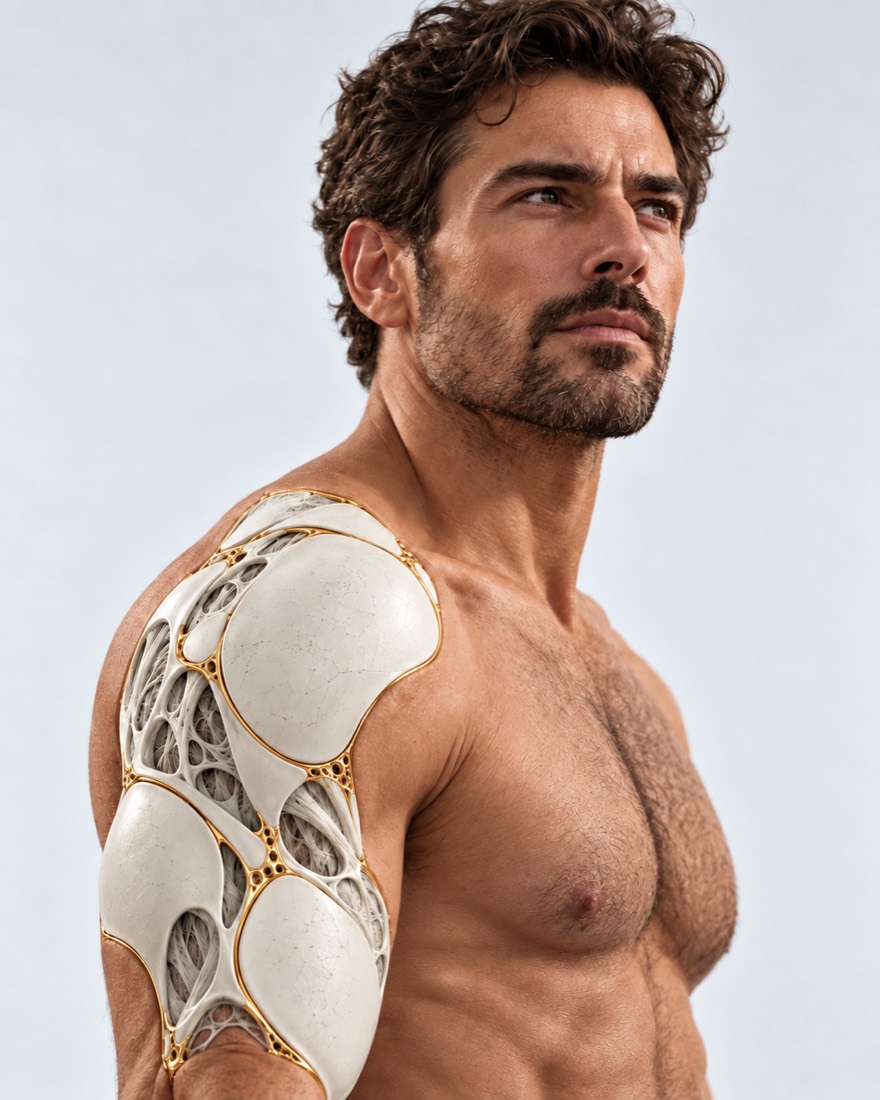
We prepare the residual limb for a modern prosthesis with procedures that may reduce phantom pain, improve signals for controlling a bionic hand or anchor a prosthesis to bone. Partner specialists manufacture the prosthesis.
Bionic prosthetic surgery is operations on the coccyx, nerves and bone that reduce pain and give clear control signals to the prosthesis.
In the past, surgeons formed a coccyx suitable for wearing a mechanical sleeve. Modern amputation surgery increasingly plans the cocky not only as a sleeve but also as the source of signals to control the prosthesis — neuromuscular interface.
They are called when a coccyx or missing limb is painful, the prosthesis does not listen well, sleeve rubs or doesn't hold and also before planned amputation.
The clinic performs the surgical part; the prosthetic is selected and manufactured by a partner prosthetist. This is a general description of the direction: specific indications and method are determined after consultation and examinations.
02 / With PM, it's dead.
When surgery is needed.
Six situations that are most common.
01
Phantom Pain
Pain is felt in a limb that is no longer present: burning, shooting pain or spasms.
How it is treated
If medication and rehabilitation fail, the coccyx nerves are transferred to motor branches of muscles (TMR) or wrapped with muscle grafts (RPNI). In many patients pain is reduced, although not in all.
Painful dot on cookie, pain in touch, or pressure with a shell.
How it is treated
Neuromas are growths of the end of a cut nerve. They are excised and the nerves transferred to muscle (TMR or RPNI) to reduce the risk that neuroma form again.
Bionic bone confuses motion, cookie muscle signals are missing.
How it is treated
TMR converts areas of the preserved coccyx muscle into new sources of signals that contract when a person “thinks” about moving his or her wrist; prosthesis sensors read these signal.
Short doughnuts, scarring, sweating, rubbing, prosthesis slips away.
How it is treated
One option is osteointegration: the prosthesis is attached to a titanium pin in the coccyx, without sleeve. This method is not suitable for everyone; decisions are made together with the prosthetic surgeon.
Basic surgical technologies that provide intuitive management of biotech prostheses and patient comfort.
01
TMR — Targeted Muscle Reinervation.
This microsurgery operation is one of the globally recognized approaches to preparing for hand prosthetics.
Main methods
Large nerves that previously went to the lost wrist or forearm are redirected and sutured to preserved coccyx muscles (e.g., pectoralis major or remaining bicep/triceps).
How it works with the bionics.
When the patient thinks of “clenching his fist,” a brain impulse goes down the nerve and causes muscle fibers on the coccyx to contract. The myoelectric sensors in the prosthesis, applied to the skin, read this signal, and the prosthesis performs the appropriate movement—an elbow flexion, wrist rotation or grab.
Additional effects
The TMR method in many patients reduces the pain of neurosis (sick neural tissue spread) and phantom pain.
02
RPNI is the regenerative interface of peripheral nerves.
In routine practice, the method is primarily used for prevention and treatment of neuroses; in research it gives separate signals to control a prosthesis.
Main methods
The end of the damaged nerve is separated and tightly wrapped with a small loose flap of healthy muscle tissue (usually taken from the patient's own leg).
How it works with the bionics.
In studies, the muscle coupling provided separate signals that patients used to control the movement of their prosthesis fingers.
03
Osteointegration is a direct skeletal fixation.
This technology eliminates the need for a classic puppy-pirt (gils), which often causes rubbing, sweating, and pain.
Main methods
A titanium implant is inserted into the bone canal of the coccyx (screwed or pressed, depending on the system), part of which protrudes through the skin. Over a few months, the Bone grows with the surface of Titanium. The bionic prosthesis attaches directly to this pin in seconds.
Value for biota
In addition, there is an effect of osteoperception: through the bone, the patient feels better the surface and hardness of the ground underneath the prosthesis.
Risks
Most often, an infection occurs at the point where the pin is inserted through the skin; less frequently, a bone fracture or implant shaking.
Context
From 2023 to 2024, it was actively developed in Ukraine and Kiev.
04
Implanted sensors and neural interfaces.
The new generation of technology moves away from wearable sensors, as they shift during sweating or active limb movement.
IMES (Injectable Myoelectric Sensors)
Surgeons directly to the cookie muscles use tiny sensor capsules that transmit the signal to the prosthetics wirelessly.
Cuff electrodes
They are surgically secured around large nerves and transmit weak impulses from the pressure sensors of the prosthesis to the nerve; movement commands in such systems read electrodes implanted into muscles. In studies, this gives a partial sense of touch.
04 / HOW IT GOES
What's happening in the kuksi.
Gold marks what a surgeon creates.
01
TMR
The nerve that previously controlled the hand is sewn to the motor branch of the preserved coccyx muscle. After a few months, the muscle contracts when the person thinks about moving the wrist and the prosthetic sensors read this signal.
02
RPNI
The nerve end is wrapped with a small piece of muscle. The nervous stem grows into it, so the risk of neuroma is significantly reduced and the muscle can give a separate signal to the prosthesis.
03
Osteointegration.
A titanium implant is inserted into the bone of the residual limb; over several months, the bone integrates with it. The implant passes through the skin, allowing the prosthesis to attach without a socket.
The schemes are simplified and not scaled up.
05 / PHASE
How the path to a prosthesis is going.
Prosthetic evaluation
A look at cookie, pain and muscle signals, a picture of the bone, decides what surgery is needed and what is needed at all.
Operation
TMR or RPNI during amputation or later; osteointegration takes place in one or two stages.
Rehab and training
Nerves have been growing into muscles for months; with the osteointegration of the load, they are gradually increasing.
Prosthetics and education
The prosthesitor is set up with a prosthesis. He's learning how to control it.
06 / AFTER OPERATION
How the recovery is going.
The terms depend on the size of the operation; the exact plan consists of a prosthetic.
First weeks of pregnancy
Wound healing, bandages, pain control.
Muscle Signals.
After TMR, muscles begin to respond to "thinking" about movement in a few months when nerves grow.
Osteointegration.
The pressure on the pin is gradually increased through the rehabilitation programme; the skin exit is looked at daily.
Learning with a prosthesis
A Protestant and a rehabilitationist are taught to manage a prosthetic device, ranging from simple movements to daily activities.
07 / REABILITATION
Learning with prostheses and phantom pain.
However, he had to learn how to live with him and how to cope with phantom pain.
01
Learning with a prosthesis
Why It's Important
Prosthetic implants are often rejected: in an Austrian survey of people with traumatic arm amputations, 44% of respondents refused them; the most common complaints were discomfort and weight. The authors believe that structured personalised training and patient involvement in prosthesis selection is likely to help patients accept prostheses.
Multi-grip prosthetic hands
Few training programmes have been described for multi-grip myoelectric hands, and none fully explains how to transfer these functions into daily life, according to a review of nine sources. Training is therefore planned individually with a prosthetist and an occupational therapist.
Myoelectric or traction
A systematic review of 31 publications found no general advantage for any type: traction prostheses are more reliable, easier to train and maintain, myoelectrics are better-looking, associated with less phantom pain, and better suited for light work.
02
Phantom Pain
Mirror therapy
A meta-analysis of 10 randomized trials showed pain reduction within the first month; long-term effect was not confirmed, possibly due to lack of data. A review of only placebo-controlled studies found no evidence of efficacy. The method is promising but unproven.
Sustainable motor presentation
Sequential exercises: recognize left and right limb, imagine movements, then mirror. In a meta-analysis of chronic pain, the method overall reduced pain better than conventional physiotherapy but data were limited (2 studies, 63 patients).
What Experts Advise
A panel of 27 phantom pain experts (2021) supported progressive motor imagination, mirror therapy, touch discrimination training and the use of a functional prosthesis, while cognitive behavioral therapies and virtual reality were supporting on clinical basis because there is no scientific evidence.
08 / INSTALMENT
How much does it cost.
The value of the operation depends on method and volume; the surgeon calls it after examination; however, this is done separately from the prosthetic.
For military and veterans, there are special benefits.
Operations for IDF servicemen the clinic conducts with funding from charitable foundations. Take a military ticket and hospital records.
09 / PACIENT SHOTS
From the first call.
Conversations and materials
You describe the request and, if you have it, you provide the results of the previous examination and treatment.
Consultation and evaluation
The doctor determines what situation we are in, what circumstances we need, what we need, and what his limitations are.
Reorganization
It discusses the next steps, the sequence of phases and the issues of reconstruction.
You don't live in Kiev or abroad?
Patients come from all over Ukraine and abroad.
10 / For Consultation
What is worth discussing?
01
When and at what level was amputation?
02
Is there pain in the residual or phantom limb?
03
Is there a prosthetic and what's wrong with it?
04
Are there any notes and pictures of the cookie?
05
What prosthetics does a prosthetic work with?
06
What do you expect from a prosthetic?
11 / FOOD AND REPLIES
Frequently Asked Questions.
The short answers are that what suits you is what the doctor will tell you.
Do you do it yourself?
No, the Clinic is surgically preparing the cuckoos, and the prosthetics are being picked up and manufactured by a prosthetic partner; the plan is being put together.
Does surgery help with phantom pain?
May help: TMR and RPNI reduce phantom pain and coccyx pain in many patients, although not all of them do so completely.
Can you do TMR after amputation?
Yes, years after amputation, you can do it during amputation — preventive.
What is osteointegration, and who does it fit?
This is the attachment of a prosthesis to a titanium pin in bone, without sleeve. Not suitable for everyone: important are the quality of the bone and skin condition and willingness to take care of everyday the place where the pin comes out.
How long does it take to prepare for a bionic prosthesis?
Usually several months: nerves grow into the muscles gradually, and after osteointegration the load is increased according to a program.
Do you feel the touch of a bionic hand?
So far in clinical trials: electrodes implanted into the nerves give a partial sensation of touch. In mass-produced prostheses, the sense of contact through the nervous system is not yet available.
12 / JERLA
Sources
15 RRT sources, inspections and studiesShowTurn to Head
Targeted Muscle Reinnervation Treats Neuroma and Phantom Pain in Major Limb Amputees: A Randomized Clinical TrialAnnals of Surgery, 2019doi:10.1097/SLA.0000000000003088 ↗
Pain and Functional Outcomes following Targeted Muscle Reinnervation: A Systematic ReviewPlastic and Reconstructive Surgery, 2024doi:10.1097/PRS.0000000000010598 ↗
Targeted muscle reinnervation and regenerative peripheral nerve interfaces for pain prophylaxis and treatment: A systematic reviewPM&R, 2023doi:10.1002/pmrj.12972 ↗
Bone-anchored prostheses for transfemoral amputation: a systematic review of outcomes, complications, patient experiences, and cost-effectivenessFrontiers in Rehabilitation Sciences, 2024doi:10.3389/fresc.2024.1336042 ↗
Surgical complications and implant survival of the Osseointegrated Prostheses for the Rehabilitation of Amputees system in patients with combat-related limb loss: a retrospective cohort studyInternational Orthopaedics, 2026doi:10.1007/s00264-026-07054-0 ↗
A review of invasive and non-invasive sensory feedback in upper limb prosthesesExpert Review of Medical Devices, 2017doi:10.1080/17434440.2017.1332989 ↗
Sensory feedback by peripheral nerve stimulation improves task performance in individuals with upper limb loss using a myoelectric prosthesisJournal of Neural Engineering, 2016doi:10.1088/1741-2560/13/1/016001 ↗
Differences in myoelectric and body-powered upper-limb prostheses: Systematic literature reviewJournal of Rehabilitation Research and Development, 2015doi:10.1682/JRRD.2014.08.0192 ↗
Training for users of myoelectric multigrip hand prostheses: a scoping reviewProsthetics and Orthotics International, 2021doi:10.1097/PXR.0000000000000037 ↗
Current rates of prosthetic usage in upper-limb amputees - have innovations had an impact on device acceptance?Disability and Rehabilitation, 2022doi:10.1080/09638288.2020.1866684 ↗
Effectiveness of Mirror Therapy for Phantom Limb Pain: A Systematic Review and Meta-analysisArchives of Physical Medicine and Rehabilitation, 2022doi:10.1016/j.apmr.2021.07.810 ↗
Effect of mirror therapy in the treatment of phantom limb pain in amputees: A systematic review of randomized placebo-controlled trials does not find any evidence of efficacyEuropean Journal of Pain, 2023doi:10.1002/ejp.2035 ↗
The effects of graded motor imagery and its components on chronic pain: a systematic review and meta-analysisThe Journal of Pain, 2013doi:10.1016/j.jpain.2012.09.007 ↗
Treatment Recommendations for Phantom Limb Pain in People with Amputations: An Expert Consensus Delphi StudyPM&R, 2021doi:10.1002/pmrj.12556 ↗
Randomised studies, systematic reviews and research on the methods described in this page, including experience of combat amputation.
VALIKHNOVSKI SURGERY PARTNERS
Your case deserves attention.
Start consulting to see what questions and materials are needed for the evaluation.