LIMBS / FUNCTION

Hand and foot reconstruction.

We restore grip, sensation, support and movement after trauma, wounds and burns involving the fingers, tendons, nerves, soft tissue and bones of the hand or foot.

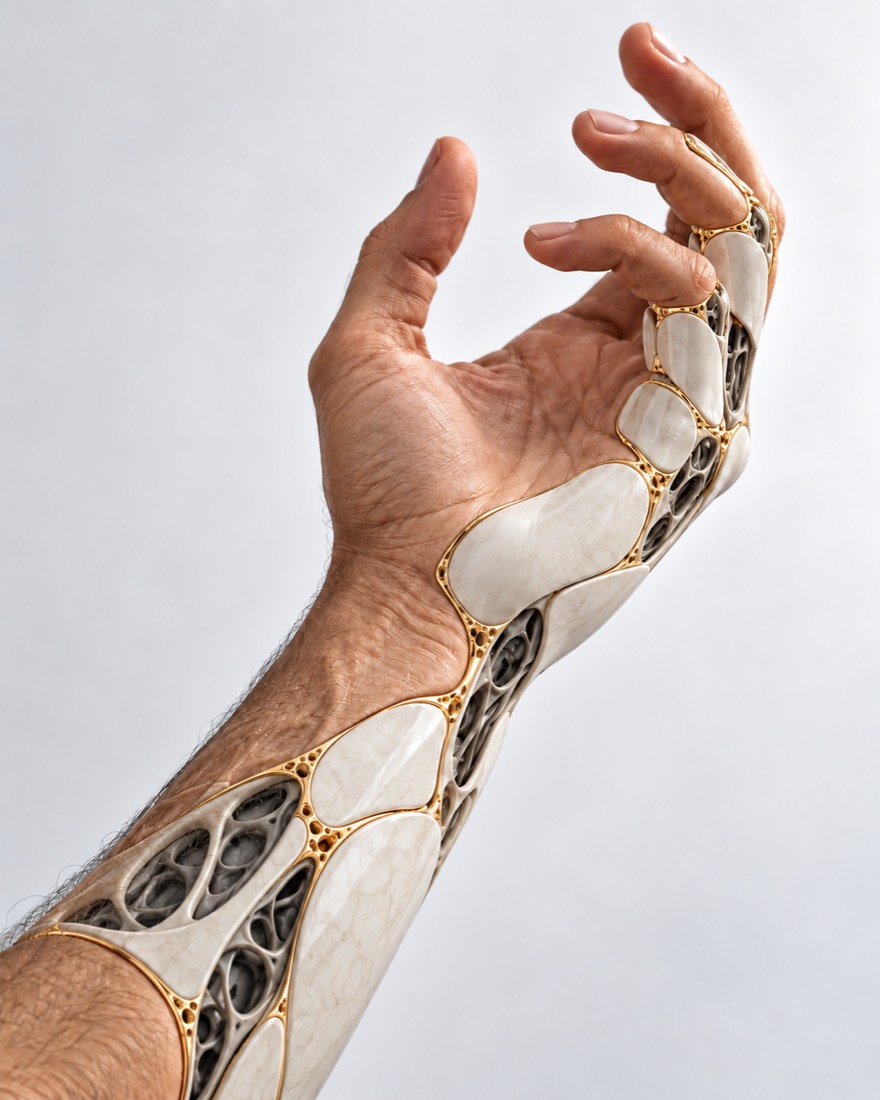
Conceptual visualization of the “Restoration of Hand and Foot” direction: a brush with open anatomical layers and golden lines.FIG. 09 / CONCEPTUAL VISUALIZATION

What is
wrist and foot rehabilitation.

Wrist and foot restorations are operations that restore grip, sensitivity, resistance and motion after injuries, wounds and burns.

Modern reconstructive surgery of the wrist and foot aims to restore anatomy, sensitivity and fine motor skills. The main principle is not simply closing a defect but restoring lost functionality, maintaining healthy blood supply and creating resilience.

They are called when a finger is lost or cannot be moved, the wrist numbness, wound does not close, bones have grown incorrectly, scars tighten toes or foot.

The specific indications, method and expected result are determined individually by the doctor after consultation and necessary examinations.

What can be
restored.

Six situations that are most common.

01

Loss of a Finger

The thumb or index finger is absent, and the hand cannot grasp an object.

How it is treated

The thumb can be restored by transplanting the toe to the wrist with microsurgical suture of vessels and nerves. Other options are extension of the coccyx or transfer of an adjacent finger.

Finger loss
02

Tendons and nerves

The finger is not bent or folded, and the hand is numb after the wound.

How it is treated

The tendon and nerve are sutured; if the ends do not come up without tension, the nerves defect is covered with an insert of your own nerver and the tendinitis - a graft. The nerving grows slowly so that sensation returns for months and not always completely.

Hand tendon injury
03

A defect of the skin and tissues.

A wound on the hand or foot does not close, leaving a tendon or bone exposed.

How it is treated

Small defects are covered with local flaps from adjacent fingers or wrists, larger - microsurgical flap from other parts of the body.

Soft tissue effect
04

The bones grew incorrectly.

Deformation after fracture, pain and instability in the wrist, fifth or shoulder.

How it is treated

The bone is cut and placed in the correct position (osteotomia) on a virtual plan, fixed with plates; lost fragments are replaced by a graft or individual implant.

Post-traumatic deformation of the foot
05

Scars and contractures.

After custody or wounds, the fingers don't break, the foot is deformed by the scars.

How it is treated

Scar tissue is cut or excised, the lack of skin is covered with Z-plastics, grafts or flaps; after surgery — tires and rehabilitation.

Recommendation for burns
06

Valgus of the foot ("bone")

The thumb of the foot is rejected, and there's a painful bone next to it.

How it is treated

Deformation redirects the osteottomy of the first humerus, open or low-invasive, through microcuts.

Vegular deformation of the foot

How to restore
the wrist and foot.

Key techniques used in hand and foot reconstruction.

Core procedures

These procedures account for most hand and foot reconstructions.

OperationWhen needed
The neck of the tendon and nervefresh injury, ends coming down without tension.
Nerve plastic with your own nerveNerve removal after wounds or scar removal
Local irons, Z-plasticsslight skin defects, fingertips
Osteosynthesis, osteottomyFractures and incredible bones
01

Microsurgical autotransplantation (free flaps)

This method is one of the main ways to repair polystructural damage, when skin, tendons, bones and nerves are simultaneously affected.

Toe-to-hand transfer
An operation to restore the lost thumb or thumb of the hand to return the seizure of the objects.
Complex tissue complexes
Use of microsurgical techniques for transplanting skin-facial, bone (e.g., a fragment of the femur) or muscle flaps on the vascular leg with simultaneous suture of vessels under a microscope.
02

Digital 3D technologies and individual modeling.

3D implant print
Based on CT data, individual titanium implants or biocompatible fixers are created that replicate the shape of lost wrist or foot bones (e.g., tarsometatarsus).
Virtual operations
Surgeons model the course of intervention in advance with special programs, calculating angles and lines of osteotomies with high accuracy, which is critical when correcting severe foot deformities.
03

Regenerative methods:

PP, SVF and BMAC
Injections of platelet-enriched plasma (PRP), stromal vascular fat fraction (SVF) or bone marrow concentrate (BMAC) are sometimes used for osteoarthritis of the wrist and foot, tendon injuries and chronic wounds. The evidence is limited and varies from condition to condition; whether this method is appropriate is a decision that must be made by your doctor on an individual basis.
04

Modern osteosynthesis and minimally invasive surgery.

Low-invasive operations (MIS)
Some operations on the foot (for example, with valgus deformity - "bones") can be performed through incisions of a few millimeters using microcutters; after them they usually walk in special shoes without plaster. Whether the method is suitable is decided by X-ray.
Anatomical stable plates
The use of low-profile titanium plates angular stability anatomical shape for small bones of the palm and foot, which allows to start movements earlier than after plaster.
05

If the limb could not be saved

When reconstruction of the patient's own anatomy is not possible and amputation must be used, surgery prepares the coccyx for prosthetics: osteointegration (a titanium pin in the coxa) and targeted muscle reinervation against phantom pain.

What happens
during the operation.

The gold marks the tissue that the defects restore.

01

Toe in place of thumb.

Transfer of the second toe to replace a missing thumb Finger transmitter Seasons and nerves Finger of foot (donor) Donor: foot

The big toe (often partially) or second toe is taken along with the vessels, nerves and tendons and transferred to the place of the thumb. Under a microscope, the blood vessel and nerve are sutured together. Walking after healing usually changes little but in some patients discomfort in the foot may be possible.

02

Nerve plastic surgery

Nervous defect covers the patient ' s own nerve with a box Nervous defect box from your own nerve to the handTo the fingers. Nerve grows slowly — sensitivity returns for months

If the nerve ends do not rise without tension, a piece of your own sensitive nerves – for example from the shin or forearm – is sewn between them. The nerved fibers grow through the insert to the fingers.

03

Valgus correction.

Osteotomy of the first braid bone in valgus deformation " Book " up to spray and shift after

The first bone is cut and moved so that the thumb becomes flat, and the “bone” shrunk. The bone can be fixed with screws; in a minimally invasive technique – through several millimetres of incisions.

The schemes are simplified and not scaled up.

When to do
surgery.

  1. Cut Finger — Immediately

    Stop the bleeding with a tight bandage and call 911. Wrap your finger in gauze moistened with physiological solution or clean water, place it in a closed bag, then put the bag into a container of ice and water: do not let your Finger touch either ice or water.

  2. Dry and Nerve — First Days

    Fresh tears are easier to sew; over time, ends are broken and plastic is needed.

  3. Tissue and Finger Transplant — Planned

    When the wounds heal and the edema sleeps, the plan goes behind the C.T. and the examination.

  4. Deformation of the foot — Planned

    When pain or deformation prevents walking and does not help orthopaedic shoes.

How the recovery
is going.

Terms depend on the number of transactions; the exact plan is individual.

Splints

After tendon surgery, the hand is kept in a splint for several weeks to protect the repair.

Rehabilitation of the wrist.

Rehab exercise is part of the treatment that increases the risk of tendons rising with scars and reduced movement.

Sensation

Nerves slowly grow, so sensitivity returns for months and not always completely.

Foot

After surgery on the stand, we have special shoes and a few weeks' load limit.

Modern rehabilitation of
the wrist.

After surgery on the wrist, the result depends largely on development. What is known about modern methods — and how well it has been proven.

01

After tendon repair

Early development
The International Federation of Society for Wrist Surgery (IFSSH, 2025) recommends a strong stitch and early active finger movement after the tendon-flexor suture. But the evidence is conflicting: a Cochrane review (17 studies, involving 1108 participants) evaluated these as very low probability, while a systematic review published in 3/29/19 found no benefit from active development over other protocols.
Splints
Randomised trials have not compared which splints should be used or how long they should be worn; the decision depends on the surgical repair and the team’s experience.
02

Sensitivity and mobility.

Sensory overvoltage
After the nerve suture, the brain re-learns to recognize touch. Early mirror feedback exercises and combination of classical retraining with temporary local anesthesia appear to improve sensitivity but only 4 out of 16 studies were qualitative; for classic reeducation alone there is little evidence.
Mirror therapy
The patient looks in the mirror at the movements of the healthy hand, and the brain "sees" the injured one. In a small meta-analysis (4 studies, along with regular rehabilitation) the method improved wrist function both on short and long term terms but not range of motion; for motor imagination there is insufficient evidence.
03

Surgery without anaesthesia.

WALANT
Surgery under local anesthesia without a suture and anaesthetizer: the patient is awake. In a meta-analysis of 12 randomized trials, pain during surgery was less than with other types of regional anesthesiology, and duration was similar. The technique did not outperform general anedesis in postsuture tendon function in zone II (randomized study, 86 fingers).

How much
does it cost.

The value of the operation depends on the volume, method, number of periods and days in the hospital; the surgeon calls it after examination.

From the first
call.

  1. Conversations and materials

    You describe the request and, if you have it, you provide the results of the previous examination and treatment.

  2. Consultation and evaluation

    The doctor determines what situation we are in, what circumstances we need, what we need, and what his limitations are.

  3. Reorganization

    It discusses the next steps, the sequence of phases and the issues of reconstruction.

  4. You don't live in Kiev or abroad?

    Patients come from all over Ukraine and abroad.

What is worth
discussing?

01

What happened and when?

02

What's wrong with grabbing, feeling, standing on your feet?

03

What kind of surgeries have you had?

04

Is there an X-ray, a C.T., a discharge?

05

What's your job and your main hand?

06

What medications do you take, do you smoke?

Frequently Asked
Questions.

The short answers are that what suits you is what the doctor will tell you.

Can the finger be restored?

The thumb is restored by transplanting the toe to the wrist; other options are coccyx extension or transfer of an adjacent finger. Method is chosen after examination.

Does the foot have any fear when you take a finger out of it?

Usually not enough, especially when a second finger is taken; patients may have complaints about walking foot.

When will the sensitivity come back after the nerve stitch?

The nerve grows slowly, so sensitivity returns gradually, for months, and not always completely.

How long do you wear a tire after the tendon stitch?

Usually a few weeks, and exercises with the rehabilitologist begin earlier, according to the surgeon's scheme. The exact dates depend on which tendon is sutured.

Can a bunion be corrected without a large incision?

Often this is the case: minimally invasive surgery is done through a few millimetres of incision. Whether it's right for you, is decided by X-ray and degree of deformation.

What do you do with the finger cut off?

Stop the bleeding and call 911. Wrap your finger in gauze moistened with salt water or clean water, place it in a closed bag and put the bag into a container of ice and water. Your finger should not touch either ice or water!

Sources

15 sources of advice
ShowTurn to Head
  1. Toe-to-thumb reconstructionInjury, 2013doi:10.1016/j.injury.2013.01.027 ↗
  2. Free Flaps for Soft Tissue Reconstruction of DigitsHand Clinics, 2020doi:10.1016/j.hcl.2019.08.008 ↗
  3. Soft tissue coverage of the upper limb: A flap reconstruction overviewAnnals of Medicine and Surgery, 2020doi:10.1016/j.amsu.2020.10.069 ↗
  4. A Systematic Review and Meta-Analysis of Nerve Gap Repair: Comparative Effectiveness of Allografts, Autografts, and ConduitsPlastic and Reconstructive Surgery, 2023doi:10.1097/PRS.0000000000010088 ↗
  5. Custom Patient-Specific 3D-Printed Titanium Truss Tibiotalocalcaneal Arthrodesis Implants for Failed Total Ankle Replacements: Classification, Technical Tips, and Treatment AlgorithmFoot & Ankle International, 2024doi:10.1177/10711007241255381 ↗
  6. Minimally Invasive vs. Open Surgery for Hallux Valgus: A Meta-AnalysisFrontiers in Surgery, 2022doi:10.3389/fsurg.2022.843410 ↗
  7. Treating hand and foot osteoarthritis using a patient's own blood: A systematic review and meta-analysis of platelet-rich plasmaJournal of Orthopaedics, 2020doi:10.1016/j.jor.2020.01.037 ↗
  8. Pain and Functional Outcomes following Targeted Muscle Reinnervation: A Systematic ReviewPlastic and Reconstructive Surgery, 2024doi:10.1097/PRS.0000000000010598 ↗
  9. Rehabilitation following surgery for flexor tendon injuries of the handCochrane Database of Systematic Reviews, 2021doi:10.1002/14651858.CD012479.pub2 ↗
  10. Flexor tendon rehabilitation in the 21st century: A systematic reviewJournal of Hand Therapy, 2019doi:10.1016/j.jht.2018.06.001 ↗
  11. The IFSSH consensus and current guidelines on flexor tendon repairs and reconstructionJournal of Hand Surgery (European Volume), 2026doi:10.1177/17531934251404821 ↗
  12. The effects of sensory re-education on hand function recovery after peripheral nerve repair: A systematic reviewNeuroRehabilitation, 2021doi:10.3233/NRE-201612 ↗
  13. Effects of Mirror Neurons-Based Rehabilitation Techniques in Hand Injuries: A Systematic Review and Meta-AnalysisInternational Journal of Environmental Research and Public Health, 2022doi:10.3390/ijerph19095526 ↗
  14. Wide-Awake Local Anesthesia No Tourniquet in hand surgery: A systematic review and meta-analysisHand Surgery and Rehabilitation, 2024doi:10.1016/j.hansur.2024.101778 ↗
  15. Outcomes of Zone II Flexor Tendon Repair Under General Versus Wide Awake Local Anesthesia: A Randomized Controlled TrialJournal of Hand Surgery (American Volume), 2024doi:10.1016/j.jhsa.2024.06.008 ↗

Review and meta-analysis of methods on the page.

VALIKHNOVSKI SURGERY PARTNERS

Your case
deserves attention.

Start consulting to see what questions and materials are needed for the evaluation.

Call Send a request