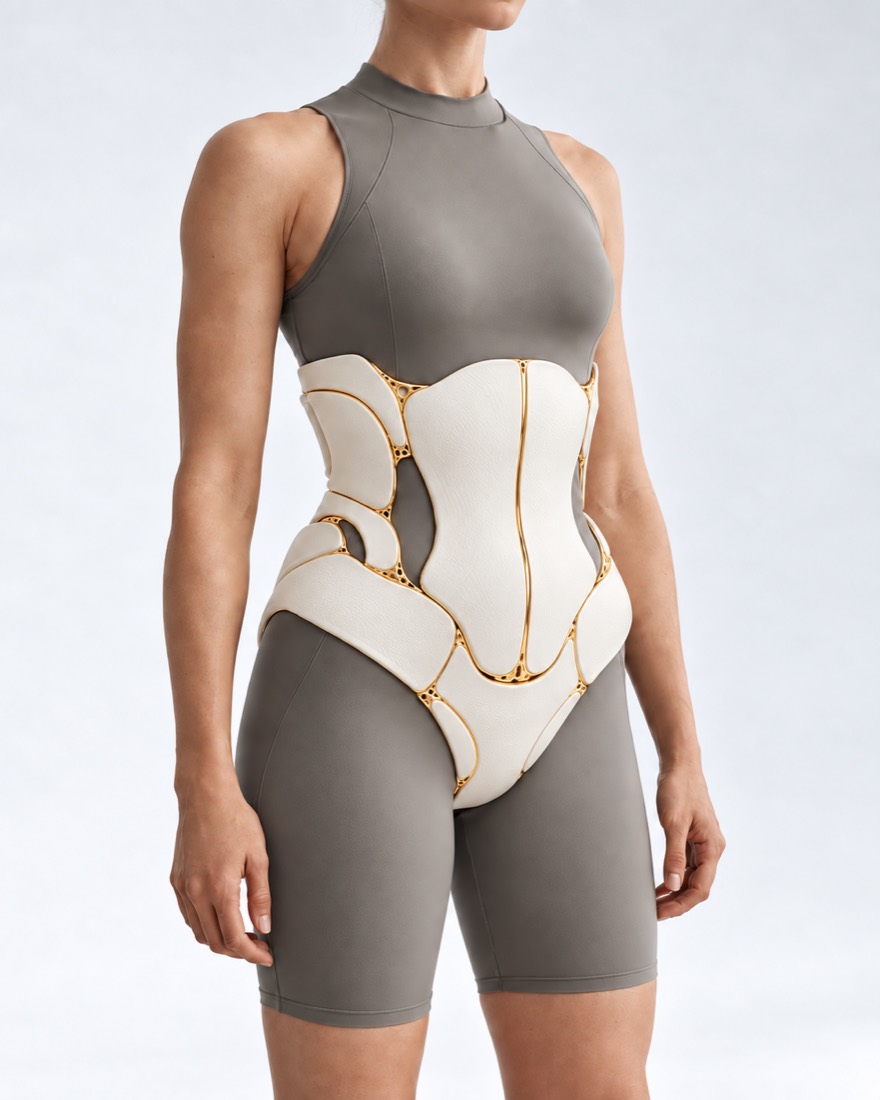
We restore the abdominal wall in umbilical, incisional and large hernias and diastasis, mainly with minimally invasive techniques and retromuscular mesh.
A trapped dressing is an urgent condition: the intestine may lose its blood supply.
103 or directly to a hospital if:
the hernia suddenly becomes very painful;
becomes hard or painful to the touch and is not directed;
Nausea, vomiting, no gas, no salad.
Do not force the device.
Do not try to reduce a painful hernia yourself; only a doctor should do this after an examination.
01 / WHAT IT IS
What is abdominal wall reconstruction.
The recommendation of the abdomen wall is an operation that closes the dressings and restores the muscle framework of the abdomen.
Modern technologies of reconstruction of the anterior abdominal wall are aimed at restoring anatomical integrity, returning functions to the muscular framework and minimizing traumatism. In large and postoperative hernias, plastic surgery with mesh is preferred over simple suture.
They are referred to with an umbilical or postoperative hernia, a large herniated disc after several surgeries or diastasis - divergence of the straight muscles of your abdomen after pregnancy or overweight.
The specific indications, method and expected result are determined individually by the doctor after consultation and necessary examinations.
02 / With PM, it's dead.
What can be restored.
Four situations that most often occur.
01
Umbilical or middle hernia.
Stop at the belly button or the mean abdomen line increasing at voltage.
How it is treated
Small hernias are sutured, larger ones are closed with a mesh — openly through a small incision or laparoscopically, depending on the size and weight of the hernia.
The straight muscles of the abdomen were separated after pregnancy or by excessive weight; the abdomen is torn out.
How it is treated
Surgery is considered if there are symptoms or a hernia: straight muscles are brought together by stitching the white line between them, and excess skin (abdominoplasty) removed as needed.
Basic technologies and concepts for modern abdominal reconstruction.
01
Endoscopic and robotic surgery.
Large incisions are often replaced by multiple punctures: this can reduce the risk of wound complications and shorten hospital stay; method is chosen depending on size of hernia.
eTEP (Extended Totally Extraperitoneal)
Access is made inside the layers of the abdominal wall itself (in the space behind the straight muscles), without going into the abdomen. This allows to install a large sized mesh, separating it from the intestine.
TARM (transabdomminal retromuscular, or TARUP)
The mesh is injected through the abdomen and placed behind the straight muscles.
Robotized reconstruction
Robotic complexes give the surgeon 3D images with magnification and instruments with a "wrist" that bend in several planes. This is convenient for stitching muscles and fixing meshes in hard-to-reach areas.
02
Separation of abdominal wall (AWL) components.
With gigantic gorges, the edges of the muscles are so far apart that they cannot be removed without additional tissue release.
Transversus Abdominis Release
The surgeon then cuts through the deep layer, the transverse abdominal muscle. This releases tension in the tissue and allows the patient's own muscles to be pushed into the center, closing even very large defects with their own tissues rather than just a mesh.
03
Chemical separation of muscles (botulinum toxin)
Preparation for a complex operation
A few weeks before surgery, the patient is administered botulinum toxin type A under ultrasound control into the lateral abdominal muscles. It temporarily relaxes and lengthens the contracted lateral muscle, allowing for easier and less stressful lifting of the defect's edges.
04
Reticle Implants
Grids are different; the surgeon selects them according to the size of the dressing and the location.
Self-fixating meshes
Retain without stitches or clamps, which can ease the pain after surgery.
Composite Grids (IPOM)
They have a coating that reduces the risk of mating with internal organs that can be invested directly on the intestine side.
Light and partially suction grids
Leave less material in the body, keeping the abdominal wall elastic.
05
Sublay / retro-rectus placement of the mesh behind the muscles.
Why are the muscles behind you?
The most commonly recommended placement of the mesh is behind the straight abdominal muscles. The mesh, clamped between anatomical layers, is held by pressure in the abdomen, grows through its own tissue and does not contact any organs .
04 / RECIDEL AND SETTLEMENTS
If the hernia recurs or the mesh becomes infected.
After hernia repair, recurrence, mesh infection or fluid accumulation may occur.
01
Recurrence
Which increases the risk
A meta-analysis of 274 studies identified recurrence factors as smoking, diabetes, overweight, steroids, postoperative or repeated hernia, repair without mesh and post-surgical complications such as wound infection, seroma, haematoma, wounds diverging. Some of these — smoking, weight, controlling diabetes — can be corrected before scheduled surgery.
02
Retinal infection.
Can you save the grid?
In a review of 10 studies involving 265 patients, negative-pressure wound therapy preserved infected mesh in 76.2% of cases. Results were better with polypropylene mesh (93.5%) and when the mesh was placed above the aponeurosis (82.6%) or behind the muscles (98.5%); results were poorer for intraperitoneal placement (55.6%).
When mesh is removed
Removal often involves a series of repeated surgeries: among 332 veterans in the US who had an infected mesh removed, 48.1% recurred over a follow-up period up to 12 years. There is no direct "save or remove" comparison, but when the material and position of the mesh allow it, the infection is usually treated first with preserving the mesh.
03
Seroma
Accumulation of liquid
A seroma is a collection of fluid at the surgical site. Evidence is currently insufficient for fibrin glue, negative-pressure wound therapy or special sutures intended to prevent it, according to a review of nine studies.
05 / HOW IT BRACKS
What happens in the abdominal wall.
Golden Grid
01
Mesh position matters
The mesh is placed behind the rectum muscle: it is compressed by pressure in the abdomen, it grows with its own tissue and does not touch the intestine.
02
TAR — dislocation of the muscles.
The incision of the deep transverse muscle releases straight muscles, and they can be brought down to the middle above the mesh — the defect is closed with own tissue.
03
Diastasis
In the case of a diastasis, straight muscles diverge by stretching the white line between them. The surgery brings the muscle together by suturing the White Line; if there is a hernia, a mesh is added.
The schemes are simplified and not scaled up.
06 / WHEN TO OPERATION
When to do surgery.
Fracture — Immediately
The painless dressing that doesn't leave is 103.
Symptom mushroom — planned
Adult gorges do not disappear themselves; surgery is planned when they interfere or grow.
Preparation for a major operation
Weight reduction, smoking cessation and blood-glucose control; when indicated, botulinum toxin several weeks before surgery.
Diastasis after practice.
First, a few months of physical therapy; if the symptoms remain.
07 / AFTER OPERATION
How the recovery is going.
The term depends on the size of the dressing and the method; the plan is individual.
Early Days: The First Days
Walking on a day or the following day is often shorter after low-invasive operations.
Weight bearing
The heavy lifting and training of the press after the surgeon's permission is usually a few weeks away.
Bandage
After major reconstructions, the bandage is carried by a surgeon.
What Helps What helps?
Avoid smoking and keep weight and blood glucose within a healthy range to reduce healing complications and the risk of recurrent hernia.
08 / INSTALMENT
How much does it cost.
The cost depends on the size of the hernia, method (laparoscopic, robotic or open), mesh and days in hospital; it is named by the surgeon after examination.
09 / PACIENT SHOTS
From the first call.
Conversations and materials
You describe the request and, if you have it, you provide the results of the previous examination and treatment.
Consultation and evaluation
The doctor determines what situation we are in, what circumstances we need, what we need, and what his limitations are.
Reorganization
It discusses the next steps, the sequence of phases and the issues of reconstruction.
You don't live in Kiev or abroad?
Patients come from all over Ukraine and abroad.
10 / For Consultation
What is worth discussing?
01
When did the gorge come and grow?
02
What kind of stomach surgery have you had?
03
Do you smoke what chronic diseases and medications?
04
Are there any UPDs or CTs on the abdominal wall?
11 / FOOD AND REPLIES
Frequently Asked Questions.
The short answers are that what suits you is what the doctor will tell you.
Can it go by itself?
Adults don't disappear on their own, but only temporarily hold her back, but don't treat her.
Do we have to have a grid?
Sutures may be sufficient for some small hernias, but in most cases mesh reduces the risk of recurrence.
Laparoscopy or open?
Depending on the size of hernia, previous operations and condition of abdominal wall. Small and medium often operate minimally invasive, large complications — often open.
Is it possible to correct the diastasis of exercise?
Physical exercise is recommended first, and if the symptoms remain or there is a dressing, the operation is performed.
When can I go back to sports?
Usually in a few weeks, gradually and with the permission of the surgeon, the heavy press exercise is later.
12 / JERLA
Sources
12 NHS sources, EHS instructions, meta-analysisShowTurn to Head
Midline incisional hernia guidelines: the European Hernia SocietyBritish Journal of Surgery, 2023doi:10.1093/bjs/znad284 ↗
European Hernia Society guidelines on management of rectus diastasisBritish Journal of Surgery, 2021doi:10.1093/bjs/znab128 ↗
IPOM versus eTEP as minimally invasive approaches for ventral/incisional hernias: a systematic review and meta-analysisHernia, 2025doi:10.1007/s10029-025-03319-6 ↗
Comparison of Robot-assisted Enhanced-view Totally Extraperitoneal (eTEP) and Transabdominal Retromuscular (TARM aka TARUP) Ventral Hernia Mesh Repair: A Systematic Review and Meta-AnalysisJournal of Abdominal Wall Surgery, 2025doi:10.3389/jaws.2025.14723 ↗
Systematic review of transversus abdominis release in complex abdominal wall reconstructionHernia, 2019doi:10.1007/s10029-018-1870-5 ↗
A systematic review and meta-analysis of technical aspects and clinical outcomes of botulinum toxin prior to abdominal wall reconstructionHernia, 2021doi:10.1007/s10029-021-02499-1 ↗
Meta-analysis of sublay versus onlay mesh repair in incisional hernia surgeryAmerican Journal of Surgery, 2014doi:10.1016/j.amjsurg.2013.08.030 ↗
Identifying predictors of ventral hernia recurrence: systematic review and meta-analysisBJS Open, 2021doi:10.1093/bjsopen/zraa071 ↗
The salvage of mesh infection after hernia repair with the use of negative pressure wound therapy (NPWT), a systematic reviewANZ Journal of Surgery, 2022doi:10.1111/ans.18040 ↗
Events, care, and outcomes after hernia mesh explantation for infectionThe American Journal of Surgery, 2022doi:10.1016/j.amjsurg.2021.11.036 ↗
The use of adjuncts to reduce seroma in open incisional hernia repair: a systematic reviewHernia, 2018doi:10.1007/s10029-017-1690-z ↗
Signs of obstruction are from the NHS; treatment principles are guidelines from European Hernia Society (EHS); the rest is meta-analysis on methods.
VALIKHNOVSKI SURGERY PARTNERS
Your case deserves attention.
Start consulting to see what questions and materials are needed for the evaluation.