Treatment of complications after aesthetic surgery.
We treat complications after aesthetic surgery, including skin necrosis, wound dehiscence, capsular contracture, post-liposuction irregularities and severe scarring.
First contact the surgeon who operated on you – he knows the details of your operation. If this is not possible, call any surgeons that day.
103 Now, if:
Breathing, chest pain, bleeding;
Strong bleeding or part of the operation quickly swells and stresses;
High temperature with chilling, confusion or vomiting;
the skin around the wound becomes dark, blue or black and is very painful.
To the surgeon the same day if:
The wound has become red, it is leaching pus, the stitches have broken apart, an implant or suture can be seen through the skin, a temperature of 38 °C (104.5 °F) and above has appeared, or one leg (usually the knee) is sore, swollen and reddened.
01 / WHAT IT IS
What is the treatment of complications.
Treatment of complications from cosmetic surgery is the operation to heal wounds, repair tissues and correct the effects of aesthetic procedures.
Treatment of complications and iatrogenic damage (which occurred as a result of medical intervention) after cosmetic surgery is an area where aesthetic surgery combines with reconstructive. The main goal here — to restore the viability and functionality of tissues, and only then restore aesthetically.
They are approached with wounds that do not heal or have split, areas of dead skin, breast compaction around the implant, unevenness after liposuction, coarse scars.
The specific indications, method and expected result are determined individually by the doctor after consultation and necessary examinations.
02 / With PM, it's dead.
What complications are treated.
Six situations that are most common.
01
Skin necrosis.
The skin area darkened and froze after lifting the face, chest or abdomen plastic.
How it is treated
Small areas, especially on the face, are often healed under bandages; deep ones are cleaned of dead tissue, vacuumed if necessary and closed with local flaps, grafts or microsurgical flap.
Groups with implants were solid, deformed or painful.
How it is treated
The capsule around the implant is either cut (capsulotomy) or removed (capsulectomy), and if necessary, the implants are replaced. " Surgery of the Breast "?.
Modern medicine helps to treat such complications through several technological approaches.
01
Microsurgical autotransplantation (for necrosis)
Necrosis of the skin or subcutaneous tissues may occur due to excessive tension of tissue or impaired blood supply after facial lift, reduction breast surgery or tummy tuck.
Free flaps (for example, an ALT flap from the thigh)
If after the removal of dead tissue a deep defect is formed, surgeons transplant a complex of tissue from another area of the body with suture of vessels under a microscope. This makes it possible to restore lost volume and close the wound with healthy tissue with good blood supply.
Perforator flaps
Thin flaps on one small vessel (perforant) allow to cover defects in the face or neck with tissue, similar in color and thickness.
Coarse scars, asymmetry and tissue nutrition disorders can occur after liposuction with excessive fat removal or when wound healing is complicated.
Fat grafting
The patient’s own fat is not only used for volume. Its injection under scar tissue can soften the scar areas and improve skin texture.
CFS and PRP
Cells from the patient’s fat or blood plasma are sometimes inserted into the area of impaired tissue nutrition; the evidence for these methods is so far limited.
03
Vacuum therapy and biomatrixes
After plastic or breasts, the following are usually used in divorce, dredging or infecting wounds:
Vacuum therapy (NPWT)
Negative-pressure machines remove the injury, reduce the haemorrhage and help prepare the wound for closure.
Cellless dermal matrices (ADM)
They serve as a framework into which their own tissues grow; they are used, for example, in repeated breast surgeries after capsular contracture.
04
Minimally invasive repeat interventions.
Endoscopy capsule and capsule
In case of capsular contracture (when the body compresses the implant with a dense scar capsule), the capsule is cut or removed, usually through an incision; if the implants were inserted through the armpit, this can be done endoscopically under camera control.
Ultrasound correction of unevenness
VASER devices are used for the minimally invasive alignment of bumps and scars after uneven liposuction.
04 / HOW IT GOES
What happens during treatment.
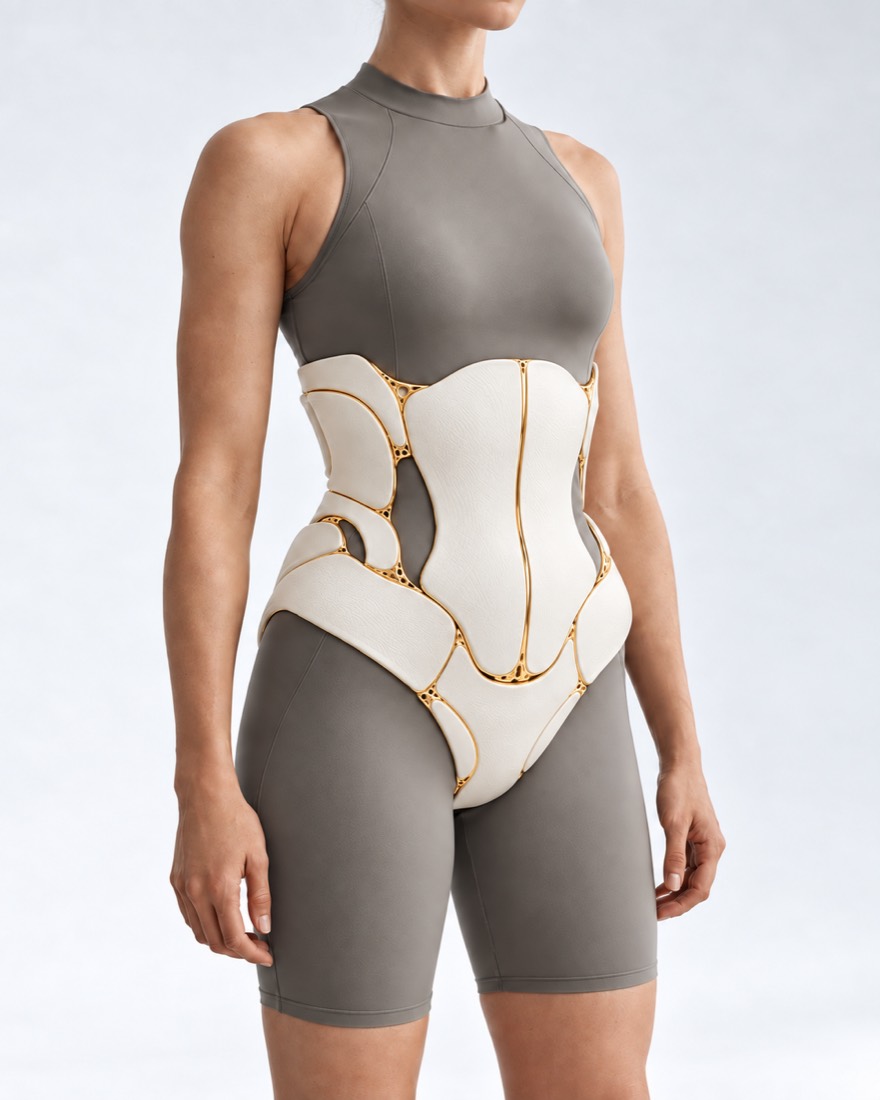
The gold marks the tissue that the defects restore.
01
The capsule around the implant.
A capsule forms around any implant. When it becomes dense, it compresses the implant and deforms the breast. The capsule is cut or removed, if necessary the implants are replaced.
02
Wound closure after necrosis.
The dead tissue is removed, the wound cleaned and prepared (vacuum if necessary), then covered with well-blooded tissue.
03
Alignment after liposuction
Westers fill with their own fat and remove their ears; the surface becomes even, although it may require several sessions.
The schemes are simplified and not scaled up.
05 / WHEN TO OPERATION
When to intervene.
Acute Complications — Immediately
Bleeding, hematoma, infection, necrosis — treatment without delay.
Wounds — Before Recovery
The wound purifies and closes as soon as it's clean.
Aesthetic Correction — After Stabilization
Unevenness, scarring and asymmetry are corrected when the tissues have healed and swelling has subsided – usually not earlier than after 6-12 months.
Capsular contract — planned
The operation is planned for stages of compaction and complaints.
06 / AFTER OPERATION
How the recovery is going.
Terms depend on complications and volume; the plan is individual.
Bandages
The wounds and necrosis are regular bandages, a vacuum.
Compression
After the liposuction and abdomen surgery were corrected for weeks.
Patience
Repeated surgery takes longer, and the final form is in the month.
What Helps What helps?
Do not smoke: smoking impairs blood supply to the skin and increases the risk of necrosis.
07 / REABILITATION
Modern methods of rehabilitation.
What helps to recover from aesthetic and repeated operations — and to what extent it is proven.
01
Accelerated Recovery Protocols (ERAS)
Precautional precautions, during and after surgery, instead of a doctor's habits.
Which turns on
Short fasting before surgery, warming up during the operation, anaesthesia with a minimum of opioids, early rising and feeding, monitoring after discharge.
What We Know
In plastic surgery, protocols have been studied most often for breast reconstruction (29 out of 50 studies in the years 2021-23), aesthetic operations are only five and the quality of the research is generally low. Therefore, the protocol is based on official guidelines from ERAS Society (they exist, for example, to breast surgeries).
02
Less pain, less blood and less bruising.
Nerve blockade
After abdominal surgery, the anesthesiologist injects local anaesthetic between the muscles of the aorta wall. In a systematic review, most such blockades reduced opioid need; in direct comparisons, TAP-block was better than vaginal rectal and pararectal blockade (review of 8 studies).
Tranexamic acid
A drug that reduces bleeding. In a systematic review of 14 studies on cosmetic surgery, blood loss was less (26 ml on average) and bruising in the first week was lower in 5 out of the 7 studies; impact on hematomas was at the margin of statistical significance.
03
Prevention of thrombosis.
Caprini risk assessment
Before surgery, the doctor counts thrombosis risk scores. These determine prophylaxis: early rising, leg compression, anticoagulants if necessary. The benefit is always weighed against the risk of bleeding.
04
Scar care from the first weeks of the scar.
Silicon gel or plates
International guidelines call silicone the first choice for prevention and treatment of hypertrophic scars and keloids. They also recommend reducing tightness with taping, moisturizing and sun protection.
Fracture laser
For rough scars after injuries and burns; experts also allow early treatment to prevent tightening. The 2014 consensus of professionals considers the method promising, but relies largely on expert experience.
08 / INSTALMENT
How much does it cost.
The value depends on the complications, the volume and the number of steps; the surgeon calls it after the examination.
09 / PACIENT SHOTS
From the first call.
Conversations and materials
You describe the request and, if you have it, you provide the results of the previous examination and treatment.
Consultation and evaluation
The doctor determines what situation we are in, what circumstances we need, what we need, and what his limitations are.
Reorganization
It discusses the next steps, the sequence of phases and the issues of reconstruction.
You don't live in Kiev or abroad?
Patients come from all over Ukraine and abroad. Send photos, description of previous surgery and extracts for preliminary evaluation.
10 / For Consultation
What is worth discussing?
01
What surgery and when?
02
Is there a description of the operation, an implant?
03
How and when did the complications occur?
04
Do you smoke what medications you take?
11 / FOOD AND REPLIES
Frequently Asked Questions.
The short answers are that what suits you is what the doctor will tell you.
Should we first go to the surgeon who operated?
If the complication is acute and you cannot contact him, refer to any surgeon on the same day.
When can the outcome of a failed operation be corrected?
Acute complications are treated immediately, and cosmetic correction is performed after healing and swelling has subsided, usually not earlier than 6-12 months.
What's a capsule contract?
This is a tightening of the capsule around the breast implant, which causes the chest to become stiff, deformed or painful. It is treated with surgery on the capsula, sometimes with replacement of an implant.
Can inequalities be corrected after liposuction?
Often, the falls fill with their fat, remove their ears, and sometimes require several steps.
Will the scar remain after the necrosis is closed?
The purpose is to close the wound in a stable manner and to place the scar as far as possible as is less visible.
12 / JERLA
Sources
14 NHS sources, inspections and studiesShowTurn to Head
Systematic Review of Capsular Contracture Management following Breast Augmentation: An UpdatePlastic and Reconstructive Surgery, 2024doi:10.1097/PRS.0000000000010358 ↗
Effectiveness of fat grafting in scar reduction: A systematic review and meta-analysisJournal of Cosmetic Dermatology, 2022doi:10.1111/jocd.15067 ↗
The Facial Artery Perforator Flap for Reconstruction of Facial Defects: Surgical Pearls and Clinical SeriesJournal of Craniofacial Surgery, 2024doi:10.1097/SCS.0000000000010025 ↗
Quality of plastic surgery Enhanced Recovery After Surgery (ERAS) studies: A systematic reviewJournal of Plastic, Reconstructive & Aesthetic Surgery, 2025doi:10.1016/j.bjps.2024.11.063 ↗
Analgesic Efficacy of Nerve Blocks After Abdominoplasty: A Systematic ReviewAesthetic Surgery Journal, 2020doi:10.1093/asj/sjz313 ↗
A Systematic Review and Meta-Analysis Evaluating the Impact of Tranexamic Acid Administration in Aesthetic Plastic SurgeryAesthetic Surgery Journal, 2022doi:10.1093/asj/sjab333 ↗
A Review of Venous Thromboembolism Risk Assessment and Prophylaxis in Plastic SurgeryPlastic and Reconstructive Surgery, 2022doi:10.1097/PRS.0000000000008663 ↗
Updated scar management practical guidelines: non-invasive and invasive measuresJournal of Plastic, Reconstructive & Aesthetic Surgery, 2014doi:10.1016/j.bjps.2014.04.011 ↗
Laser treatment of traumatic scars with an emphasis on ablative fractional laser resurfacing: consensus reportJAMA Dermatology, 2014doi:10.1001/jamadermatol.2013.7761 ↗
After cosmetic interventions, what to do about complications is for NHS; the rest are for reviews and studies of methods on the page.
VALIKHNOVSKI SURGERY PARTNERS
Your case deserves attention.
Start consulting to see what questions and materials are needed for the evaluation.