Hair transplanting is a place where hair is missing.
It is most often done for hereditary (androgenic) baldness in men and women. The donor area usually serves as the occiput: hair there is resistant to the hormone that causes balding, and retains this property at the new location.
A separate area is the restoration of hair where it has been lost due to a burn, injury or surgery: first they restore the scalp itself, then transplant the hair.
This is a general description of the direction. The specific indications, method and expected result are determined individually by the doctor after consultation.
02 / With PM, it's dead.
When a transplant can help.
Four situations that most often occur.
01
Baldness and baldness in men.
The halls on the modest temples, they're wiped, they're stabilised.
How it is treated
Follicular transplantation from the occiput; together with it, a doctor may prescribe medication to preserve your own hair.
Liquid eyebrows, beard, facial scars without hair.
How it is treated
Interplanting of individual folicules with back of the head at a certain height.
03 / METHODS
How to transplant and restore.
Methods of head transplanting and remodeling.
01
Hair Transplantation
Folocular units, groups of 1-4 hairs, are taken from the donor area and moved to prepared holes.
Robotized FUE (ARTAS)
The robot selects follicular units from the camera images and extracts them according to specified parameters; the surgeon controls the process and shapes a growth line. As with manual FUE, the result depends on the team’s experience.
Hand FUE
Folicules are cut with an electronic tool; small drips, barely visible under the hair, remain.
FUT is a striped technique
A strip of skin is cut from the occiput and divided into grafts; a linear scar hidden by hair remains. Allows more graft transplantation per session.
BHT — Body Hair
If donor hair on the occiput is lacking, follicles are additionally taken from the beard or body; such hair is thinner and grows differently, so it is usually combined with head hair.
02
Scalp reconstruction.
Reconstruction of the scalp (hairy part of your head) is a serious surgical challenge due to its unique anatomy: skin here is dense, inert and tightly stretched against convex skull bones. Modern surgery focuses on functionality, brain protection and hair preservation.
Tissue dermotenasia (expander)
This method is the basic one for restoring hair in large defects (after burns, tumor removal or scar alopecia). A silicone balloon (expander) is placed under healthy skin near the defect and over several weeks to months through a port physiological solution is introduced into it. The skin stretches and increases its area; new hair follicles are not created but distributed over a greater area. Then the balloons are removed and the flaw is closed with skin and hair.
Rotation and transposition flaps
If the defect is of medium size, surgeons cut flaps from adjacent areas of the head and move skin. The tendon helmet (galea) inserts reduce tension and each add several millimeters to the length of a flap.
Free flaps
In total defects with exposure of the skull bone, a flap of either the widest back muscle or ALT-flap (one of most commonly used options) is transplanted and sutures under microscope. Over time, the muscle thins out and follows the contour of a skulls. These flaps are hairless — this is the next step.
Osteoption and vacuum
If the skull bone is bare, small holes are made in its outer plate for spongy substance, a wound is covered with a matrix and vacuum bandage - granulation tissue grows on which skin can be transplanted.
Post-renovation hair transplant
Hair can also be transplanted into scarred tissue or the scalp, but grafting is usually lower there and often requires several sessions.
04 / NON-REWARD
What can be fixed after transplantation.
Serious complications are rare in experienced hands: the two large series have a total incidence of 1.2% and 4.7%, respectively. However, in a summary of twenty-one studies, some complication, most often pain, was reported by 2353 patients out of a group of four hundred and forty-two.
01
What happens?
Donor zone
Pain and swelling are the most common complaints. Bleeding that required intervention (up to 8%), prolonged numbness (ups to11%) and infection (Up to20%) have also been reported. After strip technique (FUT), hypertrophic scar or keloid is the main complication of the donor area (UPS up to35.1%).
Transplant zone
Hair loss (efflevation) occurs in up to 6.5% of the transplanted area and up 4.1% in the donor area. Skin necrosis and unnatural appearance are less common, but also occur frequently.
02
How it is corrected
Non-natural growth line
In a series of 246 women (one clinic in Korea) who had failed hairline correction, they were re-transplanted with strip or FUE and the wrongly positioned old grafts were removed by laser. Coarse scars were treated with hormone injections.
Endurance of the donor zone
There is a limit to the safe donor zone: if too much is taken, it becomes noticeably thinner. The number of grafts are therefore planned for lifetime. Combining FUE with striping has been shown by the authors to help take more graft without exhaustion, but data are still limited.
Scarring
In a series of 25 cases (scars after burns, surgeries and injuries), the outcome was excellent or good in 83% of the 18 patients followed for more than six months. But scars following incisions have worse results than those following burnings, and may require several procedures.
Poor micro-pigmentation
Micropigmentation is a tattoo that mimics hair follicles. Failure was most often masked by hair transplantation (62% of 120 patients), less frequently removed with laser and redone (13%). Average satisfaction – 4.5 out of5 (one retrospective study).
05 / HOW IT BRACKS
What happens during the procedure.
The gold marks the transplanted tissue.
01
FUE: a single-time hair removal procedure.
A thin tool (manual or robotic) cuts out individual groups of hair along with the root and implantes them in the balding area at a natural growth angle.
02
Expander on the head.
A balloon is placed under the skin and hair, filled for weeks. The scar is then sucked out and the stretched skin with hair is moved to its place.
03
Rotational Valve
The skin and hair from the neighbouring area are removed and rotated to cover the defect; the place of destination is sewn.
The schemes are simplified and not scaled up.
06 / WHEN TO RAB
When to transplant.
The leak has stabilized
Transplantation is more often done after 25-30 years, when it can be seen how the baldness progresses; in very young patients it is usually postponed, age assessed individually by the doctor.
The cause of the formation is established.
Especially for women: hormonal and other causes are excluded first.
Donor area of wealth
The thickness of the back depends on how many graphs can be transplanted.
Rubles — After Maturity
Hair transplantation into scars and flaps is performed once the tissues have stabilised.
07 / AFTER PORTRETE
How the recovery is going.
Terms vary according to method and volume; they are made individually.
Early Days: The First Days
Cirquees on a transplanted site, a small crooked forehead; washing your head — according to a doctor's scheme.
Transplanted Hair Loss
In a few weeks, the falling hair falls out normally: the folicules stay.
Growth
The new hair starts to grow in about three or four months, and the final result is seen in about a year.
Supporting:
The bending hair is stable, but it may still be the case that the doctor may prescribe treatment.
08 / INSTALMENT
How much does it cost.
The cost depends on the number of grafts, method (robot, manual FUE, FUT) and number Of sessions; exact amount is given after examination.
09 / PACIENT SHOTS
From the first call.
Conversations and materials
You describe the request and, if you have it, you provide the results of the previous examination and treatment.
Consultation and evaluation
The doctor determines what situation we are in, what circumstances we need, what we need, and what his limitations are.
Reorganization
It discusses the next steps, the sequence of phases and the issues of reconstruction.
You don't live in Kiev or abroad?
Patients come from all over Ukraine and abroad.
10 / For Consultation
What is worth discussing?
01
Since when does the hair give birth, and does the fall process continue?
02
Have baldness been treated before?
03
Are there chronic diseases, blood clotting disorders?
04
Were there any transplants or head surgery?
11 / FOOD AND REPLIES
Frequently Asked Questions.
The short answers are that what suits you is what the doctor will tell you.
How does a robotic transplant differ from a manual one?
The follicles are selected and cut by a robot based on camera images, not manually by the surgeon; both the growth line and transplantation are formed by doctors. As with the manual method, the result depends on the experience of the team.
Are there any scars left?
After FUE, small dot scars are visible under the hair; after FUT, a linear scar is hidden behind the head.
When will the results be seen?
The new hair starts to grow in about three or four months, the final result in about a year.
Can you put your hair on a scar after custody?
Yes, but the scar is usually less secure than healthy skin and often requires several sessions. Larger scars are first covered with hair using an expander.
Who doesn't want a transplant?
In active scalp diseases, uncompensated diabetes mellitus, blood clotting disorders and acute infections as well as during pregnancy and breastfeeding – the decision is made by a doctor.
12 / JERLA
Sources
15 NHS sources, instructions, inspectionsShowTurn to Head
Evidence-based (S3) guideline for the treatment of androgenetic alopecia in women and in men - short versionJournal of the European Academy of Dermatology and Venereology, 2018doi:10.1111/jdv.14624 ↗
Application of Autologous Hair Transplantation Technique in Children with Cicatricial AlopeciaAdvances in Therapy, 2023doi:10.1007/s12325-023-02581-3 ↗
Scalp Reconstruction Techniques in Children With a Focus on Tissue ExpansionSage Open Pediatrics, 2025doi:10.1177/30502225251346255 ↗
Scalp Reconstruction after Malignant Tumor Resection: An Analysis and AlgorithmJournal of Neurological Surgery Part B: Skull Base, 2020doi:10.1055/s-0039-1683371 ↗
Multiple stage tissue expansion for reconstruction of scalp nevocellular nevus in pediatric age groupGMS Interdisciplinary Plastic and Reconstructive Surgery DGPW, 2019doi:10.3205/iprs000134 ↗
Complications Following Hair Transplantation: A Systematic Literature Review and Meta-AnalysisAesthetic Plastic Surgery, 2025doi:10.1007/s00266-025-05125-y ↗
A Scoping Review on Complications in Modern Hair Transplantation: More than Just Splitting HairsAesthetic Plastic Surgery, 2025doi:10.1007/s00266-024-04316-3 ↗
Complications in follicular unit excision hair transplantation: current evidence and practical approachesFrontiers in Medicine, 2026doi:10.3389/fmed.2026.1750989 ↗
Follicular Unit Excision-Linear Ellipse Donor Harvesting Technique: Combining Standard Follicular Unit Excision with Follicular Unit Excision inside a Linear Strip (Modified Linear Strip Excision) to Optimize Graft YieldFacial Plastic Surgery, 2024doi:10.1055/a-2198-2703 ↗
 Discuss your case
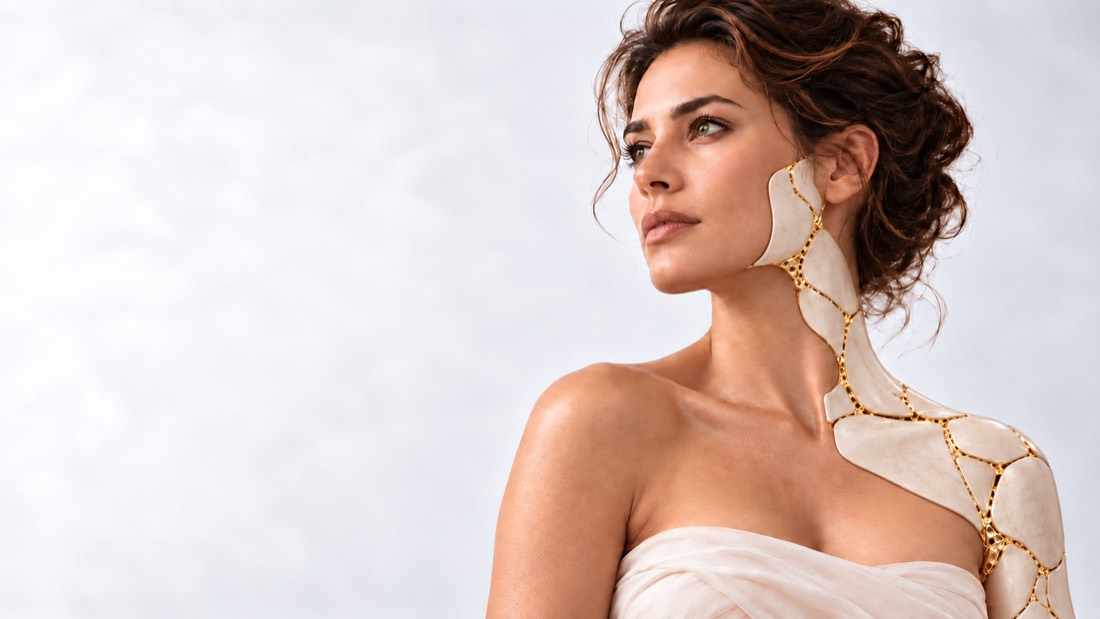 FIG.05 / CONCEPTUAL VISUALIZATION