This page tells us that burns are already healing and that fresh burns help with injury or burn.
First aid
Cool the burn with cool running water for 20 minutes. Remove jewelry and clothing if they have not stuck to the skin. Cover the area with cling film. Do not apply ice or oils or creams.
103 or directly to a hospital if:
There's more opic than the rest of the victim;
The skin is white, grey or charred.
blisters on the face, hands, feet, arms, legs or genitals;
Chemical or electricity burning;
The cough, the groaning voice, is hard to breathe by sniffing at the nose or mouth.
A child under 5 years old, a pregnant woman, someone over the age of 60 or with diabetes — to the doctor on the same day even for minor burns.
01 / WHAT IT IS
What is reconstruction after burns.
The recommendation of post-care defects is the most difficult stage of recovery after guardianship.
It is aimed at eliminating anatomical disorders: tissue deficit, loss of body fragments (ear shells, fingertips), gross facial deformations and persistent joint contractures.
A plastic surgeon is called upon when the wound has healed, but the scar (scar) pulls, itches, cracks or restricts movement, prevents you from closing your eye or opening your mouth wide, or changes your face and body in such a way that it makes life difficult. Reconstruction can be done even many years after the burn.
The specific indications, method and expected result are determined individually by the doctor after consultation and necessary examinations.
VISUALIZATION
From damage to recovery.
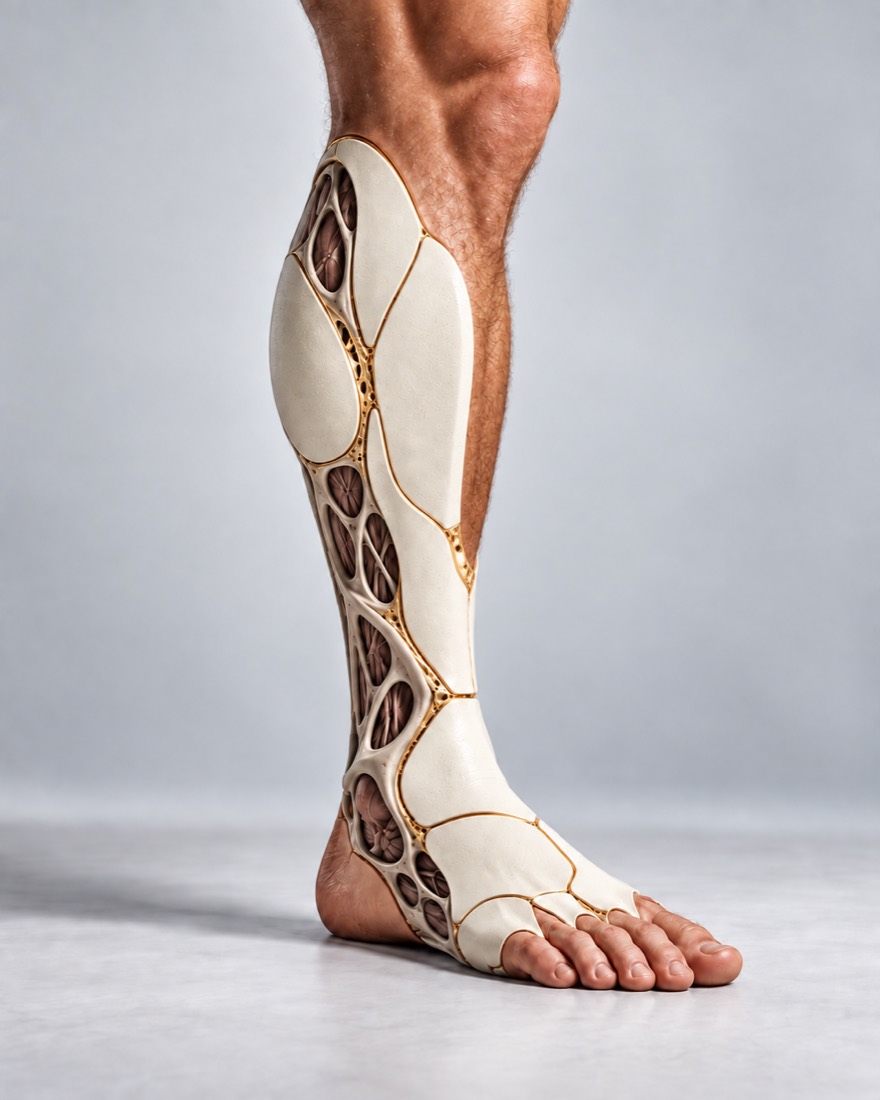
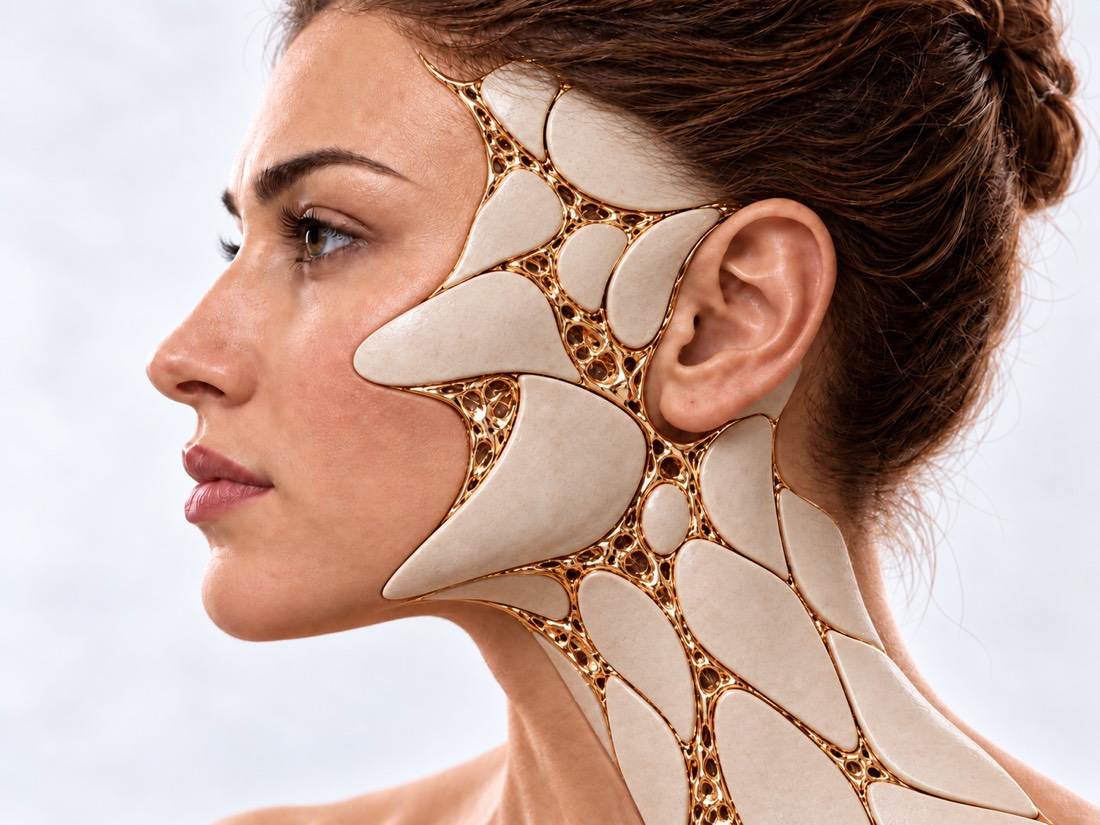
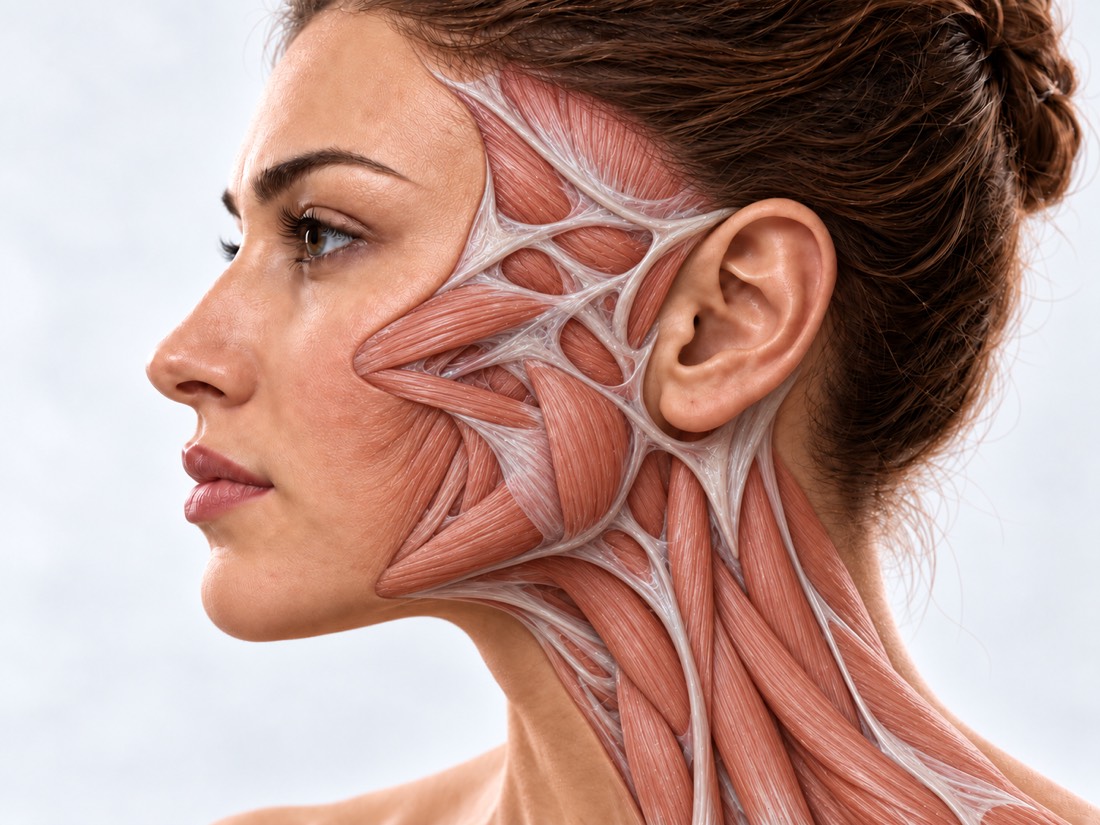
Move the slider. Open anatomic layer means damaged tissue, gold means the reconstruction performed.
The artist is direct, not a picture of the patient.
BACKGROUNDRECONSTRUCTIONFIG. 10.1 / CONCEPTUAL VISUALIZATION, NOT PACIENT PHOTO
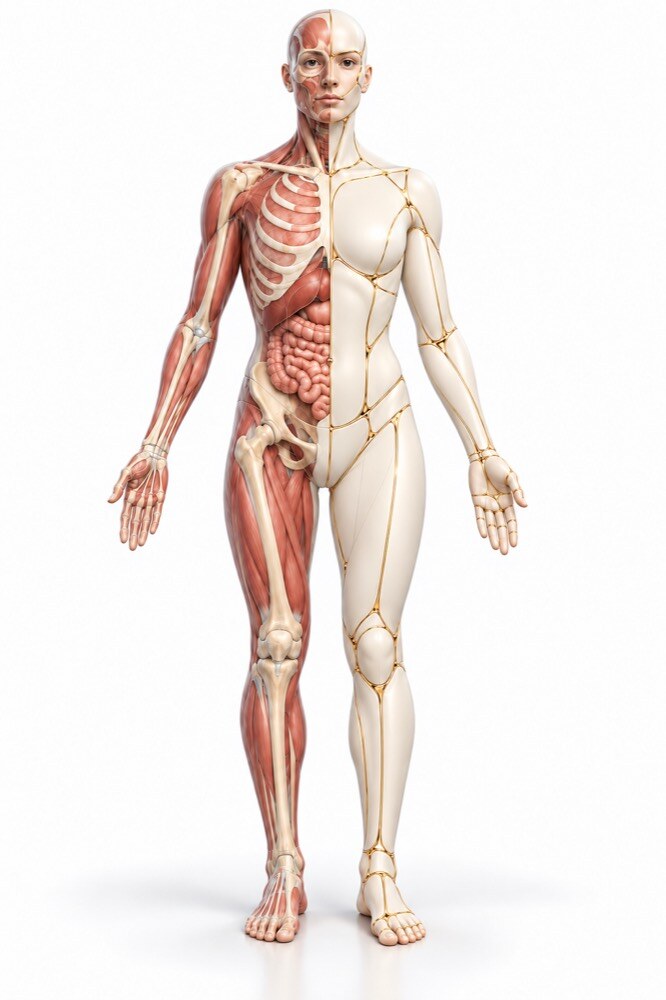
FIG. 10.2 / INSTALLATION
02 / DE OVERSIGHT
Which areas are being restored.
Select the area on the figure or on the list - see what happens after custody and how it is treated.
Scarring alopecia
The skin of the head without hair after custody. Large areas are closed with an expander: stretch the adjacent skin and hair, then move it to the scar. Small areas — remove or transplant hair.
Recovery of the age (ecropion), constriction of the mouth, nose and lip scars, loss of part of the earshell. The face skin is replaced with whole aesthetic areas so that the stitches lie along natural boundaries.
The ribs pull the chin to the chest and keep the head up. Scar tissue is removed, the lack of skin is covered with a graft or flap; after surgery, neck is fixed in correct position for some time.
The arm does not rise fully or break in the elbow. Most often treatment involves Z-plasty and local flaps; a skin graft is used when there is a large skin deficit. Splinting and rehabilitation follow.
Big hypertrophic scarring that pulls the skin and itchy. First conservative treatment: compression, silicone, injections. Next — partial excision, expanders, skin grafting or dermal matrices.
Fingers don't fold, fingertips lost, fingers on the palm. Z-plasty, a full-thickness skin graft, or local or free flaps; after surgery, splinting and rehabilitation are used.
The knee contract, the foot scar, the unstable scar, trembling. Scar bands are released and repaired with local flaps or grafts; an unstable scar is excised and covered with healthy tissue.
Six of the most frequently visited states, each of which has its own page with a detailed answer.
01
Hypertrophic and keloid scars.
Yellow, red scars, blazing, hippertrophic remains within the wound, and the keloid is marrying them.
How it is treated
Treatment begins with conservative measures: silicone, compression garments, injections and laser therapy. Surgery is considered when the scar does not respond or restricts movement. Keloids often recur after excision alone, so combined treatment is used.
The ribs fold the skin and do not allow the neck, toes, elbow, knee, or arm to be completely sprained.
How it is treated
The scar tissue is cut or excised, and the lack of skin is covered with local flaps (Z-plastics and its variants), a skin graft or flap. After surgery, tires and rehabilitation are required, otherwise contracture may return.
Mouth recovery, nose, lip and chin scarring, neck tight.
How it is treated
The ectopion is a threat to the eye, so it is operated on earlier without waiting for other scars to mature. On the face, skin is replaced with whole aesthetic areas rather than patches, in order that stitches follow natural boundaries and creases.
The ear is restored on a frame of own rib cartilage or an implant, the nose with flaps from neighboring tissues and the fingers with local or free flap.
Dillies on their heads where their hair doesn't grow after custody.
How it is treated
Large areas are most often closed with an expander: stretch the adjacent skin and hair and move it to the scar site. Small — pull out or transplant hair.
A prune that is constantly cracked, wet, or covered with wounds that aren't naked.
How it is treated
Such an area is always shown to the doctor: in old burn scars rarely develop skin cancer (Marjolen’s ulcer). Unstable scar is excised and closed with full-fledged tissue.
Modern plastic surgery solves these problems with the help of advanced bioengineering solutions, microsurgery and 3D modeling technologies.
Basic Methods of the Body
Most of the reconstruction starts with them, and more sophisticated technologies connect when they're not enough.
Method
When it is suitable
Cleaning of the scar
Narrow scarrings that can be sewn without tension
Z-plastics and local cables
scarring weights due to joints, contracts, washed eyelids and lips
Skin transplant (authodermoplastics)
large areas without naked tendons and bones; split or full-scale transplant
Fat grafting
Tight scars, lack of soft tissue.
Laser
surface, colour and toughness of the scar, itch; often with the operation
01
High-tech microsurgery and autotransplantation.
When the defect affects deep structures (muscles, tendons, nerves), standard skin grafting is ineffective. Complex surgical methods are used.
Super-microsurgery
Using high-power surgical microscopes and robotic assistants, surgeons can suture vessels or nerves with diameters ranging from 0.3 to 1 mm. This enables successful transplantation of complex “living” tissue complexes (flaps containing skin, fat, muscle and even bone fragments) from donor areas to the defect site with blood circulation restored.
Perforant Klapts (DIEP, ALT)
The tissues for transplantation are taken on the basis of a single specific vessel (perforant). This minimizes traumatization of the donor area (e.g. thigh or abdomen), while preserving the anatomical integrity of patient’s muscles.
Flap prefabrication
If there is no ready-made donor flap with the necessary tissue and own vessel for the defect, a vascular loop is first implanted under the skin in the donors area. After the tissue grows over new blood vessels, it is transplanted to the burn defect zone.
02
Bioengineering and 3D Bioprinting
Modern technologies allow practically to "grow" or create individual frames to replace lost volumes.
3D bioprinting of living cells
Creation of personalized tissue implants using 3D printers directly according to the shape of a patient’s defect (based on CT/MRI data). Hydrogels containing the patient's own stem cells are used as “ink”.
Dermal matrices (e.g. double-layer Integra or single-layer MatriDerm)
In two-layer systems, the lower layer (collagen and glycosaminoglycans) serves as a matrix for new vessel growth and dermis formation while the upper one (silicone) protects the wound. After a new vascular network has formed, the silicone layer is removed and replaced with a very thin layer of the patient’s own skin (a split-thickness skin graft).
Titan and polymer endoproteases
If the burn has damaged facial skull bones, defects are replaced with 3D-printed implants that accurately reproduce facial symmetry.
03
Controlled tissue regeneration and expansion.
Multi-stage extension dermotension
To reconstruct the hairline of the head, face or neck under healthy skin silicone balloons (expanders) of different geometric shapes are implanted. Gradual filling them with physiosolution allows to grow new skin that in color, thickness, presence of hair follicles and elasticity is as close as possible to the lost one.
Matrix therapy (RGTA)
Using polymers that mimic the damaged extracellular matrix. They protect natural growth factors from destruction and stimulate rapid targeted tissue regeneration without creating deep defects (“minus-tissues”).
05 / HOW IT BRACKS
What happens to the tissues.
Three approaches that make up most reconstructions after burns. Golden is the tissue used to repair the defect.
01
Skin Transplantation
The split graft takes the epidermis and part of the dermis: it covers large areas, while the donor site heals itself. Full-layered takes all the Dermis; it tightens less after healing, so it is more often used for faces and wrists, with the Donor Site sutured.
02
Dermal Matrix.
The lower layer of the matrix is a framework into which vessels grow and form new dermis; the upper silicone layer protects the wound. When the vessel has grown, the silicone is removed and a thin skin graft is placed.
03
Tissue expander
A silicone balloon is placed under the healthy skin next to the scar and gradually filled over weeks. At a second stage, the Scar is excised and stretched skin is moved into its place – color, thickness and hair match with the neighboring area.
The schemes are simplified and not scaled up.
06 / WHEN TO OPERATION
When to do surgery.
Until the wound healed.
A burn is treated in an emergency or burst unit. A plastic surgeon can be involved at this stage to plan the reconstruction in advance.
Mature scarring: usually 1-2 years
The scar gradually fades, softens and flattens. During this period, compression garments and silicone are used together with rehabilitation, which can reduce the extent of future surgery.
Early operation
If the scar prevents closing an eye, opening a mouth, spreading the neck or fingers, or hinders growth of the child, surgery is performed earlier without waiting for maturation: these problems only worsen over time.
Planning reconstruction
After the scars have matured, there are staged operations: first what limits movement and function, then appearance. A few months usually pass between the stages.
07 / AFTER OPERATION
How the recovery is going.
Terms depend on the number of transactions; the exact plan is individual.
Stationary and bandages.
From one day to several days; after microsurgical transplants - longer, with control of blood flow in the valve. Sutures are usually removed after 7-14 days.
Splinting and compression
After contracture surgery, the joint is supported with a splint, and compression garments are worn over the scar for several months to prevent recurrent tightening.
Rehabilitation
Liquid physical stress is part of the treatment, not the supplement: without it, the contractor can return.
If a tissue expander is in place
It is gradually filled in sessions, usually once a week, over several weeks or months. A second operation is then performed to move the stretched skin back into place.
08 / Rebuilding
Modern Rehabilitation.
The rune has been changing for months: full treatment can only be available in 18 months.
01
Lasers for scars Laser scar removal
Fracture CO2 laser
An international consensus in 2021 (26 dermatologists and plastic surgeons from 13 countries) identified lasers as the first-line treatment for traumatic scarring and contractures. A meta-analysis on burns showed statistically significant improvement; there were very few reported side effects.
Pain and itch of the scar
In a review of 15 randomized trials (780 participants), laser, massage and shock wave therapy reduced pain and itching; quality of evidence was low to moderate.
02
Compression, silicone, massage, etc.
Compression garments and silicone
The 2016 systematic review identifies pressure and silicone as evidence-based methods: they reduce scar thickness, redness and elasticity. Cochrane’s 3024 review (15 studies, 1179 participants) is more cautious: there is insufficient evidence to recommend compression garments or an alternative for the prevention of hypertrophic scarring, so authors advise that patient choice should be considered.
Massage and wetting
Massage may improve scar elasticity, reduce pain and itching although the evidence is less. Data on moisturizers are mixed.
03
Motion and force.
Splints and casts
Because research is limited, the clinical guideline makes one practical recommendation: consider splinting in adults to increase range of motion or reduce contracture.
Training with physiotherapist
In a meta-analysis of 8 randomized trials (393 participants), exercise improved endurance, muscle strength, muscular mass and respiratory function but not quality of life.
09 / INSTALMENT
How much does it cost.
The value of the surgery is referred to by the doctor after the examination, depending on:
The area and depth of the scars;
The method chosen;
Periods;
Life expectancy at hospital.
10 / PACIENT SHOTS
From the first call.
Conversations and materials
You describe the request and, if you have it, you provide the results of the previous examination and treatment.
Consultation and evaluation
The doctor determines what situation we are in, what circumstances we need, what we need, and what his limitations are.
Reorganization
It discusses the next steps, the sequence of phases and the issues of reconstruction.
You don't live in Kiev or abroad?
The clinic is visited by patients from all over Ukraine and other countries. Send photos and extracts – the doctor will pre-evaluate your case remotely and tell you what to bring for consultation.
11 / For Consultation
What is worth discussing?
01
When did the burn happen and how was it treated?
02
What's the biggest obstacle: motion, pain, itch, or species?
03
What kind of surgery have you had since custody?
04
Is there a photograph and a discharge from the opium ward?
05
What are your chronic diseases and medications?
06
What do you expect from the operation?
12 / FOOD AND REPLIES
Frequently Asked Questions.
The short answers are that what suits you is what the doctor will tell you.
How long after custody can you do plastic?
Planned reconstruction is usually done after the scars have matured, approximately one year and later. Early surgery is performed if the Scar restricts movement, prevents closing an eye or opening a mouth, or interferes with child growth.
Can the burn scar be removed completely?
The goal of the reconstruction is to make it thinner, softer and less visible, move the suture into natural folds, and most importantly – restore movement and function.
How many surgeries will it take?
A small scar is often corrected in one operation; the consequences of large burns are usually treated over several stages with intervals of a few months.
Is it possible to use a laser without surgery?
The laser improves the surface, color and softness of the scar and reduces itching. It does not remove skin tightening or contracture – this requires surgery. These methods are often combined.
Where do they get the skin for transplantation?
From the patient’s own body – most often from a thigh, buttock, abdomen or behind an ear. The area is chosen by color and thickness of skin.
Do they rebuild after burns for children?
Yes. Scars in children can hinder growth, so they are regularly examined and sometimes operated on earlier than adults. Some operations have to be repeated as they grow.
Opics — Isn't it too late to address him?
No. Old scars can be operated on at any time if your general health permits it. Be sure to see a doctor if an old scar has started cracking, wetting or has become a wound that does not heal.
Use of Integra® Dermal Regeneration Template Bilayer in Burn Reconstruction: Narrative Review, Expert Opinion, Tips and TricksEuropean Burn Journal, 2025doi:10.3390/ebj6030045 ↗
Use of supermicrosurgery in craniofacial and head and neck soft tissue reconstruction: a systematic review of the literature and meta-analysisBritish Journal of Oral and Maxillofacial Surgery, 2024doi:10.1016/j.bjoms.2023.11.014 ↗
Robotic-assisted Supermicrosurgery in Plastic Surgery: A Systematic Literature ReviewPlastic and Reconstructive Surgery – Global Open, 2025doi:10.1097/GOX.0000000000006912 ↗
Post-Burn and Surgical Scar Reconstruction with Tissue Expanders: Review of the Literature and Our Local ExperienceReports, 2023doi:10.3390/reports7010001 ↗
Updated Scar Management Practical Guidelines: Non-invasive and invasive measuresJournal of Plastic, Reconstructive & Aesthetic Surgery, 2014doi:10.1016/j.bjps.2014.04.011 ↗
Laser Treatment of Traumatic Scars and Contractures: 2020 International Consensus RecommendationsLasers in Surgery and Medicine, 2020doi:10.1002/lsm.23201 ↗
Fractional CO2 laser treatment for burn scar improvement: A systematic review and meta-analysisBurns, 2021doi:10.1016/j.burns.2020.10.026 ↗
Pressure-garment therapy for preventing hypertrophic scarring after burn injuryCochrane Database of Systematic Reviews, 2024doi:10.1002/14651858.CD013530.pub2 ↗
Systematic Review and Expert Consensus on the Use of Orthoses (Splints and Casts) with Adults and Children after Burn Injury to Determine Practice GuidelinesJournal of Burn Care & Research, 2020doi:10.1093/jbcr/irz150 ↗
Massage, laser and shockwave therapy improve pain and scar pruritus after burns: a systematic reviewJournal of Physiotherapy, 2024doi:10.1016/j.jphys.2023.10.010 ↗
Effectiveness of physiotherapist-led exercise interventions for burn rehabilitation: A systematic review and meta-analysisPLOS ONE, 2024doi:10.1371/journal.pone.0316658 ↗
The first aid is based on NHS recommendations, and the rest are peer-reviewed methods described on the page.
VALIKHNOVSKI SURGERY PARTNERS
Your case deserves attention.
Start consulting to see what questions and materials are needed for the evaluation.