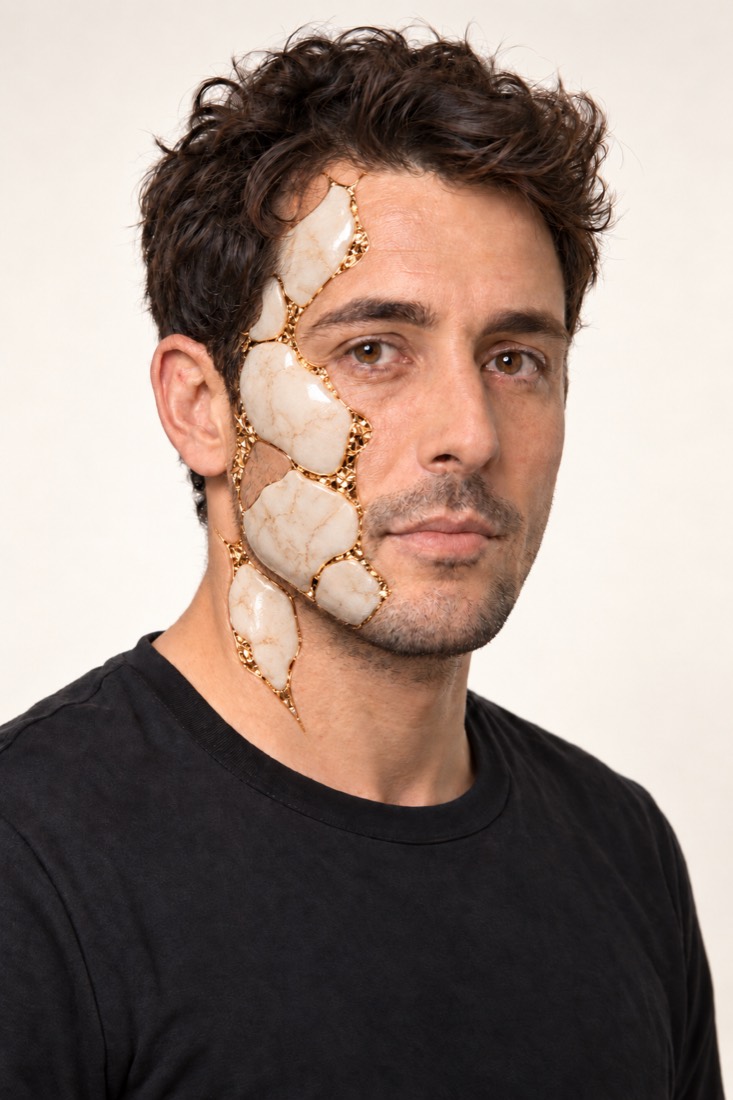
Inborn vice surgery is an operation that corrects the facial, skull, jaw, and skin disorders with which the child was born.
Modern children's reconstructive plastic surgery is aimed at the early and minimally traumatic removal of congenital defects in appearance. The main goal — not just to correct an anatomical defect, but also to ensure normal development of the child (speech, bite, vision), minimize psychological trauma and make scarring less noticeable.
Parents of newborn babies and children of all ages, as well as adults who did not have surgery in childhood or need correction.
The specific indications, method and expected result are determined individually by the doctor after consultation and necessary examinations.
02 / With PM, it's dead.
What defects are corrected.
Six most common mistakes.
01
Cleft lip and palate.
The indistinctness of the lips or the infestation (in the home, the hare's mouth and the mouth).
How it is treated
Lips are usually replaced in the first months of life, and palate up to a year old so that speech is not affected. An orthodontic plate (NAM) may be worn before surgery.
The skull sutures have grown prematurely, and the head is growing in the wrong shape.
How it is treated
In the first months, endoscopic surgery through small incisions with subsequent wearing of a helmet is possible; later — open reconstruction of the skull vault.
Pierre Roben's sequence: the jaw is small, the tongue is penetrating, the child is having difficulty breathing and eating.
How it is treated
If the body position and orthodontic plate do not help, the jaw is lengthened by distraction: bone is cut open and gradually diluted daily with an apparatus.
Key technologies that have changed the surgery of congenital defects in children.
01
Digital planning and 3D technology.
Complex facial and skull surgery is increasingly planned in advance in 3D.
3D Modelling and Virtual Surgery
Based on the child's CT data, an exact digital copy of her skeleton is created. The surgeon performs a "virtual operation" on a computer, calculating bone or tissue displacement.
Operations
Personalised plastic guidelines are printed on 3D-printers, which are applied to the bone during surgery and indicate where the cuts will be made and at what angles screws will need to be inserted.
Stereography models
A plastic model of the skull or jaw of a child is printed, on which surgeons pre-bend titanium plates before surgery.
02
Distractional osteogenesis.
Technology for facial bone underdevelopment syndromes (Pierre Robbin sequence, Crozon's syndrome, hemifacial microsomy).
Main methods
After surgery, the device is slowly moved around every day (about 1 mm per day). The child’s body grows new bone tissue and stretches soft tissue. This often enables the child to breathe and eat independently and avoid tracheostomy.
03
Minimally invasive and endoscopic techniques.
Endoscopy treatment of craniosinostosis
In the case of premature sutures in infants (up to 3-4 months), surgery is performed through small incisions (the number depends on which suture has grown) using an endoscope. The child recovers faster than after open surgery; a corrective helmet is worn for several months following it.
Microsurgery
Magnifying optics (loupe, in some cases surgical microscope) and thin suture material help to accurately align tissues, especially the lip muscle — this is important for lip function and less visible scarring.
04
Individual defects.
Split and deforestation
Lipoplasty is usually performed in the first months of life (often 3-6 months), which restores lip appearance and function early on, and facilitates family adaptation. From the very first weeks of childhood until surgery, a baby can wear an orthodontic plate (NAM) that gradually brings together the edges of the slit to form a nose wing.
Large congenital neuses
A silicone balloon (expander) is placed under healthy skin near the nevus and gradually filled with physiotherapy solution over a few weeks. The balloons are then removed, the mole cut out and the defect is closed by stretching up own skin similar in color and texture.
Micro and Anothy
The main material is the own rib cartilage. An alternative is porous polyethylene frame (Medpor): it can be installed without removing the cartilages, but there is a higher risk of exposing the framework. Which option is suitable, the doctor discusses with parents; in detail — in the direction "Growing an ear".
04 / Post-platform removed
Repeated operations in the crack.
Cleft lip and palate treatment takes years, with some children requiring repeated interventions. This is a predictable part of the long-term plan.
01
Tongue: velopharyngeal insufficiency.
What it is
The soft palate does not block the nasopharynx during speech: voice becomes humpy, air exits through the nose. After speech surgery normal resonance was achieved in 70.7% of patients (review of 83 studies, 4011 patients with various causes of insufficiency).
Choosing Operation
Pharyngeal valve and sphincter pharyngoplasty gave similar results in speech, complications and recurrence. Sleep apnea after pharyngeotomy was more commonly reported in one meta-analysis (2026, 531 patients), but another large review found no such difference. There is no single rule of choice — the decisions are made by the surgeon and the logopedist together.
The first plastic weighs too.
Furlow Z-plasty failed less often than straight-line intravelar veloplasty. For unilateral cleft lip and palate, failure rates were 11.1% versus 17.1%, a statistically significant difference; for isolated cleft palate, they were 9.7% versus 16.5% in a review of 12 studies.
02
The nose and lip are red.
Skyhole
The opening between the mouth and nose after palatal reduction is found in an average of 8.6% of children; with a combined cleft lip-palate, it occurs more often (17.9% vs. 5.4%). Nozzles through which air or food enters the nose or the tongue suffers are usually closed by repeated surgery.
Secondary lip deformations
Repeated lip surgery is performed on average by 21% of patients (review of 34 studies; in different studies — from 0 to 91%), most often for scar correction.
03
Bone plastic surgery is clear.
When and with what result
Bone is grafted into the alveolar cleft to close the defect and allow the teeth to erupt. The highest success rate is achieved at ages 8–12, before or shortly after eruption of the permanent canine: graft success was reported in 71–89% of cases. At follow-up of one year or longer, bone-graft success was 76.5%, and the canine erupted spontaneously in 81% of cases.
05 / HOW IT BRACKS
What happens during treatment.
Gold marks a new fabric.
01
Jaw Distraction.
The bone is cut and the appliance is placed. Every day, it is rotated about a millimeter – new bone gradually forms in the gap, and your jaw becomes longer.
02
NAM Plate
From the first weeks of life and until surgery (usually several months) a child wears a plate that gradually brings together the edges of the fissure and forms the wing of his nose – it is easier for the surgeon to restore the lip.
03
Expander for a nevus.
The balloon is filled under the healthy skin for weeks, stretching it. Then the mole is cut out and the stretched own skin is moved into its place.
The schemes are simplified and not scaled up.
06 / WHEN TO OPERATION
When to do surgery.
In the first months of Craniosynostosis
Endoscopy surgery is usually possible for up to three or four months; later, it is open.
Guba — In the First Months, Underwear — Up to a Year
In order to restore the lip early, the speech developed with less risk of disruption.
Scary — When It's Hard to Breathe
Disturbances are done early if other methods don't work.
Ear, neus, contours — as they grow
Treatment is staged according to the child’s age and growth.
07 / AFTER OPERATION
How the recovery is going.
Terms depend on operation and age; they are made up individually.
Hospital stay
Parents near the child; duration depends on operation.
Feeding
After surgery on the lip and under the sky, the special feeding regime is explained by the discharge.
Helmet and apparatus.
After endoscopy surgery, the helmet has been deployed for several months; the distributor has been on schedule.
A team for years to come.
Orthodontics, speech therapists, and checkups as they grow up are part of the treatment.
08 / INSTALMENT
How much does it cost.
The value depends on the lack, volume and number of phases; the surgeon calls it after examination.
09 / PACIENT SHOTS
From the first call.
Conversations and materials
You describe the request and, if you have it, you provide the results of the previous examination and treatment.
Consultation and evaluation
The doctor determines what situation we are in, what circumstances we need, what we need, and what his limitations are.
Reorganization
It discusses the next steps, the sequence of phases and the issues of reconstruction.
You don't live in Kiev or abroad?
Patients come from all over Ukraine and abroad.
10 / For Consultation
What is worth discussing?
01
How much baby does he eat and breathe?
02
Are there any other deficiencies or symptoms?
03
What tests have you done?
04
Has there been any surgery before?
11 / FOOD AND REPLIES
Frequently Asked Questions.
What's right for your baby, the doctor's gonna tell you about it.
When do they operate on the splinter lip?
Usually, in the first months of life, often between three and six months, underwear up to a year, depending on the child's condition.
Will the scar remain after the plastic lip?
Yes, but it is placed along the natural lines of the lip and becomes less noticeable over time. Some children may need a scar or nose correction later on – before school or in adolescence.
Why the helmet after skull surgery?
After endoscopic surgery, the helmet directs head growth to a correct shape for several months — without it the result is worse.
A child's illness?
As with any surgery, there are risks (infection, damage to the embryos or nerve) – your doctor will talk about them at a consultation and teach parents if you need to do it at home.
Can you remove the big neus at once?
Large neuses are removed in stages, often with extanders, to cover the area with their own skin.
12 / JERLA
Sources
15 sources of communication and researchShowTurn to Head
Protocols in the management of cleft lip and palate: A systematic reviewJournal of Stomatology, Oral and Maxillofacial Surgery, 2023doi:10.1016/j.jormas.2022.11.014 ↗
Does Presurgical Nasoalveolar Molding Reduce the Need for Future Bone Grafting in Cleft Lip and Palate Patients? A Systematic Review and Meta-AnalysisJournal of Craniofacial Surgery, 2022doi:10.1097/SCS.0000000000008616 ↗
Don't Delay: Sociodemographic Factors Impacting Timing of Cleft Lip RepairJournal of Craniofacial Surgery, 2025doi:10.1097/SCS.0000000000011448 ↗
Endoscopic strip craniectomy with molding helmet therapy versus spring-assisted cranioplasty for nonsyndromic single-suture sagittal craniosynostosis: a systematic reviewJournal of Neurosurgery: Pediatrics, 2022doi:10.3171/2022.7.PEDS2232 ↗
A Systematic Review of Mandibular Distraction Osteogenesis Versus Orthodontic Airway Plate for Airway Obstruction Treatment in Pierre Robin SequenceThe Cleft Palate-Craniofacial Journal, 2022doi:10.1177/10556656211011886 ↗
Pharyngeal Flap and Sphincter Pharyngoplasty for Velopharyngeal Insufficiency in Cleft Patients: A Systematic Review and Meta-AnalysisJournal of Craniofacial Surgery, 2026doi:10.1097/SCS.0000000000012460 ↗
Surgery for Velopharyngeal Dysfunction: A Systematic Review of Interventions and OutcomesThe Cleft Palate-Craniofacial Journal, 2018doi:10.1177/1055665617735102 ↗
A systematic review comparing Furlow double-opposing Z-plasty and straight-line intravelar veloplasty methods of cleft palate repairPlastic and Reconstructive Surgery, 2014doi:10.1097/PRS.0000000000000637 ↗
Fistula incidence after primary cleft palate repair: a systematic review of the literaturePlastic and Reconstructive Surgery, 2014doi:10.1097/PRS.0000000000000548 ↗
The rate of revision surgery for secondary deformities of the lip in cleft lip patients: A systematic reviewJournal of Plastic, Reconstructive & Aesthetic Surgery, 2025doi:10.1016/j.bjps.2025.06.016 ↗
Long-Term Stability of Alveolar Bone Graft in Cleft Lip and Palate Patients: Systematic Review and Meta-AnalysisJournal of Craniofacial Surgery, 2022doi:10.1097/SCS.0000000000008254 ↗
Timing of alveolar bone graft and sequences of canine eruption in cases of cleft lip and palate: a systematic reviewL'Orthodontie Française, 2017doi:10.1051/orthodfr/2017011 ↗
Systematic research and methods described on the page.
VALIKHNOVSKI SURGERY PARTNERS
Your case deserves attention.
Start consulting to see what questions and materials are needed for the evaluation.