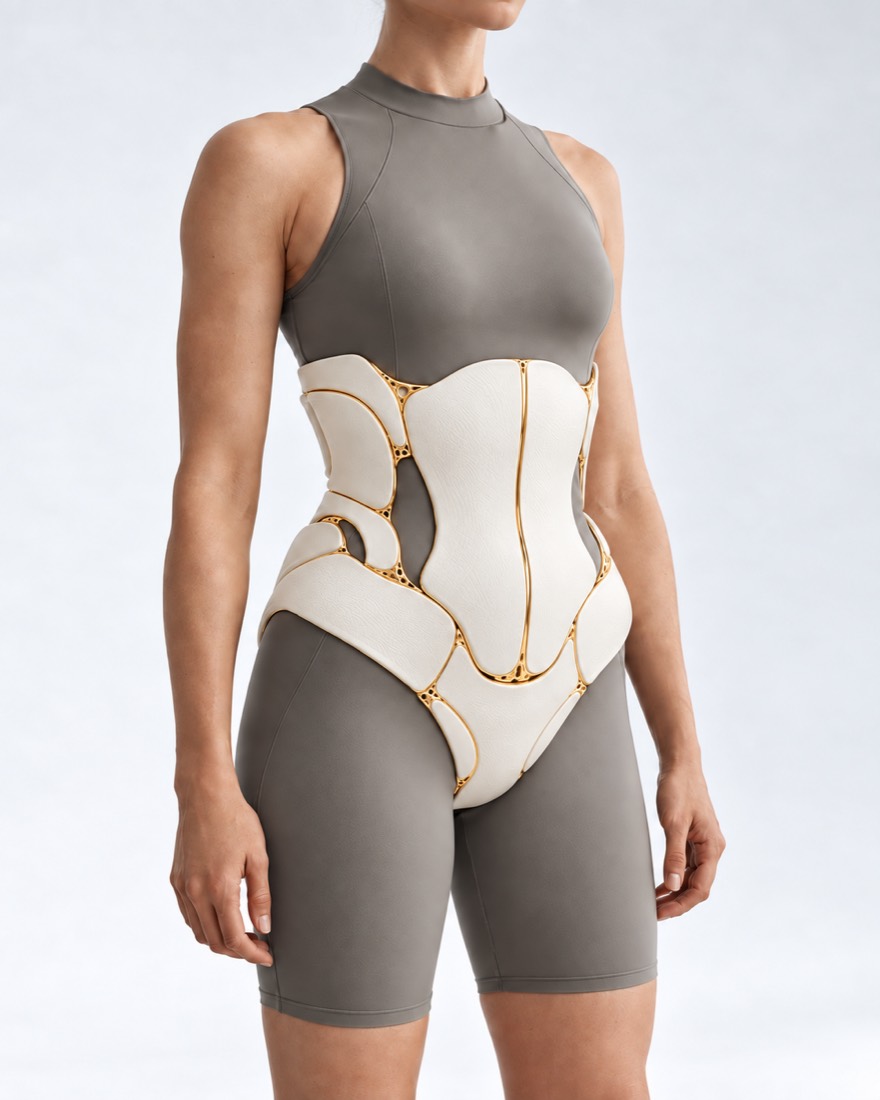
We restore the breast after mastectomy using the patient’s own tissue, implants or fat, immediately or later, and correct the effects of previous breast surgery.
Contact the surgeon who operated on you, if that's not possible, contact any surgeon.
103 Now, if:
Breathing, chest pain, bleeding;
After surgery, the chest is rapidly increased, pressured and painful;
High temperature with chills or confusion.
To the surgeon without delay if:
If the skin over the implant has become red or swollen, if you can see the implants through it and there is a leak from the wound; or one year after surgery or more later, one breast suddenly enlarges or a dense tissue appears – this late-onset fluid around the implantable device must be examined.
01 / WHAT IT IS
What is breast reconstruction.
Breast reconstruction is surgery to restore the shape, volume and symmetry of breasts after mastectomy or other procedures.
Modern reconstruction is based on an individual approach and minimal trauma of the donor areas. The goal — not only volume, but also softness, shape, symmetry, and if possible — partial restoration of sensitivity.
They are referred to before or after mastectomy, with a BRCA mutation, after organ-saving surgery and also with problems following previous breast plastic surgery.
The specific indications, method and expected result are determined individually by the doctor after consultation, examinations and agreement with the oncologist.
02 / With PM, it's dead.
When a renovation is needed.
Six situations that are most common.
01
Mastectomy ahead.
The infirmary needs to be removed because of the tumor.
How it is treated
Often breasts are restored immediately, during the same operation; a plan is drawn up together with an oncologist, depending on whether radiation will be used.
02
After mastectomy.
The treatment is complete, the chest is not deformed.
How it is treated
Deferred tissue reconstruction, implantation, and fat — when it was finished and healed.
03
BRCA mutation.
High detection risk of breast cancer.
How it is treated
Preventive mastectomy with single-minded reconstruction; the decision was made with genetics and onoculars.
04
After organ-preserving surgery.
West, asymmetrical, post-spray changes.
How it is treated
Lipofilling, local flaps and surgery on the opposite breast to improve symmetry.
05
Capsular contracture.
The breasts with the implant are frozen, deformed or painful.
How it is treated
The capsule is removed or dispersed, the implant is passed and, if necessary, moved to another pocket, see 04.
Burst, old or textured implants, dissatisfaction with shape.
How it is treated
Implants are replaced or removed with the capsule, if necessary restore volume with own fat. The FDA does not recommend removing textured implants without complaints — it is an individual decision.
03 / METHODS
How breasts are restored.
The methods are divided into three groups: their tissues, implants, and their own fat, and then nipples and peanuts.
01
Own tissues (autologous reconstruction)
Breasts made of the woman's own tissue are soft to the touch and change with her body as she loses or gains weight. Perforator flaps use skin and fat while preserving muscle at the donor site.
DIEP-clad
Skin and fat are taken from the lower abdomen, as during a tummy tuck, while straight muscles of the abdomina remain. The flap vessels are sutured under microscope to the chest vessel. In an examination of more than 23 thousand DIEP reconstructions, the flaps were implanted in 98.4% of cases.
PAP-clad
The tissues are taken from the posterior-inner surface of the thigh, scarring is done in the gluteal fold. Option when DIEP is not available or undesirable: a meta-analysis of 1612 reconstructions showed that the flap adhered in 99.6%, wound divergence on the hip — 8.7%.
Two flaps, or a flap combined with an implant
If the own fat is low and the breast was large, two flaps (e.g. DIEP and PAP) or a smaller flap with a tiny implant are combined.
Recovering Sensitivity
In an interim randomized trial (41 patients) after 2 years, the skin of such flaps felt better to touch and warmer than without nerve suture; there were no complications from this stage.
02
Implants and expanders
It works when there's a shortage or a long-term microsurgery operation that's not desirable.
Immediately implanted.
If the quality and quantity of skin allows, implantation is done immediately without expander stretching. In a meta-analysis of 21,529 patients in carefully selected cases, results and complications were comparable between one-stage and two-step reconstruction; another meta analysis found that single-phase had more removals, so it was the skin quality that decided.
Over muscle (preceptorial)
The implant is placed above the large pectoral muscle, under the skin. In meta-analyses pain on day one and seven was less, and breast deformation when tensioning the muscle occurred significantly less often than with submuscular placement.
Dermal matrices and grids
Biological matrices (ADM) or synthetic mesh materials (e.g. TIGR) serve as a “hammock” or shell for the implant. Recent meta-analyses have shown comparable results with and without ADM, so it is not used in all cases.
03
Own Fat
Fat grafting
After mastectomy, about 3-5 sessions are usually needed - more if the breast was irradiated; after organ-preserving surgery - 1-2. In a meta-analysis, there was no difference in the rate of local cancer recurrence with and without lipofilling.
04
Nipple and areola
The last step is a few months after the main surgery, when the breast form stabilizes.
Local tissue nipple
The nipple is formed from the skin of a new breast. Over time, it loses much of its height (45-75% in an overview), so it is shaped with a quarter to half margin.
tattoos of the tattoo
Complications are rare (in the review — 1.6%), but the color fades over time, so tattoos are often renewed. Artistic medical tattoo creates an area with a volume effect.
04 / FULL OPERATIONS
If something is wrong with the implant.
Implants are not eternal: in post-marketing FDA studies (99,939 patients) 11.7% of women had surgery repeated after breast augmentation and 25% after reconstruction over a period of seven years.
01
Capsular contracture.
What it is and how often
A capsule forms around any implant; when it becomes denser, the breast hardens and deforms. 7.2% of women after breast augmentation had severe contracture over a period of seven years and 12.7% after reconstruction; for breast enlargement this is the most common reason for repeated surgery.
How it is treated
After breast augmentation, implant replacement and transfer to another pocket is associated with less recurrence; data on capsulectomy itself are less conclusive and there are no controlled studies. In a meta-analysis after radiation, contracture occurred about five times more often in implant reconstruction than in the post-irradiation period.
02
BIA-ALCL
What it is
A rare lymphoma associated with breast implants; almost all cases described are textured. Most often manifests itself as fluid around the implant (in 66%) on average after 10 years of surgery. Diagnosis is made by ultrasound and fluid analysis; treatment necessarily includes removal of the implantable tissue together with the capsule, or in widespread processes — also chemotherapy or radiation therapy.
05 / HOW IT BRACKS
What happens during reconstruction.
The gold marks the fabric or material that restores the breast.
01
DIEP-care
The tissue from the abdomen is carried to the chest and sews vessels with chest vessels; the muscles of the abdomen remain.
02
Under the muscle and above the muscular.
Under the muscle, the implant is covered by muscle; above the muscular layer only skin and subcutaneous tissue are present.
03
Lipofilling
Fats are cleaned and introduced into small portions; part of it is dissolved, so usually several sessions.
The schemes are simplified and not scaled up.
06 / WHEN TO OPERATION
When to recover.
Absolutely.
During mastectomy, if the oncological plan permits: it is possible to preserve her own breast skin and she wakes up with breasts.
Postponed
After the end of treatment, when tissues have recovered. If irradiation is ahead, terms and method are chosen together with an oncologist.
Prevention
In BRCA mutation: in a meta-analysis of prospective studies, breast cancer occurred 93% less often after bilateral prophylactic mastectomy; whether it extends life is yet to be proven.
Revision
The contract, breakage or dissatisfaction with the form is sent out on schedule after the examination.
07 / AFTER OPERATION
How the recovery is going.
The term depends on the method; the plan is individual.
Hospital stay
After flap reconstruction, blood flow through the flap is monitored closely for the first few days; discharge is usually earlier after implant-based reconstruction.
Lingerie and movements.
A few weeks — compressive or supportive underwear — limit the load on the arms and stomach.
Stages
Symmetry of the second breast, lipophing, and nipples, a few months after the shape stabilizes.
Follow-up
The oncologist continues to guide you, implants need regular monitoring, including an ultrasound or an MRI.
08 / INSTALMENT
How much does it cost.
The cost depends on the method, number of stages, implants or matrices and days in hospital; the surgeon will name it after examination.
09 / PACIENT SHOTS
From the first call.
Conversations and materials
You describe the request and, if you have it, you provide the results of the previous examination and treatment.
Consultation and evaluation
The doctor explains the clinical situation, the oncology plan, the desire for methods, and possible limitations.
Reorganization
The team is discussing the method, the sequence of phases and the recovery with the Onkol.
You don't live in Kiev or abroad?
Patients come from all over Ukraine and abroad.
10 / For Consultation
What is worth discussing?
01
Will it be late and when?
02
My own tissue or implant — what is appropriate for me?
03
How many steps are there?
04
What kind of implants are standing now, and when were they put on?
11 / FOOD AND REPLIES
Frequently Asked Questions.
The short answers are that what suits you is what the doctor will tell you.
Can breasts be recovered immediately during mastectomy?
The decision is made together with the oncologist, depending on whether there will be radiation: after it contracture occurs about 5 times more often in implants.
Your own tissue or implant?
Depends on the body, cancer plan and wishes. Own tissue changes with the Body but surgery is longer and leaves a scar in the donor area. Implantation — shorter operation but implants are not eternal: 25% of patients have had re-operation within 7 years after reconstruction.
Is Lipofiling safe after breast cancer?
According to a study of 9 cases (4,247 patients), the frequency of local reoffending with and without lipofieldon was not different.
Will Breast Sensitivity Return?
In an interim randomized trial, 2 years later DIEP-flaps with a sutured nerve felt touch and heat better than without the nerves.
What is BIA-ALCL, and should I worry?
This is a rare lymphoma, almost always associated with textured implants. Most often it manifests itself as fluid around the implant years after surgery; such change is examined by ultrasound. Treatment necessarily includes removal of the implantable capsule; in widespread processes chemotherapy or radiation therapy are added.
12 / JERLA
Sources
20 sources of assessments, meta-analysis and researchShowTurn to Head
Alternatives to the Gold Standard: A Systematic Review of Profunda Artery Perforator and Lumbar Artery Perforator Flaps for Breast ReconstructionAnnals of Plastic Surgery, 2024doi:10.1097/SAP.0000000000003916 ↗
Clinical Outcomes Following Profunda Artery Perforator Flap Breast Reconstruction: A Systematic Review and Meta-AnalysisAesthetic Plastic Surgery, 2025doi:10.1007/s00266-024-04441-z ↗
The efficacy of sensory nerve coaptation in DIEP flap breast reconstruction - Preliminary results of a double-blind randomized controlled trialThe Breast, 2024doi:10.1016/j.breast.2024.103691 ↗
Quality of life, pain of prepectoral and subpectoral implant-based breast reconstruction with a discussion on cost: A systematic review and meta-analysisJournal of Plastic, Reconstructive & Aesthetic Surgery, 2022doi:10.1016/j.bjps.2022.02.019 ↗
Prepectoral Versus Subpectoral Implant-Based Breast Reconstruction: A Systemic Review and Meta-analysisAnnals of Surgical Oncology, 2023doi:10.1245/s10434-022-12567-0 ↗
Review: Implant-Based Breast Reconstruction After Mastectomy for Breast Cancer: A Meta-analysis of Randomized Controlled Trials and Prospective Studies Comparing Use of Acellular Dermal Matrix (ADM) Versus Without ADMAnnals of Surgical Oncology, 2024doi:10.1245/s10434-024-14943-4 ↗
Less is more? One-stage versus two-stage implant-based breast reconstruction: A systematic review and meta-analysis of comparative studiesJournal of Plastic, Reconstructive & Aesthetic Surgery, 2023doi:10.1016/j.bjps.2023.08.021 ↗
Oncologic safety of breast reconstruction with autologous fat grafting: A systematic review and meta-analysisEuropean Journal of Surgical Oncology, 2022doi:10.1016/j.ejso.2021.12.017 ↗
Efficacy of breast reconstruction with fat grafting: A systematic review and meta-analysisJournal of Plastic, Reconstructive & Aesthetic Surgery, 2018doi:10.1016/j.bjps.2018.08.024 ↗
The role of postmastectomy radiation therapy in patients with immediate prosthetic breast reconstruction: A meta-analysisMedicine, 2018doi:10.1097/MD.0000000000009548 ↗
Bilateral risk-reduction mastectomy in BRCA1 and BRCA2 mutation carriers: a meta-analysisAnnals of Surgical Oncology, 2015doi:10.1245/s10434-015-4532-1 ↗
Nipple-areola complex reconstruction techniques: A literature reviewEuropean Journal of Surgical Oncology, 2016doi:10.1016/j.ejso.2016.01.003 ↗
US FDA Breast Implant Postapproval Studies: Long-term Outcomes in 99,993 PatientsAnnals of Surgery, 2019doi:10.1097/SLA.0000000000002990 ↗
Revisiting the Management of Capsular Contracture in Breast Augmentation: A Systematic ReviewPlastic and Reconstructive Surgery, 2016doi:10.1097/01.prs.0000480095.23356.ae ↗
A Systematic Review and Head-to-Head Meta-Analysis of Outcomes following Direct-to-Implant versus Conventional Two-Stage Implant ReconstructionPlastic and Reconstructive Surgery, 2015doi:10.1097/PRS.0000000000001749 ↗
Society of Surgical Oncology Breast Disease Site Working Group Statement on Bilateral Risk-Reducing Mastectomy: Indications, Outcomes, and RisksAnnals of Surgical Oncology, 2025doi:10.1245/s10434-024-16484-2 ↗
BIA-ALCL and Textured Breast Implants: A Systematic Review of Evidence Supporting Surgical Risk Management StrategiesPlastic and Reconstructive Surgery, 2021doi:10.1097/PRS.0000000000008040 ↗
3D Nipple-Areolar Tattoo: It's Technique, Outcomes, and UtilizationAesthetic Plastic Surgery, 2021doi:10.1007/s00266-020-01967-w ↗
Three-dimensional Volume Changes of the Reconstructed Breast Following DIEP Flap Breast ReconstructionJournal of Reconstructive Microsurgery, 2023doi:10.1055/a-1947-8116 ↗
Systematic research, meta-analyses, randomized research and FDA post-regulating data on methods on the page.
VALIKHNOVSKI SURGERY PARTNERS
Your case deserves attention.
Start consulting to see what questions and materials are needed for the evaluation.