The skin
Superficial defects - when the tumor has not affected the cartilage.
 Discuss your case
Nasal defect after tumor removal — a wound or loss of part of the nose after surgery for skin cancer. Small defects are sutured or closed with a local flap, large ones with a frontal flap, restoring both the skin and the frame.
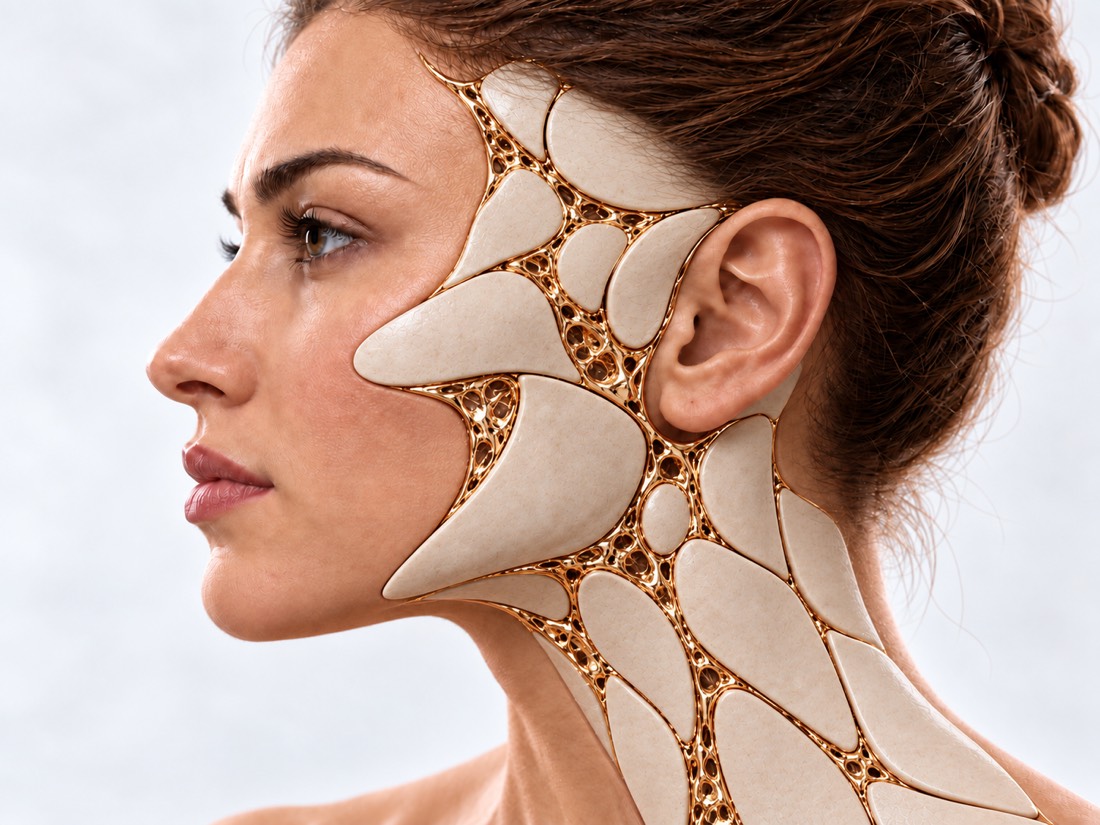 CONCEPTUAL VISUALIZATION
The nose is one of the most common sites of facial skin cancer, especially basal cell carcinoma. After the removal of the tumor with a reserve of healthy tissue, a wound of various sizes and depths remains: from a small area of skin to the loss of part of a wing, tip or back along with cartilage.
The reconstruction should restore both appearance and function of the nose: so that the skin is suitable in color and thickness, and the nostrils do not narrow and do not collapse during inhalation.
Surgeons divide the nose into aesthetic sections — the back, side walls, tip, and wings. The choice of method depends on which area is affected and how deeply.
This is general information. The doctor will tell you which method is right for you after the examination.
Defects vary in size, depth and location. In the series of 419 patients, the back and side walls were most often restored (66.35%).
Superficial defects - when the tumor has not affected the cartilage.
An area with thicker, dense skin, where it is important not to distort the shape.
Here it is important that the nostrils do not collapse during inhalation.
Loss of skin, cartilage, and inner lining requires restoration of all three layers.
Scars and asymmetry after previous reconstruction.
Repeated operations on the noseMost nose reconstructions are performed after removal of skin cancer, in particular, Moss surgery — layer-by-layer removal with control of the edges under a microscope.
The most common tumor of the skin of the nose.
Basal cell carcinoma of the faceSquamous cell cancer, melanoma, sometimes tumors hiding under rhinophyma.
RhinophymaRemoving skin changes before they become cancerous also leaves a wound.
Precancerous skin changesReconstruction is usually planned in advance — together with or after tumor removal. Urgency is needed if the wound does not heal well after the operation.
The wound after removal of the tumor or reconstruction has become red, swollen, pus has appeared, the temperature has changed or the flap has changed color. If the wound has healed, but you are concerned about the shape of the nose or breathing, make an appointment for a scheduled consultation.
Reconstruction is done when the edges of the removed tumor are clean.
The size, depth, area of the nose, whether the cartilage and inner lining are affected.
Where to get skin and cartilage: cheek, forehead, ear, rib.
Is one operation enough, or are two or three stages necessary?
The evidence base here is mainly from cohort series, so the choice of method is based on the experience of the surgeons and the location of the defect.
Defects of the nose after the removal of tumors at Dr. Valikhnovsky's Institute of Surgery are restored in the "New Nose" direction - from reconstruction of the wings, tip or back to three-layer reconstruction for large defects.
Plastic surgeon, candidate of medical sciences, founder of Dr. Valikhnovsky Institute of Surgery.
Short answers. What is right for you, the doctor will tell you during the consultation.
When the edges of the removed tumor are clear histologically. Sometimes the reconstruction is done immediately, sometimes in a separate stage.
Yes, a vertical scar remains on the forehead; it usually becomes less noticeable over time. The skin of the forehead matches the nose well in terms of color and thickness.
Small defects - one operation. Frontal flap — at least two stages: transfer and cutting off the pedicle; sometimes additional corrections are required.
In a study of 144 reconstructions, local and frontal flaps were more likely to receive a good appearance rating than skin grafts. But the choice depends on the location and size of the defect.
Yes, a three-layer reconstruction: inner lining, cartilage framework and skin. These are several stages.
Yes: bleeding, infection, separation or necrosis of wound edges, rough scars. Their risk is reduced by careful technique and post-operative control.
The figures on the page are from these sources.
Send a photo of the defect and a histology report. The doctor will tell you how to restore the nose and how many stages will be needed.