Part of the lip is missing
A notch or step on the lip is visible, the lip is shorter on one side.
 Discuss your case
Lip defects are the loss of part of the lip after an injury, bite, or tumor removal, and deformities are scars, asymmetry, or a narrowed mouth that remain after healing. The lip is restored with an operation - reconstructive cheiloplasty.
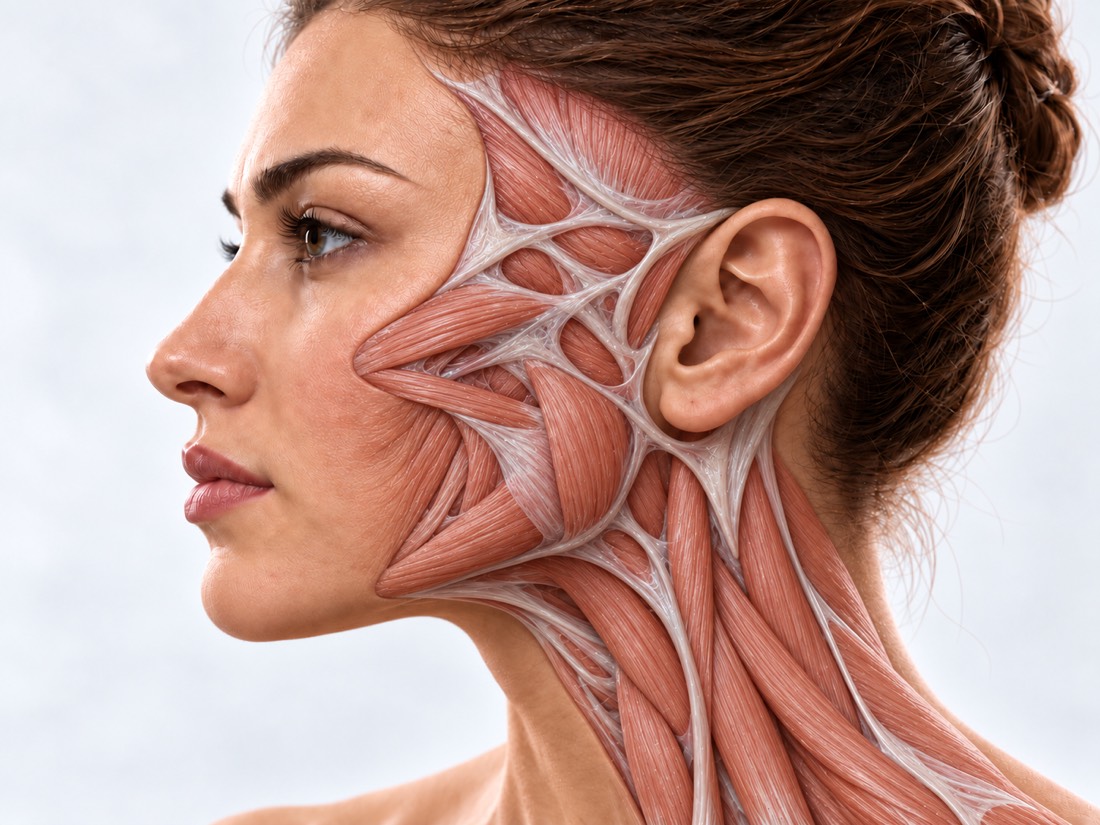 CONCEPTUAL VISUALIZATION
The lip consists of three layers: skin, muscle and mucous membrane. It is needed to speak, eat and drink, feel touch, and it is very visible on the face. Therefore, even a small defect is noticeable and can interfere.
A defect is when part of the lip is missing: it was removed with a tumor or lost due to an injury or bite. Deformation — when there is enough tissue, but the lip has healed incorrectly: the scar tightens it, the border of the red border has shifted, the mouth has become smaller.
The goal of restoration is that the mouth closes securely and food and saliva do not flow in, the lip feels and moves, and the visible lines - the border of the lip and skin, the corners of the mouth - are in their place.
This page is dedicated to lip repair for any reason. About the tumor itself - on the page "Cancer of the lips".
This is general information. The doctor will tell you what will suit you after the examination.
Some are bothered by the appearance, others by the fact that the mouth does not close well or the lip does not feel. Often, both.
A notch or step on the lip is visible, the lip is shorter on one side.
The lip is pulled up or down, everted, a thick or retracted scar is visible on it.
Scars after facial injuriesThe border between the red border and the skin does not coincide - the step is visible even from a distance.
Food, liquid or saliva flows, it is more difficult to pronounce individual sounds.
It is difficult to open your mouth wide, eat or brush your teeth.
MicrostomePart of the lip does not feel touch, heat or cold.
The reason depends on when and how the lip is restored: after an injury — after healing, after a tumor — often in the same operation.
The most common acquired cause. About 25% of oral cavity cancers affect the lips, and they are treated primarily by removal.
Lip cancerWhen a dog bites the face, the lips, cheeks and nose are most often affected. After a human bite, in addition to treating the wound, tests for hepatitis B and C and HIV can be offered.
Animal bites on the faceFalls, blows, road accidents. It is most difficult to treat wounds that affect the border of the red border or more than a quarter of the lip.
The wound has spread, healed with a rough scar or without exact alignment of the edges.
A long-standing defect or scar on the lip is a planned situation, it does not need urgent help. A fresh wound is another matter: the lip is stitched exactly along the border, so the wound should be shown to the doctor on the same day.
On the same day: any lip bite that breaks the skin - animal or human: wound dressing and vaccination decisions are required. On the same day - and if the wound dissects the border of the red border, the wound is hot, swollen, oozes fluid or smells unpleasant, has a fever or is freezing. In the coming weeks: an ulcer on the lip that does not heal for more than 3 weeks, a lump on the lip or neck - see a doctor: these signs often have other causes, but it is worth checking. Planned: old defects, scars, asymmetry, narrowed mouth.
What happened and when, what operations have already taken place; after the tumor - histology conclusion.
The surgeon assesses how much of the lip is lost, what layers are affected—skin, muscle, mucosa—and whether there is enough nearby tissue.
Does the mouth close, how does the lip move and feel how wide the mouth opens.
The method is selected according to the size and location of the defect, the condition of the tissues, the patient's age and wishes.
There is no universal method: there are few qualitative comparative studies, so the surgeon chooses the method based on the size, location and depth of the defect. The less tissue is lost, the easier the operation.
Up to a third of the lip.
From one third to two thirds of the lip.
After healing.
Defects and deformations of the lips are treated at the Institute of Surgery of Dr. Valikhnovskyi in the "New Face" direction. If the defect remains after the removal of the cancer, the tumor is treated by an oncologist, and the clinic is responsible for removing and restoring the lip.
Plastic surgeon, candidate of medical sciences, founder of Dr. Valikhnovskyi Institute of Surgery.
Short answers. What is right for you, the doctor will tell you during the consultation.
Yes. If the torn part is preserved, it is taken with them to the hospital. If not, the lip is restored with own tissues - from the other lip, cheek or other parts of the body.
Usually after the scar matures, when it becomes paler and softer. Earlier - if the scar tightens the lip and prevents opening the mouth.
Often yes, if the cut edges are clean. If histology is required, the lip is restored after it.
In a study of 615 patients, the rate of complications did not differ in people older than 75 years, smokers, and those taking blood-thinning medications. What is right for you, the doctor will decide after the examination.
Maybe, especially if most of the lip is restored with local tissues. In a study of 102 patients after a circular flap, the mouth narrowed in 15.7%. The narrowing of the mouth is treated separately - about it on the "Microstoma" page.
Numbness is one of the most frequent complications after local flaps. How much sensitivity is retained depends on the size of the defect and the method.
If the ulcer does not heal for more than 3 weeks, see a doctor. Such signs often have other causes, but it is worth checking.
The figures on the page are from these sources.
Send a photo of your face with your mouth closed and open. The doctor will tell you how to restore the lip.
Leave your contact details and briefly describe the situation. A coordinator will contact you to agree on the next step.