CONDITION / CARRY

Crooked nose after an injury.

A post-traumatic crooked nose is a deformity left when a broken nose is not treated or the bones and septum have not fused properly. It is corrected by planned septorhinoplasty, restoring both shape and breathing.

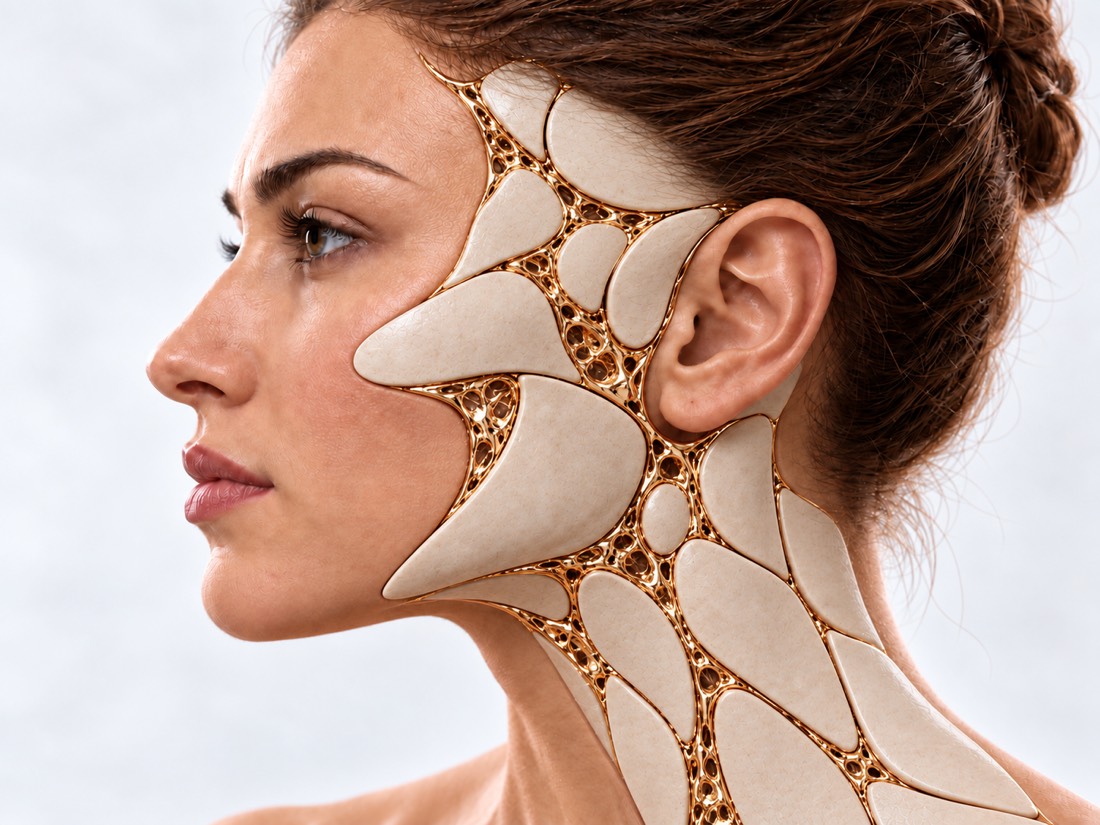
Conceptual visualization: reconstruction of the noseCONCEPTUAL VISUALIZATION
what is it
Changes in the shape and breathing of the nose after trauma, when the fracture did not fuse properly.
Most often
Crooked nose and saddle nose are two of the most common post-traumatic deformities.
When to fix
Planned — usually 3 months or later after the injury.
Who treats
A surgeon who performs functional and reconstructive operations on the nose.

What is
deformation after injury.

Fracture of the nasal bones is the most common fracture of the face, and together with the bones, the cartilage and septum are often affected. If the fractures were not treated or treated incompletely, the nose grows crooked.

The most common consequences are a crooked nose, when the back bends to the side, and a saddle nose, when the back collapses. Both options can disturb the appearance and breathing.

The following changes are corrected in a planned way: the bones, cartilage and septum are aligned in one operation - septorhinoplasty.

This is general information. The doctor will tell you what will suit you after the examination.

How is
deformation manifested.

Changes are visible from the outside, but often more important are those inside: a septum after a fracture makes it difficult to breathe.

01

The nose deviated to the side

The back or tip is offset from the midline of the face.

02

sunset

The back collapses — the nose becomes saddle-shaped.

Saddle nose
03

Humpback

A hump or a step appeared at the point of fusion of the bones.

Why does the nose
grow crooked.

The decision to correct often depends on how the recent injury was treated.

Fracture without treatment

Untreated nasal fractures often lead to functional and aesthetic problems.

Fresh broken nose

Broken partition

An undetected septal fracture may be one of the reasons why closed reduction fails.

Hematoma

A hematoma of the septum that is not opened in time can destroy the cartilage, and then the back collapses.

age

Corrective septorhinoplasty after a fracture is more likely to be performed at a young age: in a cohort of 78,474 patients, the highest chance was at the age of 18–34.

When to seek medical advice?

If the injury is long-standing, the deformity does not require emergency care. If the blow was recent, do not wait: it is better to exercise a fresh fracture in the first 2 weeks.

103 immediately if:

  • bleeding does not stop after 15 minutes of pressing;
  • after a fresh injury — loss of consciousness, severe headache, vomiting or double vision;
  • after a fresh injury, a clear liquid flows from the nose.

To the doctor on the same day, if:

After a fresh injury, the nose is very stuffy with pain and swelling inside, or a fever has appeared. If the injury is old and you are worried about your form or breathing, make an appointment for a scheduled consultation.

How to determine
what to fix.

  1. Conversation and photo

    When was the injury, how was it treated, a photo of the nose before it, if any.

  2. Examination and endoscopy

    Evaluation of the bones, cartilage, septum and valves of the nose.

  3. Photo in standard angles

    For planning and comparison.

  4. CT scan if necessary

    If you need to evaluate bones, sinuses or cartilage stock.

How to fix a
crooked nose.

The authors of the 2023 review believe that delayed treatment (more than 3 months) with open access has advantages over early closed management: fewer reoperations, more reliable fixation, and the ability to correct complex deformities.

01

Septorhinoplasty

The form and septum are restored in one operation.

Osteotomy
Improperly fused bones are dissected and rearranged; after trauma, it is performed more often than during septorhinoplasty without trauma (85.3% vs. 61.0%).
Cartilage grafts
Spacer strips of cartilage align and strengthen the middle part of the nose; after the injury, they were used more often (41.1% vs. 21.1%).
Partition
The curved partition is leveled, and if it is destroyed, it is restored. In a study of 25 patients with combined crooked and sunken noses, one in five had to have a septum repaired.
02

The result

Breathing and appearance
In a series of 76 patients after septorhinoplasty, breathing improved in all, 75% were very satisfied with the appearance, one was dissatisfied.
Combined deformations
If the nose is both crooked and inflamed, in a study of 25 patients, complete correction was achieved in 76%.

How do we
treat it.

Deformation of the nose after trauma is corrected at Dr. Valikhnovsky's Institute of Surgery in the direction of "New Nose" - along with nose reconstruction after unsuccessful operations and removal of tumors.

DIRECTION TO THE CLINIC A new nose Shape, support and breathing of the nose: septum, concha, sinuses, consequences of injuries, failed operations and removal of tumors. Go to direction

What do we do in this condition

  • Osteotomy — bones that have not fused correctly are dissected and rearranged.
  • Septorhinoplasty — restoration of both the shape of the nose and the septum in one operation.
  • Cartilage grafts — the patient's own cartilage from the septum, ears or ribs to support the back.
  • Post-traumatic septoplasty — alignment of the septum displaced by the injury.
  • Piezo instruments — for delicate modeling of the bony part of the back.

Rostislav Valikhnovsky

Plastic surgeon, candidate of medical sciences, founder of Dr. Valikhnovsky Institute of Surgery.

Publications by topic

  • "Peculiarities of surgical tactics in reconstructing the dorsum of the nose" — Clinical anatomy and operative surgery, 2025 (DOI).
  • Article on the principles of diagnosis and treatment in reconstructive surgery of acquired nasal defects — Clinical Surgery, 2009 (PubMed).

How is the treatment in us

  1. Photo onlineSend a photo of the nose now and before the injury - the doctor will assess the situation in advance.
  2. ConsultationExamination, endoscopy, photo; if necessary — CT.
  3. PlanWhat to level and what to strengthen; is cartilage needed outside the nose.
  4. OperationSeptorhinoplasty with alignment of bones and septum.
  5. RecoveryThe first weeks — tire and swelling; the final form is formed gradually, in about a year.

Frequently asked
questions.

Short answers. What is right for you, the doctor will tell you during the consultation.

When can the nose be corrected after an injury?

If more than 2 weeks have passed and the bones have fused, it is planned, usually after 3 months or later. It is better to exercise a fresh fracture in the first 2 weeks.

Will breathing improve after surgery?

Usually yes: the septum is leveled during the same operation. In a series of 76 patients, breathing improved in all.

How does septorhinoplasty differ from rhinoplasty?

Septorhinoplasty corrects both the shape of the nose and the septum inside. After an injury, it is often required together.

Is it possible to fix the nose if the injury happened a long time ago?

Yes. Old deformations are corrected in the same way; sometimes additional cartilage is needed for support.

Why is a more complex operation more often required after an injury?

Because the bones, cartilage, and septum are damaged. In a study of 227 patients, post-traumatic osteotomies, spacer grafts, and septal correction were more common than non-traumatic septorhinoplasty.

Will repeat operations be necessary?

This is possible. In a series of 76 patients after septorhinoplasty, noticeable residual curvature remained in three, reoperation was required in one. The authors of one of the reviews believe that delayed open surgery results in fewer reinterventions than early closed reduction.

Sources

12 sources · reviews, guidelines and studies
ShowCollapse
  1. The Management of Posttraumatic Nasal DeformitiesFacial Plastic Surgery, 2023doi:10.1055/a-2152-8670 ↗
  2. Nasal Fractures: Acute, Subacute, and Delayed ManagementOtolaryngologic Clinics of North America, 2023doi:10.1016/j.otc.2023.05.004 ↗
  3. Nasal Fractures: The Role of Primary Reduction and Secondary RevisionFacial Plastic Surgery, 2019doi:10.1055/s-0039-1700801 ↗
  4. An Algorithm for the Initial Management of Nasal TraumaFacial Plastic Surgery, 2015doi:10.1055/s-0035-1555618 ↗
  5. Risk Factors for Corrective Septorhinoplasty Associated With Initial Treatment of Isolated Nasal FractureJAMA Facial Plastic Surgery, 2018doi:10.1001/jamafacial.2018.0336 ↗
  6. Septal fractures predict poor outcomes after closed nasal reduction: Retrospective review and surveyLaryngoscope, 2019doi:10.1002/lary.27781 ↗
  7. Unmasking Nasal Septal Hematoma/Abscess: A Systematic Review and Meta-analysisOTO Open, 2024doi:10.1002/oto2.174 ↗
  8. Comparison Of Surgical Techniques Used In Post-Traumatic And Non-Traumatic RhinoseptoplastyOtolaryngologia Polska, 2024pubmed.ncbi.nlm.nih.gov/39648703 ↗
  9. The Crooked Nose — Surgical Algorithm in Post-Traumatic Patient — Evaluation of Surgical SequenceJournal of Clinical Medicine, 2024doi:10.3390/jcm14010087 ↗
  10. Management of post-traumatic combined deviated and saddle nose deformityActa Oto-Laryngologica, 2012doi:10.3109/00016489.2012.659757 ↗
  11. Deviated Nose: A Systematic Approach for CorrectionPlastic and Reconstructive Surgery Global Open, 2020doi:10.1097/GOX.0000000000003078 ↗
  12. Features of surgical tactics in the reconstruction of the nasal dorsum (Features of surgical tactics in the reconstruction of the nasal dorsum)Clinical Anatomy and Operative Surgery, 2025doi:10.24061/1727-0847.24.3.2025.38 ↗

The figures on the page are from these sources.

VALIKHNOVSKI SURGERY PARTNERS

The nose changed
after the impact?

Send a photo of the nose now and before the injury. The doctor will tell you what can be fixed and when.

to call Send an appeal