CONDITION / TORSO AND ABDOMEN

Unevenness and deformities after liposuction.

Irregularities after liposuction — bumps, depressions, waviness, asymmetry or sagging skin remaining when the swelling has already subsided. This is a planned situation: it is corrected with repeat liposuction, fat grafting, or other methods. Rare early complications — clot or fat in lung vessels, bowel injury — require urgent care.

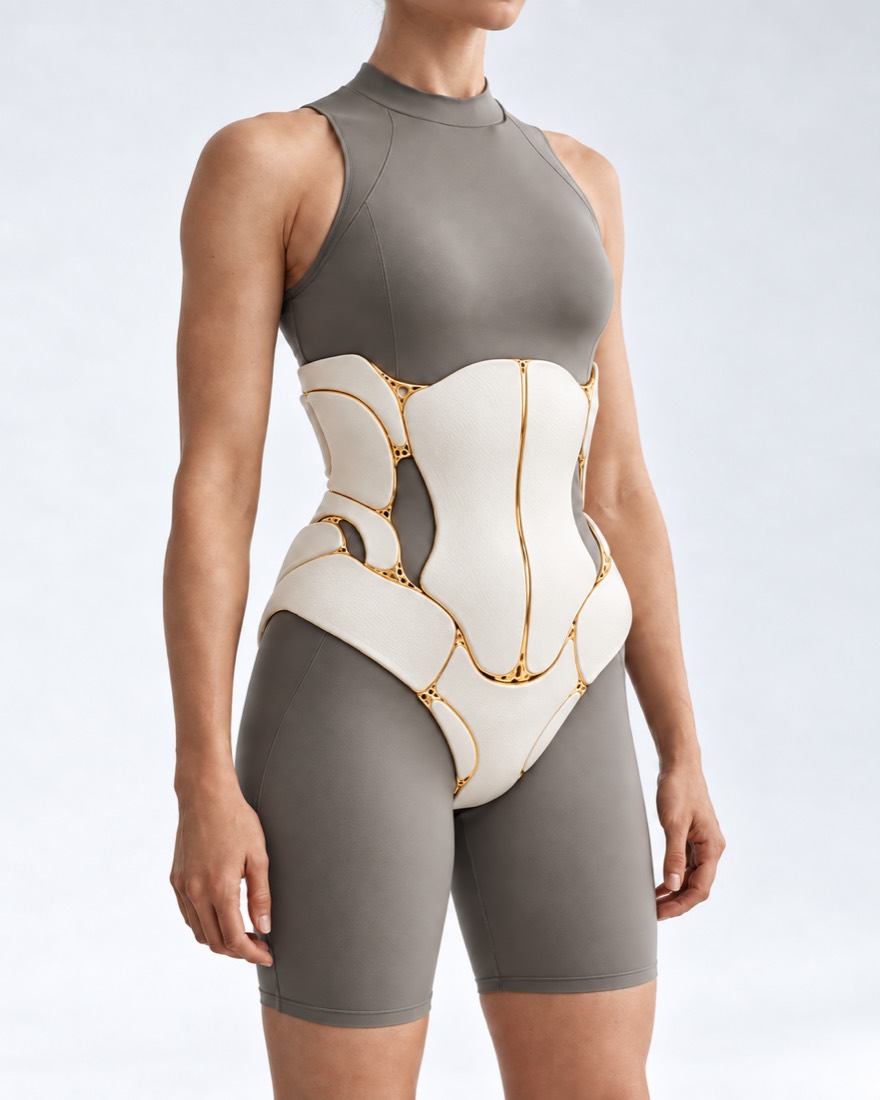
Conceptual visualization: torso and abdominal contourCONCEPTUAL VISUALIZATION
What it is
Bumps, depressions, waviness, asymmetry, or sagging skin that do not disappear after the swelling subsides.
How common
In a meta-analysis of 39 studies (29,368 patients), contour deformation occurred in 2.35% — most often among complications.
When to evaluate
According to the NHS, the area finally settles by 6 months; it is difficult to judge the result earlier.
The most dangerous
Rare early complications: blood clot or fat in the lung vessels, bowel injury. They are treated urgently in the hospital.

What is
Deformations after liposuction.

Liposuction is a surgery in which fat from the abdomen, thighs, buttocks, or other areas is suctioned through a thin tube via small incisions. According to the NHS, it gives better results in people without excess weight and in areas where the skin is firm. Liposuction does not treat obesity and does not remove cellulite or stretch marks.

In the first months after surgery, the area is swollen and may be numb, so the result is not immediately visible. According to the NHS, bruising and swelling can last up to 6 months, numbness usually goes away in 6–8 weeks, and it takes up to 6 months for the area to fully settle.

Deformation is what remains when the swelling goes down: bumps, depressions, wavy surfaces, differences between the two sides, sagging or indented skin. In a systematic review of 39 studies, contour deformation was the most common complication of liposuction — 2.35%; in another meta-analysis of 60 studies, 2% of patients had contour irregularities.

Separately, there are rare early complications that are life-threatening: blood clots in the lungs, fat embolism (drops of fat enter the bloodstream and block small vessels in the lungs and brain), injury to the bowel or other organs. They are treated urgently in a hospital.

This is general information. The doctor will tell you what will suit you after the examination.

What can
go wrong

Most changes are not visible or palpable immediately, but appear weeks or months later, when the swelling subsides.

01

Bumps and depressions

Areas where too much fat remains alternate with areas where too much has been removed. The surface becomes bumpy or wavy.

02

Asymmetry

One side of the abdomen, thigh, or buttock noticeably differs from the other in volume or shape.

03

Sagging skin

After fat removal, the skin has not tightened and hangs or forms wrinkles.

05

Firmness and seroma

Hard areas (fibrosis) can be felt under the skin, or fluid accumulates, causing swelling in the area. In a meta-analysis of 60 studies, 2% of patients developed a seroma.

Difference of seams
06

The skin

Change in skin color, less commonly — necrosis of a skin area: according to a meta-analysis of 39 studies, 0.046%.

Skin necrosis after surgery

Why do they arise?
Irregularities.

Some causes are related to the surgical technique, some — to the skin and the person's own health.

Too much or unevenly

The authors of a series of 57 corrections associate excessive fat removal, bumpy skin, and asymmetry with insufficient surgeon experience.

Attachment zones

There are five zones on the torso where the skin is tightly attached to deeper tissues. According to MRI anatomical research, these zones are recommended to be avoided during liposuction to prevent deformities.

The skin

If the skin does not contract well, it sags after fat removal. According to the NHS, liposuction gives a better result where the skin is firm.

Several operations at once

In a cohort of 31,010 liposuctions, combining with other operations increased the relative risk of serious complications by 4.81 times; the risk also increased with age and body mass index.

Scar changes

After healing, lumps and scar bands may form under the skin: in a cohort of 417 patients after high-definition liposculpture, 83 cases of nodular induration were described.

When to seek medical advice?

Bumps, depressions, asymmetry, or sagging skin noticed weeks or months later are planned situations and usually do not require urgent care. It's a different matter in the first days after liposuction: increasing abdominal pain may indicate bowel injury (with such pain — immediately to the surgeon who operated or to the emergency department), and in a summary of 38 cases of pulmonary fat embolism after liposuction or fat grafting, in 76% of cases, signs appeared within 24 hours. If any of the signs from the list below appear, do not wait for them to pass, and do not go by yourself — call 103.

103 immediately if:

  • it suddenly became difficult to breathe;
  • chest pain or pain in the upper back;
  • the heart beats very often;
  • a person has fainted, even briefly;
  • confusion, slurred speech;
  • very frequent breathing;
  • skin or lips bluish, pale, or blotchy;
  • rash or small spots on the skin that do not disappear when pressed;
  • very high temperature or severe chills;
  • severe bleeding from the incision that does not stop.

Do not delay a visit to the doctor:

Immediately - to the surgeon who operated, and if it does not work - to the reception department: severe or increasing abdominal pain or pain in the surgical area; the surgical area swells rapidly, becomes tense, and painful. On the same day: to the surgeon who operated, and if that is not possible — to any surgeon, if one leg is painful and swollen, if a cough with blood has appeared, the incision has become red, hot, or is oozing pus, or if a temperature of 38 °C or higher has risen. In the coming days: The area is swollen and "squishy" under the fingers — possible seroma. Planned: Bumps, hollows, asymmetry, sagging skin — the final appearance forms up to 6 months, but you can see a doctor earlier.

As defined,
what to treat

  1. Conversation and documents

    When, where, and how many times liposuction was done, which areas, whether weight changed; discharge summary and preoperative photos, if available.

  2. Review

    The surgeon examines the area standing and lying down, palpates bumps, hollows, and indurations, assesses skin firmness.

  3. Marking

    What to remove, what to fill, and where there is excess skin; the method and number of stages depend on this.

  4. Ultrasound if necessary

    Helps to find fluid accumulations, indurations, and assess fat thickness.

How we treat
Deformations.

Early severe complications are treated urgently in the hospital. Irregularities are corrected electively when swelling has subsided and tissues have healed; methods can be combined.

01

Early severe complications

Immediately, in the hospital.

Lung thrombus
In a survey of surgeons (1994–1998, 496,245 liposuctions), pulmonary artery thromboembolism was the leading cause of death after liposuction — 23.4%. According to the NHS, it is treated in the hospital with blood-thinning medications; if noticed and treated early, full recovery is possible.
Fat embolism
There is no specific treatment, so early diagnosis and supportive care are important. According to a summary of 38 cases, if a person survives the first episode without lasting consequences, full recovery can be expected.
Bowel injury
In 49 described cases, 42% of patients had previous abdominal surgeries, 27% had weakness or deformation of the abdominal wall; 14% died in the hospital. They are treated in the hospital; according to the NHS, the cause of peritonitis may need to be eliminated surgically.
02

Bumps, hollows, asymmetry

Planned correction.

Repeated liposuction
Excess fat is suctioned off, and the fat around the hollow is removed to smooth the transition.
Own fat
Hollows are filled with the patient’s fat. In a series of 57 female patients, after 1–3 liposuctions, 9 required another lipofilling session.
Number of stages
In a series of 22 patients (43 areas), an average of 1.4 surgeries was required; 58% of areas improved, 37% were corrected. Completely leveling the surface is not always possible.
03

Sagging and retracted skin

Excess skin
When there is too much skin, liposuction alone is not enough: the excess is excised (dermolipectomy), on the abdomen — with abdominoplasty.
Scar bands
Bands that pull the skin are incised, and the depression beneath them is filled with one's own fat.
04

Swelling, induration, seroma

Lymphatic drainage
In a review of 7 studies, manual lymphatic drainage after liposuction and abdominoplasty reduced swelling; the effect on pain and induration was inconsistent.
Compression
According to the NHS, compression garments after liposuction are worn continuously for several weeks — they reduce swelling and bruising.
Seroma
Fluid is removed; if the wound has opened, a vacuum dressing is applied.

How
we treat it.

Inequalities and deformations after liposuction at the Doctor Valikhnovskyi Institute of Surgery are treated under the direction "Treatment of Complications of Aesthetic Surgeries" — including cases when liposuction was performed at another clinic. Bleeding, hematoma, and infection are treated without delay; thrombosis, fat embolism, or bowel injury — in a multidisciplinary hospital; aesthetic correction is planned when the tissues have healed and the swelling has subsided.

CLINIC SERVICE Treatment of complications of aesthetic operations Skin necrosis, dehisced wounds, capsular contracture, liposuction irregularities, and gross scarring. View service

What we do for this condition

  • Repeated liposuction — excess fat is removed to even out the contour.
  • Lipofilling — depressions are filled with own fat; it is also injected under scar tissue to soften it.
  • Dissection of scar tissue - threads that tighten the skin and form hollows, dissect.
  • Ultrasound correction — VASER-type devices are used for minimally invasive smoothing of bumps and scarred areas after uneven liposuction.
  • Vacuum therapy — In case of fluid accumulation or a wound that has opened, a negative pressure dressing removes exudate and prepares the wound for closure.
  • Compression — After correction — compression garments for several weeks.
  • Lymphatic drainage and physiotherapy — In the direction of 'Rehabilitation after aesthetic surgeries': help reduce swelling and return to normal activities.

Rostislav Valikhnovskyi

Plastic surgeon, candidate of medical sciences, founder of Dr. Valikhnovskyi Institute of Surgery.

How treatment works with us

  1. Photo onlineSend a photo of the area standing, from the front and side, and, if available, the discharge summary from the clinic where the liposuction was performed.
  2. ConsultationExamination, palpation of bumps and depressions, skin assessment; ultrasound if necessary.
  3. PlanWhat to remove, what to fill, whether skin needs to be excised and how many stages will be required.
  4. CorrectionRepeat liposuction, lipofilling, dissection of cords — separately or together.
  5. RecoveryCompression, lymphatic drainage as prescribed, check-ups; the final contour is assessed after months.

Common
questions

Short answers. What is right for you, the doctor will tell you during the consultation.

One month after liposuction, the abdomen is uneven. Is this already a deformity?

Not necessarily. According to the NHS, swelling can last up to 6 months, and only then does the area fully settle. But you can see a surgeon earlier — especially if the area 'flaps' under your fingers.

Is it possible to correct unevenness after liposuction performed in another clinic?

Yes. The doctor assesses what is now and makes a plan. Take a statement from that clinic and a photo before the operation, if you have them.

When can repeat correction be performed?

When the swelling subsides and the tissues have healed — usually months after the first surgery. The exact time will be told by the doctor after examination.

Can it be done in one surgery?

Not always. In a series of 22 patients, an average of 1.4 surgeries was needed, and some areas only improved, not fully leveled.

What to do if the skin is sagging?

If there is too much skin, one liposuction is not enough: the excess is excised, on the abdomen — by abdominoplasty. What will suit you, the doctor will tell you at the examination.

Does lymphatic drainage help?

In a review of 7 studies, manual lymphatic drainage after liposuction reduced swelling; its effect on pain and firmness was inconsistent.

What signs after liposuction are dangerous?

Sudden shortness of breath, chest pain, rapid heartbeat, fainting, confusion, rash that does not disappear when pressed — call 103. Severe or increasing pain in the abdomen or surgical area — immediately to the surgeon who performed the operation, and if not possible — to the emergency department.

Sources

18 sources · systematic reviews, meta-analyses, cohorts, patient series, and NHS
showCollapse
  1. Risks and Complications Rate in Liposuction: A Systematic Review and Meta-AnalysisAesthetic Surgery Journal, 2024doi:10.1093/asj/sjae074 ↗
  2. Complications of Aesthetic Liposuction Performed in Isolation: A Systematic Literature Review and Meta-AnalysisPlastic Surgery, 2024doi:10.1177/22925503221078693 ↗
  3. Cosmetic Liposuction: Preoperative Risk Factors, Major Complication Rates, and Safety of Combined ProceduresAesthetic Surgery Journal, 2017doi:10.1093/asj/sjw243 ↗
  4. Perforation of Abdominal Viscera Following Liposuction: A Systemic Literature ReviewAesthetic Plastic Surgery, 2022doi:10.1007/s00266-021-02532-9 ↗
  5. Pulmonary Fat Embolism Following Liposuction and Fat Grafting: A Review of Published CasesHealthcare, 2023doi:10.3390/healthcare11101391 ↗
  6. Fat Embolism Syndromes Following LiposuctionAesthetic Plastic Surgery, 2008doi:10.1007/s00266-008-9183-1 ↗
  7. Fatal outcomes from liposuction: census survey of cosmetic surgeonsPlastic and Reconstructive Surgery, 2000pubmed.ncbi.nlm.nih.gov/10627013 ↗
  8. Surgical Correction of Postliposuction Contour IrregularitiesPlastic and Reconstructive Surgery, 1994doi:10.1097/00006534-199407000-00013 ↗
  9. Correction of Liposuction Sequelae by Autologous Fat TransplantationAesthetic Plastic Surgery, 2011doi:10.1007/s00266-011-9720-1 ↗
  10. The Zones of Adherence: Role in Minimizing and Preventing Contour Deformities in LiposuctionPlastic and Reconstructive Surgery, 2001doi:10.1097/00006534-200105000-00043 ↗
  11. Secondary lipoplastyAesthetic Surgery Journal, 2002doi:10.1067/maj.2002.126754 ↗
  12. High-Definition Liposculpture: What are the Complications and How to Manage Them?Aesthetic Plastic Surgery, 2020doi:10.1007/s00266-019-01475-6 ↗
  13. Efficacy of Manual Lymphatic Drainage in Reducing Postoperative Complications After Cosmetic Plastic Surgery: A Systematic ReviewPlastic and Reconstructive Surgery – Global Open, 2026doi:10.1097/GOX.0000000000008139 ↗
  14. LiposuctionNHS, 2023nhs.uk/tests-and-treatments/cosmetic-procedures/cosmetic-surgery/liposuction ↗
  15. Pulmonary embolismNHS, 2026nhs.uk/conditions/pulmonary-embolism ↗
  16. DVT (deep vein thrombosis)NHS, 2026nhs.uk/conditions/deep-vein-thrombosis-dvt ↗
  17. SepsisNHS, 2026nhs.uk/conditions/sepsis ↗
  18. PeritonitisNHS, 2023nhs.uk/conditions/peritonitis ↗

The figures on the page are from these sources.

VALIKHNOVSKI SURGERY PARTNERS

Contour after liposuction
Not the way you wanted?

Send a photo of the area and the discharge summary from the clinic where the liposuction was performed. The doctor will say what can be corrected and when.

Call Send an enquiry
ONLINE ENQUIRY

Tell us how we can help.

Leave your contact details and briefly describe the situation. A coordinator will contact you to agree on the next step.

Preferred contact method