Space between muscles
Lie on your back, bend your legs, raise your shoulders a little and feel the middle of the abdomen above and below the navel with the pads of your fingers: how many fingers fit between the edges of the muscles.
 Discuss your case
Diastasis rectus abdominis — separation of two rectus muscles along the midline of the abdomen, often after pregnancy. It is not a hernia: exercises with a physical therapist are tried first, and surgery is considered when symptoms persist or there is a hernia nearby.
 CONCEPTUAL VISUALIZATION
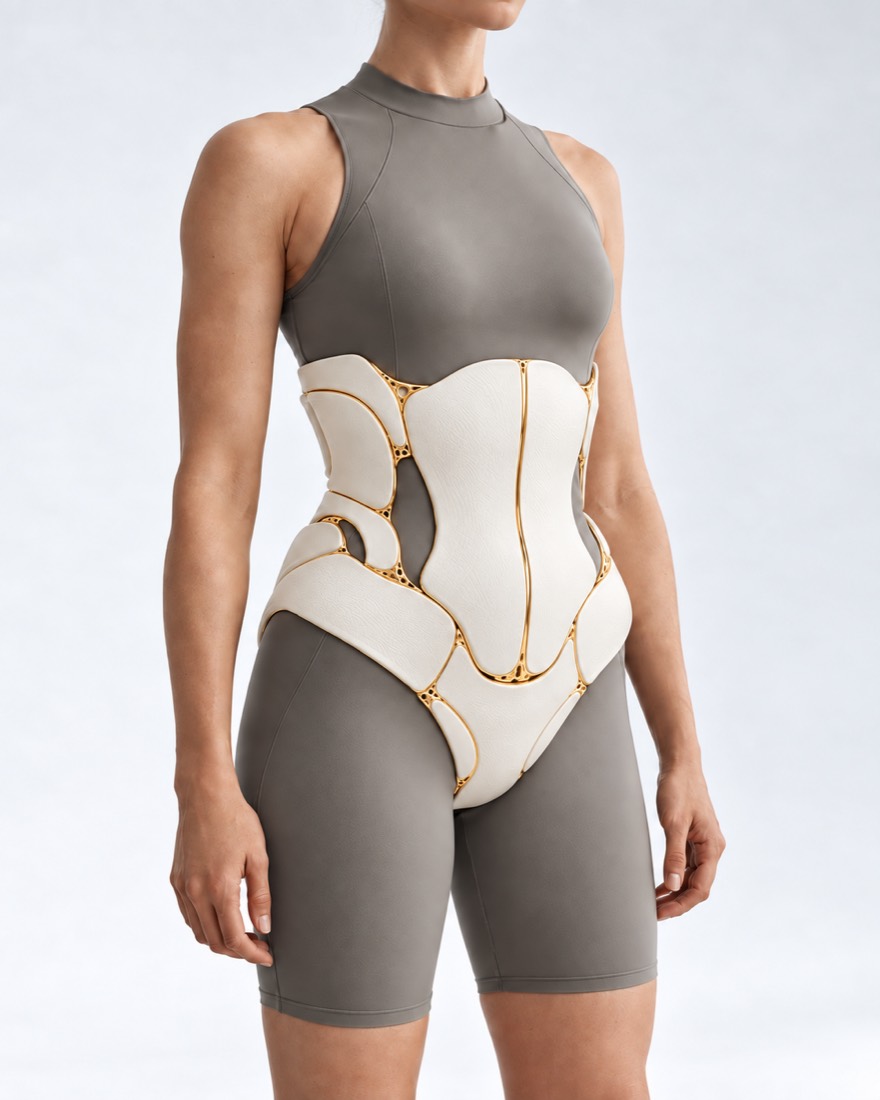
The rectus abdominis muscles are two vertical bands of muscles connected in the middle by a white line. During pregnancy, the growing uterus pushes them apart: the muscles lengthen and weaken, and the white line thins and stretches. This is diastasis, or separation of rectus muscles.
Spreading during pregnancy is common, according to the NHS it's usually around 2 fingers. In most cases, the gap returns to normal by 8 weeks postpartum, but not in all: in a Norwegian study of 300 women who gave birth for the first time, 60% had diastasis (from 2 toes) at 6 weeks postpartum and 32.6% at 12 months.
The European Hernia Society defines diastasis as a separation of the rectus muscles of more than 2 cm.
A diastasis is not a hernia: it does not allow organs to protrude through it, and it does not carry the same risk as a true hernia. But nearby, on the white line or near the navel, there may be a hernia - then the treatment is different.
This is general information. The doctor will tell you what will suit you after the examination.
Diastasis can be checked independently. The most important complaints, according to the EHS guidelines, are body weakness and abdominal appearance.
Lie on your back, bend your legs, raise your shoulders a little and feel the middle of the abdomen above and below the navel with the pads of your fingers: how many fingers fit between the edges of the muscles.
The stomach protrudes in the middle line, especially when straining.
Feeling unsteady or weak in the core muscles is one of the top two complaints in the EHS guidelines.
Dissatisfaction with the appearance of the abdomen is the second main complaint according to the same guidelines.
A review of 12 studies (2,242 participants) found no association of diastasis with low back and pelvic pain, but wider diastasis may be associated with more severe low back pain. The quality of research is weak.
A separate protrusion near the navel or on the white line, which increases when coughing and decreases when lying down, may be a hernia, not a diastasis.
Umbilical herniaDiastasis is associated with pregnancy, but it also occurs in men.
The growing uterus stretches the rectus muscles, lengthens and weakens them.
The connective tissue between the muscles thins and stretches, so the muscles do not converge towards the middle.
In a Norwegian study of 300 women, those who lifted heavy 20 times a week or more had diastasis recti more often (odds ratio 2.18).
For other risk factors compared in the same study, no difference was found between women with and without diastasis.
Among the 11,658 patients with diastasis and hernia who underwent surgery and entered the Herniamed registry, 68.7% were men.
Diastasis itself is a planned situation: it usually does not require emergency care. Urgent help may be needed if there is a hernia nearby and it is pinched. Then don't drive to the hospital alone.
On the same day: to the surgeon, if there is a hernia near the diastasis (protrusion near the navel or on the white line) and it started to hurt, the abdomen swelled or the temperature rose to 38 °C or higher. Planned: if, after 8 weeks after giving birth, the gap between the muscles is still noticeable, the abdomen hurts or pulls, or you notice a separate bulge near the belly button, contact your doctor: he will refer you to a physical therapist and, if necessary, to a surgeon.
When was the birth and how many were there, what worries me - body weakness, back pain, appearance of the abdomen, urinary incontinence; which exercises have already been tried.
The doctor will feel the space between the muscles above the belly button, at the level of the belly button and below it while you are lying with your head elevated, and look for a hernia.
In order to accurately measure the width of the diastasis and not to miss the hernia, the consensus of surgeons recommends imaging methods - ultrasound or CT.
The width of the separation, whether there have been pregnancies and whether there is a concomitant hernia — this depends on the plan.
First - exercises. Surgery is considered when symptoms remain after exercise or there is a hernia nearby. The quality of research on diastasis is limited, so most recommendations are weak and individualized.
Physical therapy is the first step.
When symptoms remain or there is a hernia.
If there is excess skin.
Diastasis of the rectus muscles at the Doctor Valikhnovskyi Surgical Institute is treated in the direction of abdominal wall reconstruction. First — exercises with a physical therapist; the surgeon assesses whether surgery is needed, and if so — which type.
Plastic surgeon, candidate of medical sciences, founder of Dr. Valikhnovskyi Institute of Surgery.
Short answers. What is right for you, the doctor will tell you during the consultation.
Often the interval is reduced: according to the NHS, usually up to 8 weeks after birth. But not always - in a Norwegian study of 300 women, 32.6% had diastasis after a year. If the gap is still noticeable after 8 weeks, see your doctor.
No. With diastasis, the white line between the muscles is stretched, but the organs do not pass through it. The hernia may be nearby, for example near the navel, then the treatment is different, often with a mesh.
First of all, exercises are recommended. In a meta-analysis of 9 randomized trials, the gap was reduced by an average of 8 mm, while another meta-analysis found no difference. Exercise can relieve symptoms; if symptoms persist, consider surgery.
According to the NHS, in the beginning it is better to avoid curls, planks and impact loads, not to strain and not to lift heavy. Specific exercises are selected by a physical therapist.
When symptoms remain after exercise — body weakness, pain, dissatisfaction with the appearance of the abdomen — or there is a hernia. The Italian consensus calls the threshold more than 2.5 cm. Decisions are made together with the surgeon.
In a meta-analysis of 13 randomized trials, exercise reduced the gap below the umbilicus better than a bandage.
Diastasis itself usually does not require emergency care. But if there is a hernia nearby (protrusion near the navel) and it hurts very much, and the pain does not go away, you feel nauseous or vomit, the skin above the protrusion has changed color, or gases do not pass and there is no stool, call 103. If the protrusion just started to hurt, go to the surgeon the same day.
The figures on the page are from these sources.
Send a photo of your abdomen and an ultrasound if available. The doctor will tell you whether it is diastasis, if there is a hernia, and where to start.
Leave your contact details and briefly describe the situation. A coordinator will contact you to agree on the next step.