CONDITION / FACE

Hemifacial microsomia.

Hemifacial microsomia is a congenital underdevelopment of one half of the face: the lower jaw, ear, soft tissues, sometimes the eye socket and the facial nerve. It is treated in stages, as the child grows, and some children do not need surgery.

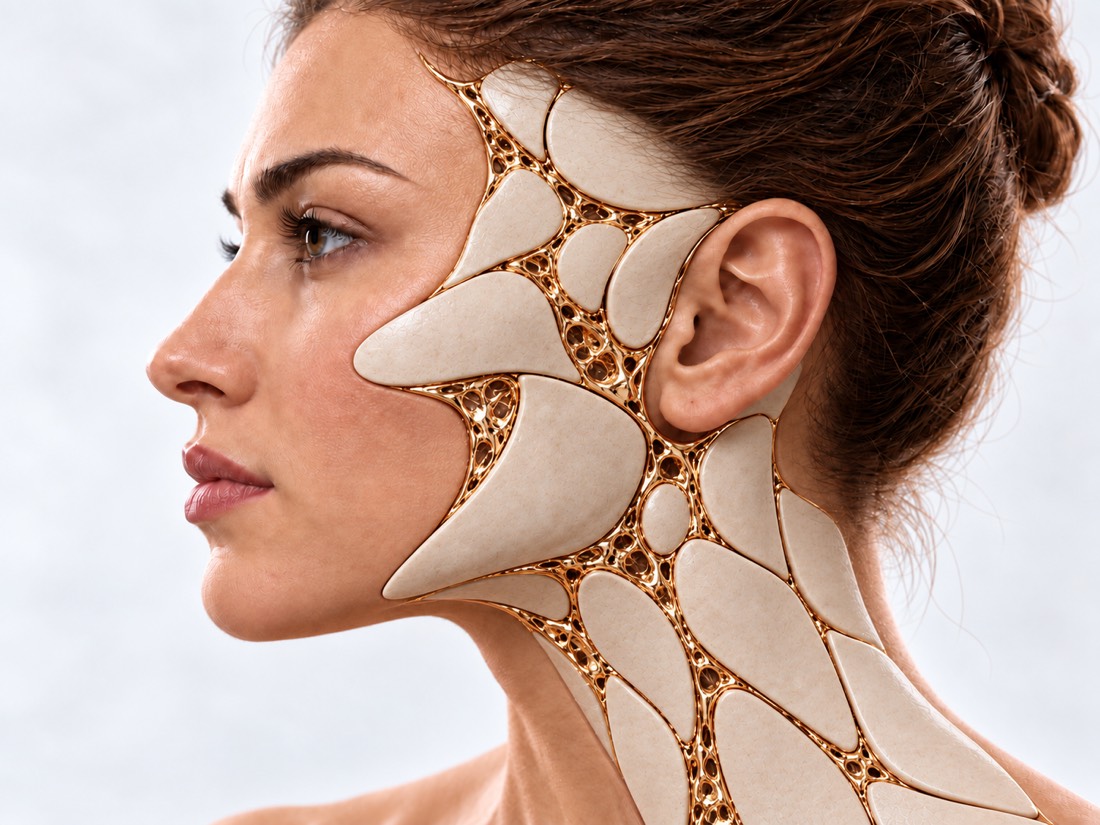
Conceptual visualization: restoration of facial symmetry in a childCONCEPTUAL VISUALIZATION
What it is
One half of the face is less developed: jaw, ear, soft tissues.
How common
The second most frequent congenital defect of the face after cleft lip and palate.
Out of your face
In a study of 991 patients, almost half (47%) had changes in the spine, heart, kidneys or other organs - they are being checked.
How we treat
Staged, as growth; with a mild form, treatment may not be necessary.

What is
hemifacial microsomia.

Hemifacial microsomia is a congenital condition in which one half of the face is less developed than the other. Often the lower jaw, auricle and soft tissues of the cheeks are underdeveloped, sometimes the eye socket, upper jaw and facial nerve. It can also be bilateral.

These structures are formed in the embryo from the first and second gill arches, so doctors use several names: craniofacial microsomia, syndrome of the first and second gill arches. Goldenhar syndrome is a variant where ear, eye and spine changes are added to facial changes.

The degree is very different: from barely noticeable asymmetry to pronounced underdevelopment with impaired breathing, feeding and hearing. Therefore, treatment for each child is made separately.

This is general information. What will suit your child, the doctor will tell after the examination.

How it
presents.

Changes are visible from birth. Doctors describe them according to the OMENS system — five components, each rated from 0 to 3.

01

O - eye socket

Eye sockets are asymmetrical.

03

E is an ear

The auricle is underdeveloped or absent (microtia), there are appendages near the ear. Ear changes — in more than half of children: according to a review of studies, at least 52%.

Microtia
04

N - facial nerve

Weakness of facial muscles on the affected side. In a study of 339 patients with microsomia and an underdeveloped ear, 23.9% had it, about one in four.

Paralysis of the facial nerve
05

S - soft tissues

There is less soft tissue on one side of the cheek, so the face is flatter there.

06

"+" - other bodies

A plus in the classification (OMENS+) means changes outside the face: spine, heart, kidneys, limbs.

Why is that?
develops.

The reason has not been fully clarified. In most children, it is not possible to establish it.

Embryo development

The development of the first and second gill arches, from which the jaws, ear and soft tissues of the face are formed, is disturbed.

spine

In a study of 991 patients, 28% had vertebral changes.

Heart and blood vessels

Changes in the cardiovascular system — in 21%; in a smaller series of heart defects — in 26%.

Kidneys and other organs

Urogenital system — 11%, nervous system — 11%; limbs — 18.2% in a study of 688 patients.

When to seek urgent medical care?

Hemifacial microsomia is a congenital condition that does not require emergency care. But a small jaw can prevent the baby from breathing and eating.

103 immediately if:

  • it is difficult for the child to breathe: croaking, sagging of the skin under the ribs, frequent breathing;
  • the baby has pauses in breathing;
  • blue or gray lips, tongue or skin;
  • the child is lethargic, it is impossible to wake him up.

Other levels of urgency:

On the same day: the baby eats much less than usual, or the diaper is dry for 12 hours or more. In the coming days: an older child snores loudly, breathing stops and resumes during sleep, he gasps for air with his mouth - these are possible signs of sleep apnea. Planned: facial asymmetry, underdeveloped ear, facial muscle weakness — make an appointment to make an examination and treatment plan.

How we assess
a child

  1. Review and evaluation by OMENS

    The doctor evaluates the jaw, ear, eye socket, facial nerve and soft tissues; photo in standard angles.

  2. Photographs of the jaw

    They show how underdeveloped the lower jaw and joint are - this determines the choice of surgery.

  3. hearing

    A hearing test is recommended for everyone: according to a review of studies, at least 29% of children have hearing loss, and in some series - all.

  4. Spine, heart, kidneys

    Children at risk are advised to have an ECG, ultrasound of the heart, X-ray of the spine and ultrasound of the kidneys; limbs are examined by everyone.

  5. Breathing and feeding

    For snoring or respiratory arrest - sleep examination; in case of difficulties with feeding - assessment of feeding.

How we treat
step by step

The timing and type of operation determines the degree of underdevelopment. The damaged half of the face grows more slowly, so operations are performed selectively in childhood, and some children do not need treatment.

01

Lower jaw

The most important thing is if the small jaw interferes with breathing or eating.

Distraction
The jaw bone is dissected and every day is gradually expanded with the apparatus, and the jaw is lengthened. Early distraction improves function and appearance, at least in the short term, but does not reverse orthognathic surgery once growth is complete.
Costal cartilage
In the most severe types of underdevelopment of the jaw, a rib graft is used; it can produce a reliable result, especially with further distraction.
Orthodontics
Orthodontic treatment is part of the growth plan.
02

the ear

Reconstruction of the auricle
The framework of the ear is modeled from its own costal cartilage or a porous implant — taking into account age, often in several stages. The implant does not require the removal of cartilage, but the risk that the framework will penetrate the skin is higher with it.
hearing
Some children need hearing aids or surgery to improve their hearing.
03

Soft tissues and final stages

Lipofilling
Transplantation of one's own fat evens out contours with mild and moderate lack of tissues; several sessions are usually required. In a review of studies, complications were 4.2% versus 27.1% after vascular tissue transplantation.
Transplantation of tissues on vessels
With a pronounced lack of soft tissues, it gives a larger volume.
After growth is complete
Orthognathic surgery on both jaws and chin correction; the previous distraction gives her more bone.

How
we treat it.

Hemifacial microsomia is treated at Dr. Valikhnovskyi's Institute of Surgery in the direction of "Surgery of birth defects" - in stages, as the child grows. Ear reconstruction is done in the direction of "Growing the ear". Hearing, heart, kidneys and spine are examined and, if necessary, treated by specialized children's doctors; the clinic is responsible for operations on the face and ears.

CLINIC SERVICE Surgery of birth defects Congenital defects of the face and body in children and adults — from the first operation to the correction of the consequences. View service

What we do for this condition

  • Distraction osteogenesis — lengthening of the underdeveloped lower jaw with an apparatus that is untwisted little by little every day.
  • 3D modeling and custom templates — virtual operation based on CT data and printed guides for cutting.
  • Reconstruction of the auricle — frame made of own costal cartilage or porous polyethylene implant.
  • Lipofilling — smoothing of the soft tissues of the face with own fat.

Rostislav Valikhnovskyi

Plastic surgeon, candidate of medical sciences, founder of Dr. Valikhnovskyi Institute of Surgery.

How treatment works with us

  1. Photo onlineSend a photo of the child's face directly and from both sides - the doctor will first assess the situation.
  2. ConsultationReview, assessment by OMENS and list of examinations: hearing, spine, heart, kidneys.
  3. Phased planWhat to do and at what age: jaw, ear, soft tissues.
  4. OperationsEach stage is in its own time; for bone operations — 3D planning.
  5. Follow-upExaminations as growth progresses, orthodontist and hearing control.

Common
questions

Short answers. What is right for you, the doctor will tell you during the consultation.

Is it necessary to operate?

No. With a mild form, treatment may not be necessary either in childhood or in adulthood. In severe cases, several operations are usually required.

What does OMENS mean?

It is a five-component scoring system: eye socket, mandible, ear, facial nerve, and soft tissue, each from 0 to 3. A "+" sign indicates changes outside the face.

Why check the spine, heart and kidneys?

In a study of 991 patients, 47% had changes outside the face: vertebrae — in 28%, cardiovascular system — in 21%, genitourinary — in 11%. Therefore, an ECG, ultrasound of the heart, X-ray of the spine and ultrasound of the kidneys are advised.

Will the child hear?

Hearing loss is common, so hearing is checked for all children. Some children are helped by hearing aids or surgery.

When is the jaw operated?

Earlier - if the small jaw interferes with breathing or eating. In other cases, the terms are discussed separately: after the growth is complete, another operation on the jaws is often required.

What is the difference between Goldenhar syndrome?

This is a variant when ear, eye and spine changes are added to the underdevelopment of half of the face. Doctors see it as part of the same spectrum, so the plan is based on what exactly has changed.

Is it possible to straighten the face without major surgery?

Lipofilling — transplantation of own fat, usually in several sessions — helps with a mild and moderate lack of soft tissues. It does not correct an underdeveloped jaw bone.

Sources

17 sources · reviews, guidelines and research
showCollapse
  1. European Guideline on Craniofacial Microsomia: A Version for Patients and FamiliesJournal of Craniofacial Surgery, 2022doi:10.1097/SCS.0000000000007987 ↗
  2. Craniofacial MicrosomiaClinics in Plastic Surgery, 2019doi:10.1016/j.cps.2018.12.001 ↗
  3. The etiology, clinical features, and treatment options of hemifacial microsomiaOral Diseases, 2023doi:10.1111/odi.14508 ↗
  4. Hemifacial microsomia: clinical features and pictographic representations of the OMENS classification systemPlastic and Reconstructive Surgery, 2007doi:10.1097/01.prs.0000287383.35963.5e ↗
  5. OMENS-Plus: analysis of craniofacial and extracraniofacial anomalies in hemifacial microsomiaThe Cleft Palate-Craniofacial Journal, 1995doi:10.1597/1545-1569_1995_032_0405_opaoca_2.3.co_2 ↗
  6. Extracraniofacial anomalies in craniofacial microsomia: retrospective analysis of 991 patientsInternational Journal of Oral and Maxillofacial Surgery, 2019doi:10.1016/j.ijom.2019.01.031 ↗
  7. Upper and Lower Limb Anomalies in Craniofacial Microsomia and Its Relation to the OMENS+ Classification: A Multicenter Study of 688 PatientsPlastic and Reconstructive Surgery, 2023doi:10.1097/PRS.0000000000010090 ↗
  8. Facial Paralysis in Patients With Hemifacial Microsomia: Frequency, Distribution, and Association With Other OMENS AbnormalitiesJournal of Craniofacial Surgery, 2018doi:10.1097/SCS.0000000000004618 ↗
  9. Hearing impairment and ear anomalies in craniofacial microsomia: a systematic reviewInternational Journal of Oral and Maxillofacial Surgery, 2022doi:10.1016/j.ijom.2022.01.005 ↗
  10. Obstructive sleep apnoea in craniofacial microsomia: a systematic reviewInternational Journal of Oral and Maxillofacial Surgery, 2015doi:10.1016/j.ijom.2015.01.023 ↗
  11. Feeding difficulties in craniofacial microsomia: a systematic reviewInternational Journal of Oral and Maxillofacial Surgery, 2015doi:10.1016/j.ijom.2015.02.014 ↗
  12. Growth characteristics and classification systems of hemifacial microsomia: a literature reviewMaxillofacial Plastic and Reconstructive Surgery, 2024doi:10.1186/s40902-024-00427-8 ↗
  13. Modern Mandibular Distraction Applications in Hemifacial MicrosomiaClinics in Plastic Surgery, 2021doi:10.1016/j.cps.2021.02.001 ↗
  14. Soft Tissue Reconstruction in Patients With Hemifacial Microsomia: A Systematic Review of the LiteratureJournal of Craniofacial Surgery, 2019doi:10.1097/SCS.0000000000005320 ↗
  15. Oculo-auriculo-vertebral spectrum: new genes and literature review on a complex diseaseJournal of Medical Genetics, 2022doi:10.1136/jmedgenet-2021-108219 ↗
  16. BronchiolitisNHS, 2026nhs.uk/conditions/bronchiolitis ↗
  17. Sleep apnoeaNHS, 2026nhs.uk/conditions/sleep-apnoea ↗

The figures on the page are from these sources.

VALIKHNOVSKI SURGERY PARTNERS

One half of the face
smaller than the second?

Send a photo of the child's face. The doctor will tell you what tests are needed and what and when to do them.

Call Send an enquiry
ONLINE ENQUIRY

Tell us how we can help.

Leave your contact details and briefly describe the situation. A coordinator will contact you to agree on the next step.

Preferred contact method