Raised and firm
The scar is higher than the surrounding skin and firm to the touch, but stays within the wound or suture boundaries.
 Discuss your case
Hypertrophic scar — a thick, dense scar that rises above the skin but remains within the wound boundaries. It appears after burns, surgeries, and injuries, often flattens on its own over time, and treatment helps make it softer and less noticeable.
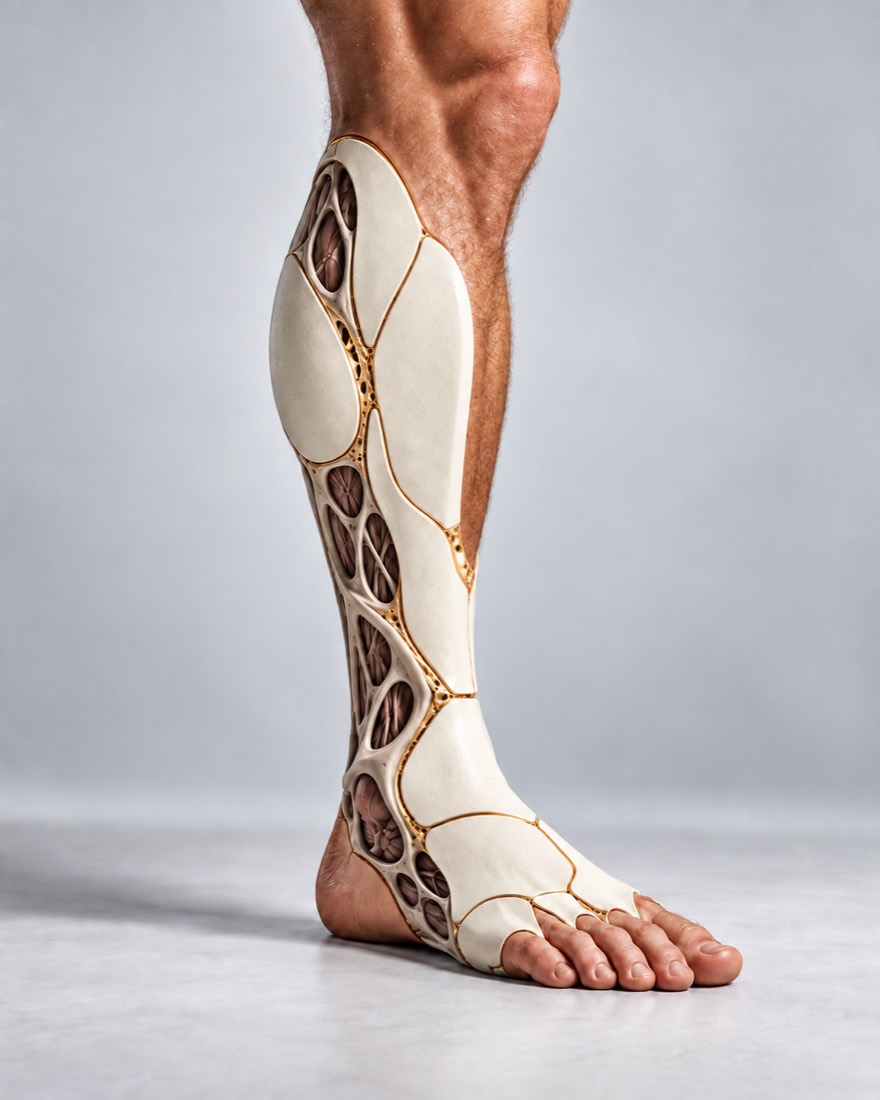 CONCEPTUAL VISUALIZATION
After a deep wound, the skin heals with a scar. A scar is called hypertrophic when too much scar tissue forms after skin injury. It is firm, raised above the skin, and often red or purple.
It differs from a keloid by its border: a hypertrophic scar does not extend beyond the edges of the original wound and often fades and flattens over time. A keloid becomes larger than the wound itself and usually does not flatten without treatment. Distinguishing them can be difficult even for a doctor, and this affects the treatment.
Such a scar is not only noticeable. It can cause pain and itching, and near a joint — interfere with bending and straightening the arm, leg, or neck. Examinations report that such scars often reduce quality of life.
A hypertrophic scar can appear anywhere: on the body, arms, neck, or face. There is a separate page about the specifics of scars on the face.
This is general information. The doctor will tell you what will suit you after the examination.
A scar appears at the site of a wound, burn, or suture. Here is what you should pay attention to.
The scar is higher than the surrounding skin and firm to the touch, but stays within the wound or suture boundaries.
The scar is pink, red, purple, or darker than the skin; over time the color often fades.
The scar itches, hurts, or interferes with wearing clothes.
A scar near a joint pulls and hinders bending or straightening. If it tightens the skin after a burn, this is a contracture.
Post-burn contractureIf the scar extends onto healthy skin and continues to grow, this is most likely a keloid.
Keloid scarA scar that constantly cracks or is covered with sores is a separate condition, an unstable scar; it should be shown to a doctor.
Unstable scarReviews identify several groups of factors: local (tension on the wound or scar), general (for example, high blood pressure), hereditary, and lifestyle. After burns, the length of wound healing also matters.
In a systematic review of 48 articles, the frequency of hypertrophic scars after burns in different studies ranged from 32 to 72%. Risk factors include dark skin, female gender, young age, burns of the neck or hand, severity of the burn, and multiple surgeries.
Cicatricial deformation of the bodyIn a study of 337 children with scald burns, the scar became hypertrophic in 0% of those whose wound healed in less than 10 days, in 20% — in 15–21 days, and in 92% — if healing lasted more than 30 days.
In a study of 4,238 patients after thyroid surgery, a thick scar on the neck was associated with younger age, higher body mass index, scar location less than 1 cm from the jugular notch, and a history of keloids.
Tension on a wound or scar is one of the local factors that contribute to scar thickening. Therefore, guidelines recommend reducing tension on a fresh scar, for example with tape.
A scar on the face is especially noticeable, so there are specific approaches to treatment there.
Hypertrophic facial scarsA hypertrophic scar usually does not require urgent care: it is a planned situation. But if the wound or burn is fresh, help may be needed immediately.
On the same day: the scar or wound is swollen, red, and increasingly painful, warm to the touch, or oozing pus; you were bitten by a person or animal. Planned: the scar is thickening, itching, has been painful or aching for a long time, interferes with movement, or simply bothers you — make an appointment for a consultation.
After what the scar appeared, how long the wound took to heal, whether the scar is still growing, whether there were keloids before.
The thickness, color, and density of the scar, its borders, whether it hinders joint movement.
Treatment depends on this. Guidelines also recommend differentiating the scar from similar skin formations, including tumors.
To see how the scar changes during treatment.
The main question is whether the scar tightens the skin. If the tightening is strong, surgery is the first choice; if not, non-surgical treatment. International guidelines recommend combining methods: according to experts, results seem better this way.
The basis of treatment while the scar matures.
When the scar pulls the skin, restricts movement, or remains coarse despite treatment.
Hypertrophic scars at the Valikhnovskyi Institute of Surgery are treated under the "Rehabilitation after aesthetic surgeries" program — regardless of where you had surgery. Scars from burns and scars that restrict movement are handled together with the "Reconstruction after burns" program.
Plastic surgeon, candidate of medical sciences, founder of Dr. Valikhnovskyi Institute of Surgery.
Short answers. What is right for you, the doctor will tell you during the consultation.
A hypertrophic scar stays within the boundaries of the wound and often flattens over time. A keloid grows beyond the wound and usually does not flatten on its own. A doctor can accurately distinguish them.
Often it fades and flattens over time, but scars change for up to 2 years and longer. Treatment helps make the scar softer and less noticeable.
Among the reasons are tension on the suture, prolonged healing, heredity, and a predisposition to keloids. The location of the scar also matters. Show the scar to a doctor: they will advise where to start.
They are recommended for large scars, especially after burns. But evidence of their benefit for prevention is still insufficient, so the decision is made together with the doctor, taking your preferences into account.
Laser is one of the leading methods: it can make the scar flatter, softer, and less noticeable, but does not remove it completely. The number of sessions is determined by the doctor.
When the scar strongly tightens the skin, limits movement, or remains coarse despite treatment. After surgery, silicone, injections, or laser are usually continued.
Yes. Take the description of the operation and your surgeon’s recommendations — the doctor will make a scar treatment plan.
The figures on the page are from these sources.
Send a photo of the scar and briefly describe when it appeared. The doctor will say where to start.
Leave your contact details and briefly describe the situation. A coordinator will contact you to agree on the next step.