CONDITION / EARS

Keloid of the auricle and lobe.

Keloid of the auricle is a dense scar that grows outside the wound on the ear, often after a piercing of the lobe. After only the excision itself, it often returns, so it is treated in combination: excision is combined with injections, compression or other methods.

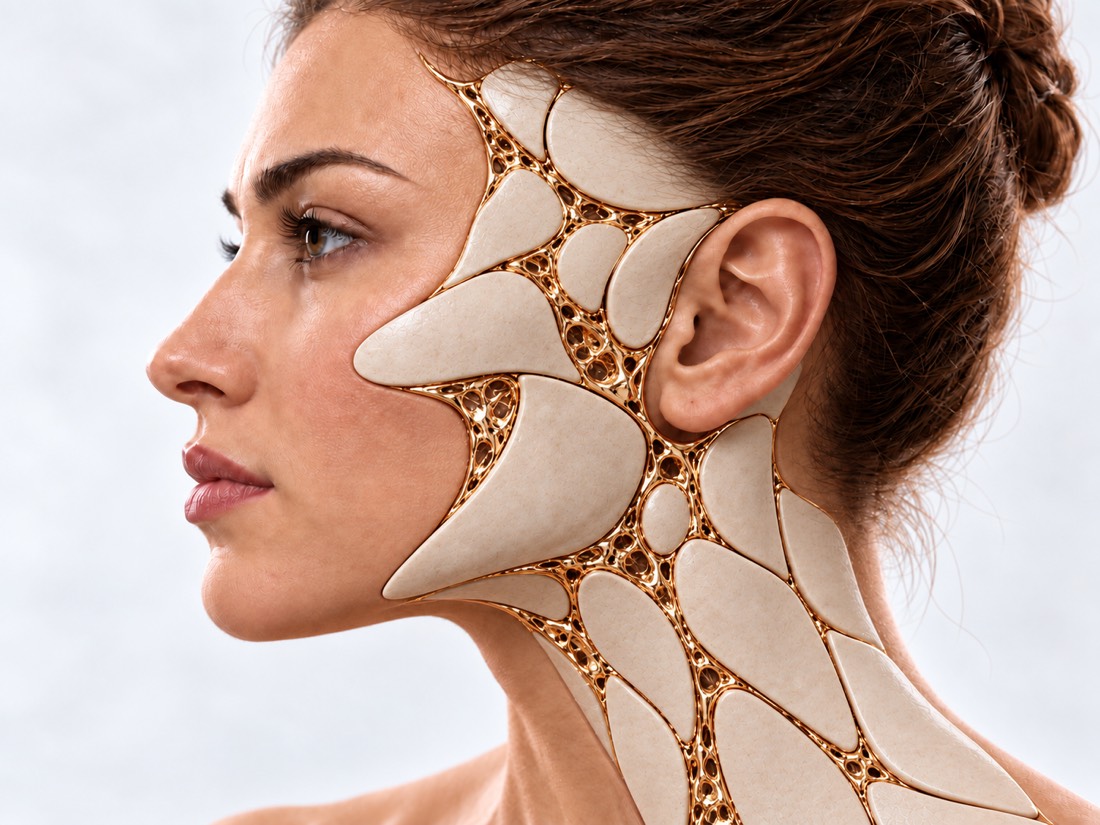
Conceptual visualization: restoring the shape of the auricleCONCEPTUAL VISUALIZATION
What it is
A dense scar that grows beyond the wound on the ear - often after a piercing of the lobe or cartilage.
Why does it appear?
Puncture, injury, burn or surgery; the risk is higher if you already have keloids.
The main thing
After only the excision, the keloid often returns, so it is treated in combination.
Who treats it
A plastic surgeon together with a dermatologist; radiation therapy is carried out by a radiotherapist.

What is
keloid on the ear.

Keloid is a benign growth of scar tissue: the scar does not stop within the wound, but goes beyond it. The ear is one of the common sites of keloids, usually after trauma or puncture. The most famous example is a dense "ball" on the earlobe around the earring hole.

A keloid appears weeks and sometimes years after the skin is damaged. It grows over months or years, and as it grows, it can be itchy and painful. It usually does not flatten or turn pale on its own without treatment.

A keloid is not the same as a hypertrophic scar. Hypertrophic is also raised and dense, but remains within the wound and usually flattens over time. Keloid becomes larger than the wound itself.

Keloid is not malignant. But it is noticeable, itches and hurts, and such scars can greatly affect well-being and quality of life.

This is general information. The doctor will tell you what will suit you after the examination.

How
ear keloid presents.

A keloid can be on one or both ears, on the lobe or on the cartilage. It is easy to confuse it with other lumps, so the doctor will say for sure.

01

A bump at the puncture site

A dense raised lump where the lobe or cartilage was punctured, which gradually enlarges.

02

Bigger than morning

The scar extends beyond the former wound and continues to grow for months or years.

03

Smooth and shiny

Usually hard, smooth and shiny; the color is flesh-colored, pink, red, purple, brown, or darker than the surrounding skin.

04

Itches and hurts

While the keloid is growing, it may itch or hurt; when growth stops, it usually goes away.

06

Grown again

If the keloid has already been treated, and it has returned, the risk of a new return is higher - the treatment is planned especially carefully.

Why does it appear?
keloid on the ear.

A keloid is an overreaction of the skin to healing. Why one person develops a keloid after a puncture, and another does not, is still not fully understood.

Puncture

Ear lobe or cartilage puncture is a common cause of ear keloid. The risk of infection and bleeding after a puncture is increased by violations of sterility, inexperience of the master and tissue injury during a puncture with a spring-loaded device.

Injury, burn, operation

Keloid can grow after any skin damage: cut, burn, surgery, acne or piercing.

Propensity

The risk is higher if keloids are already present, during pregnancy, and in people of South Asian, Chinese, African, or Afro-Caribbean descent. In light-skinned people, keloids occur less often and are usually not as pronounced.

Keloid scar

age

Keloids appear more often between the ages of 10 and 30. In a survey of 32 patients with post-piercing keloids, keloids were more likely to develop in those who had their ears pierced at age 11 or older. The authors advise people with a family history of keloids to consider getting their ears pierced at all.

When to seek medical advice?

The keloid itself does not require emergency care: it is a planned situation. But a fresh puncture or a wound after ear surgery can become infected, and the infection can spread. Call 103 if the bleeding does not stop, as well as if at least one of the signs of the spread of infection appeared against the background of an inflamed ear or a puncture:

103 immediately if:

  • bleeding from a wound or puncture that does not stop;
  • blood beats in a stream;
  • very high temperature or severe chills;
  • rapid pulse or rapid breathing;
  • purple spots on the skin;
  • confusion of consciousness;
  • cold, clammy, or pale skin;
  • the person is unresponsive or has lost consciousness.

Do not delay a visit to the doctor:

On the same day: a puncture, wound or keloid is swollen, painful, hot to the touch, very red or darkened, oozing pus or blood. Do not remove the earring unless your doctor tells you otherwise. Do not delay especially if the piercing in the cartilage of the ear is inflamed: timely treatment of the infection of the cartilage helps to avoid deformation of the ear. Planned: you have a lump on your ear that grows, itches or bothers you, or a keloid has returned after treatment - make an appointment for a consultation. Early treatment can help stop keloid growth.

As defined,
that it is a keloid.

  1. Conversation

    When and after what the bump appeared - puncture, injury, surgery; is growing; whether there were keloids before or in the family; as she was already treated.

  2. Review

    The size, density and boundaries of the scar: does it extend beyond the former wound. This is how a keloid is distinguished from a hypertrophic scar and other formations.

  3. Photo in standard angles

    Front, back and side ear for treatment plan and to compare changes over time.

  4. If in doubt

    If the growth looks unusual, the doctor will suggest an examination to distinguish the keloid from similar benign and malignant tumors.

How we treat
ear keloid.

It is impossible to remove a keloid without a trace, but treatment helps to improve the appearance and reduce itching and pain. According to international recommendations, a combination of several methods, tailored to the person and the keloid itself, gives the best chance.

01

Without surgery

For small keloids and as part of combined treatment.

Injections into the scar
The hormone (triamcinolone) is injected directly into the keloid. After excision, such injections are usually required 4-6, monthly.
Silicone
International guidelines consider silicone gel or plates to be the first choice for the prevention and treatment of keloids.
Compression
Constant pressure on the scar area after excision. In a review of 21 studies, in two of them, the keloid returned after excision and compression in 10.66% and 14%; the authors note that compression is particularly effective for ear keloids.
Cryotherapy and laser
Freezing or laser can be offered by the doctor separately or together with other methods. According to a review of 26 studies, the fractional CO2 laser may be beneficial and has fewer potential complications.
02

Surgery

Excision — only together with other treatment.

Why not just excision
It is usually not recommended to remove the keloid: it will most likely grow again - and larger. Therefore, excision is combined with other treatment.
How many are removed
A small solitary keloid can be removed completely with additional treatment or treated without surgery with several methods. If the keloids are large or there are several of them, surgery can reduce their volume.
What is added after excision
Hormone injections, compression or radiation therapy. In a meta-analysis of 45 studies (1,885 keloids), recurrence after excision was comparable: 12% with injections and 13% with radiation therapy. The effect of the injections weakened over the years, but the effect of radiation therapy remained.
Compared to excision itself
In a review of 85 articles on lobar keloids, excision combined with hormone or radiation therapy maintained the outcome without recurrence longer than excision alone; side effects occurred with the same frequency.
Radiation therapy
It is prescribed and conducted by a radiotherapist in a specialized institution; he also weighs the risks of exposure — especially for children and teenagers.
03

Result and return

Returns are possible
Even after treatment, ear keloid can return: in a review of 26 studies, an average of 20.3%.
Recurrent keloid
A keloid that has already come back has a higher risk of coming back. In a review of 13 studies of such ear keloids, recurrence after excision with various additional methods was 9–18%, and the difference between methods was not statistically significant.
Long observation
Keloid may not return immediately. In a series of 94 children with lobular keloids at a median follow-up of 2 years, it returned in 28.7% of children; in half of them — later than after 23 months. Therefore, reviews are needed over a long period of time.
New piercings
People prone to keloids are advised to avoid piercings and tattoos.

How
we treat it.

Ear keloids are treated at Dr. Valikhnovskyi's Institute of Surgery in the "Growing the ear" direction together with dermatologists in the "Rehabilitation after aesthetic operations" direction. The clinic is responsible for excision, injections, laser and scar care; if radiation therapy is required, it is carried out by a radiotherapist in a specialized institution.

CLINIC SERVICE We grow an ear Auricle with microtia and anotia, after injuries, burns and removal of tumors, consequences of unsuccessful otoplasty. View service

What we do for this condition

  • Excision with additional treatment - keloid is excised only together with other methods, because it tends to return.
  • Hormone injections into the scar — after excision to reduce the risk of recurrence, or as a separate treatment.
  • Silicone gel and plates — scar care, which is selected and explained by a dermatologist.
  • Compression — pressure on the scar area as part of combined treatment.
  • Fractional CO2 laser — for the surface, color and hardness of the scar; the number of sessions is determined by the doctor.
  • Restoring the shape of the ear — if a defect remains after the removal of a large keloid, it is closed with local flaps and cartilage.
  • Control of the ripening of the scar — during examinations, the doctor monitors the scar and offers timely treatment if it has begun to thicken.

Rostislav Valikhnovskyi

Plastic surgeon, candidate of medical sciences, founder of Dr. Valikhnovskyi Institute of Surgery.

Publications by topic

  • "Ways to improve outcomes in patients with facial keloid scars" - Clinical Anatomy and Operative Surgery, 2025 (DOI).

How treatment works with us

  1. Photo onlineSend a photo of the ear from the front, back and side - the doctor will pre-evaluate the keloid.
  2. ConsultationReview, talk about what has already been tried and whether there were keloids before.
  3. PlanWhat to combine with excision - injections, compression, laser or radiation therapy - and how to preserve the shape of the lobe.
  4. TreatmentExcision and additional methods according to the plan; injections — a course over several months.
  5. Follow-upControl examinations for a long time, because the keloid may not return immediately.

Common
questions

Short answers. What is right for you, the doctor will tell you during the consultation.

Is it possible to simply cut out the keloid on the lobe?

Excision alone is usually not recommended: the keloid is likely to grow back — and bigger. Therefore, it is combined with other treatments such as hormone injections, compression, or radiation therapy.

Will the keloid come back after treatment?

Maybe According to a review of 26 studies, ear keloid came back in an average of 20.3%. Therefore, long-term follow-up examinations are important after treatment.

What is better after excision - injections or radiation?

In a meta-analysis of 45 studies, recurrence was comparable: 12% after injections and 13% after radiotherapy. The injections require 4-6 monthly visits, and their effect has weakened over the years. The doctor will tell you what will suit you after the examination.

The new puncture is red and itchy. Is it a keloid?

Not necessarily. For the first few weeks, the new puncture may be sensitive, itchy and slightly red, and the clear liquid from it dries up with a crust. If it is swollen, painful, hot, or pus flows from it, see a doctor the same day. Keloid appears later: after several weeks or years.

Can the ear be pierced again after treatment?

People prone to keloids are advised to avoid piercings and tattoos. Discuss this with your doctor before getting a new puncture.

Do children have keloids on the ear?

Yes. In a series of 94 children and adolescents (mean age 14 years) with lobar keloids, the most common cause was puncture.

Is keloid dangerous?

Keloid is not malignant. But it can itch, hurt and noticeably affect well-being. If the bump on the ear looks unusual, the doctor will distinguish keloid from other formations.

Sources

19 sources · guidelines, systematic reviews and the NHS
showCollapse
  1. Diagnosis and Treatment of Keloids and Hypertrophic Scars-Japan Scar Workshop Consensus Document 2018Burns & Trauma, 2019doi:10.1186/s41038-019-0175-y ↗
  2. Updated international clinical recommendations on scar management: part 2--algorithms for scar prevention and treatmentDermatologic Surgery, 2014pubmed.ncbi.nlm.nih.gov/25068544 ↗
  3. Updated scar management practical guidelines: non-invasive and invasive measuresJournal of Plastic, Reconstructive & Aesthetic Surgery, 2014doi:10.1016/j.bjps.2014.04.011 ↗
  4. The Most Current Algorithms for the Treatment and Prevention of Hypertrophic Scars and Keloids: A 2020 Update of the Algorithms Published 10 Years AgoPlastic and Reconstructive Surgery, 2022doi:10.1097/PRS.0000000000008667 ↗
  5. What Do We Know About Treating Recalcitrant Auricular Keloids? A Systematic Review and Meta-AnalysisPlastic Surgery (Oakville), 2022doi:10.1177/2292550321995746 ↗
  6. Efficacy and Safety of Excision Combination Therapies for Earlobe Keloids: A Systematic Review and Meta-analysisAesthetic Plastic Surgery, 2024doi:10.1007/s00266-024-04092-0 ↗
  7. A Comparison of the Effectiveness of Triamcinolone and Radiation Therapy for Ear Keloids after Surgical Excision: A Systematic Review and Meta-AnalysisPlastic and Reconstructive Surgery, 2016doi:10.1097/PRS.0000000000002165 ↗
  8. Which Adjuvant Modality Is Superior after Auricular Keloid Excision: Radiotherapy or Triamcinolone? A Systematic Review and Meta-AnalysisFacial Plastic Surgery & Aesthetic Medicine, 2026doi:10.1177/26893614251410542 ↗
  9. Understanding and Comparing Current Practice for Ear Keloid Scars: A Narrative Systematic ReviewJournal of Plastic and Reconstructive Surgery, 2026doi:10.53045/jprs.2025-0067 ↗
  10. Surgical Excision with Adjuvant Therapies in the Management of Keloids: A Systematic ReviewMedicina (Kaunas), 2026doi:10.3390/medicina62050916 ↗
  11. Relationship between age of ear piercing and keloid formationPediatrics, 2005doi:10.1542/peds.2004-1085 ↗
  12. Pediatric earlobe keloids: Outcomes and patterns of recurrenceJournal of Pediatric Surgery, 2020doi:10.1016/j.jpedsurg.2019.07.006 ↗
  13. Ear-piercing complications in children and adolescentsCanadian Family Physician, 2022doi:10.46747/cfp.6809661 ↗
  14. Ways to improve the results of treatment of patients with keloid scars on the faceClinical Anatomy and Operative Surgery, 2025doi:10.24061/1727-0847.24.2.2025.20 ↗
  15. Keloid scarsNHS, 2023nhs.uk/conditions/keloid-scars ↗
  16. Infected piercingsNHS, 2023nhs.uk/conditions/infected-piercings ↗
  17. CellulitisNHS, 2024nhs.uk/conditions/cellulitis ↗
  18. ScarsNHS, 2023nhs.uk/conditions/scars ↗
  19. Cuts and grazesNHS, 2026nhs.uk/conditions/cuts-and-grazes ↗

The figures on the page are from these sources.

VALIKHNOVSKI SURGERY PARTNERS

Lump on the lobe
after piercing?

Send a front and back photo of the ear. The doctor will tell you how to treat the keloid to reduce the risk of it coming back.

Call Send an enquiry
ONLINE ENQUIRY

Tell us how we can help.

Leave your contact details and briefly describe the situation. A coordinator will contact you to agree on the next step.

Preferred contact method