The mouth does not open wide
Difficulty biting a piece of food or opening the mouth wide.
 Discuss your case
Microstoma is a narrowing of the mouth opening, which makes it difficult to open the mouth wide: it prevents eating, speaking, brushing teeth and treatment at the dentist. Most often, it is caused by scars after burns, scleroderma or surgery on the lips.
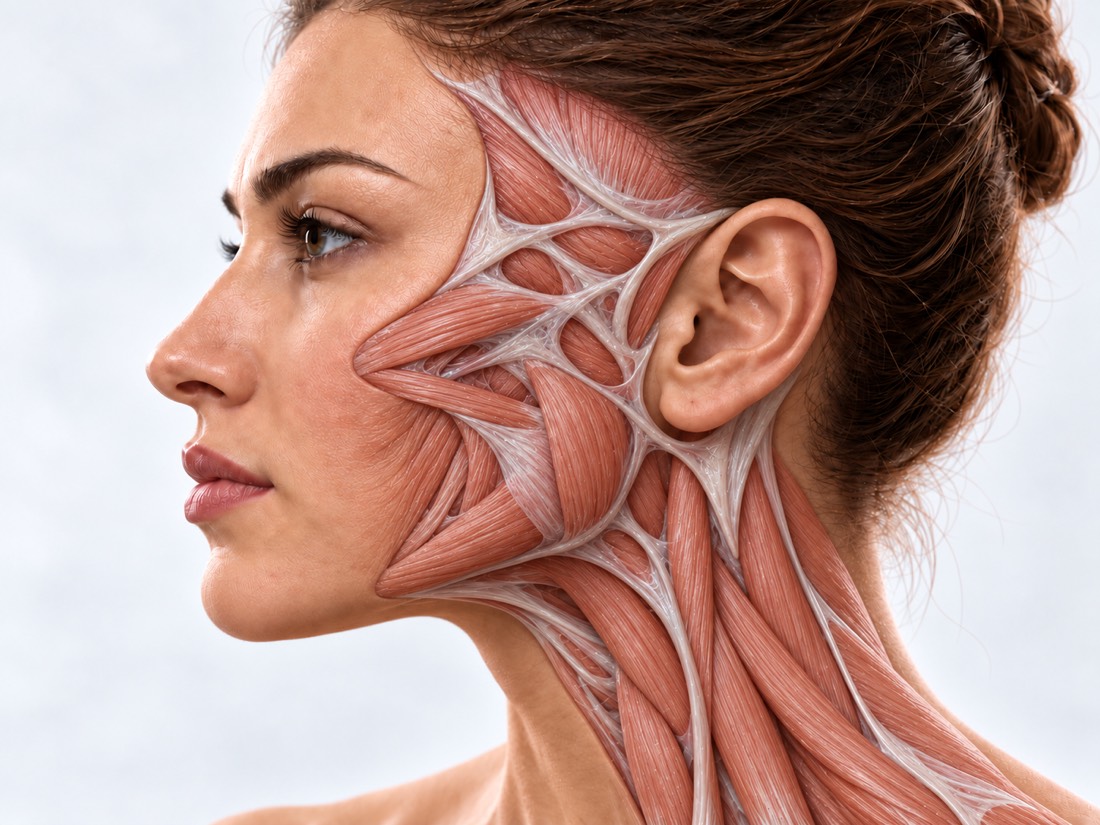 CONCEPTUAL VISUALIZATION
Microstoma is a condition where the mouth opening is smaller than it should be, and because of this the functions suffer: it is difficult to eat, pronounce words, take care of the teeth, facial expression changes. The mouth plays a key role in speech, facial expressions and eating, so even a small narrowing can be felt every day.
Most often, the mouth is narrowed by scars: after a burn, the tissues near the corners of the mouth tighten. Another common cause is systemic scleroderma, a disease in which the skin on the face hardens and thickens. Narrowing also occurs after operations on the lips, when the tissues of the lips are stitched together after the removal of the tumor.
There is no single "correct" mouth size, so the doctor evaluates not only millimeters, but also what exactly is bothering you. Microstoma is a rare condition, and the treatment plan is made individually.
This is general information. The doctor will tell you what will suit you after the examination.
Usually, the narrowing grows gradually, and a person notices it when it becomes difficult to bite, brush teeth or undergo dental treatment.
Difficulty biting a piece of food or opening the mouth wide.
The corners of the mouth are tightened with a scar, the lips are thin and tense, the smile has become narrower.
It is more difficult to chew and swallow, and it is more difficult to pronounce some sounds.
It is difficult to clean the teeth, especially the back teeth, and to treat them at the dentist.
Due to appearance and difficulties with food, a person avoids communication, loses confidence.
Whether splints and exercises will help and which operation is chosen depends on the cause.
Burns of the lips and skin around the mouth—thermal, chemical, or electric—heal with a scar that tightens the corners of the mouth.
Scars after facial burnsA mouth burn with acid or alkali scars the tissues both outside and inside the mouth; it affects children especially hard.
In systemic scleroderma, microstoma occurs frequently: in a study of 131 patients, it occurred in 56.5%. The mouth narrows due to tightening of the facial skin.
When the lip is restored with the own tissues of the lips and cheeks after tumor removal, the mouth may narrow; therefore, for large defects, flaps from other parts of the body are used.
Defects and deformations of the lipsRepeated removals of skin tumors near the mouth can also narrow the mouth.
Lip cancerMicrostoma usually grows gradually and does not require emergency care. Another matter is a fresh burn or poisoning: then help is needed immediately.
On the same day: it became difficult to swallow, you cough or choke while eating, food gets stuck in your throat, or you have shortness of breath after eating. In the coming days: the burn around the mouth heals - see a doctor before the scar tightens the mouth; your mouth opens less and less or you lose weight because you cannot eat normally. Planned: the narrowing is long-standing and stable, but interferes with eating, speaking, brushing or treating teeth.
When did the narrowing appear and what caused it: burn, scleroderma, surgery on the lips; how it changed.
The distance between the corners of the mouth and between the teeth with the mouth as wide as possible — before and after treatment.
Is the scar only on the skin or on the mucous membrane of the cheek; condition of gums and teeth; how many healthy tissues are nearby.
In case of scleroderma - the conclusion of a rheumatologist; if necessary, a dentist.
The goal is to expand the mouth and preserve its functions: food, speech, facial expressions. With a mild narrowing, help without surgery is limited, and surgery gives a better result. The method is chosen based on the severity of the narrowing and how much healthy tissue there is around the mouth.
At the early stage after a burn and with scleroderma.
When tires and exercises are not enough.
Daily life with microstoma.
Microstoma at Dr. Valikhnovskyi's Institute of Surgery is treated in the "New face" direction, and the effects of burns are treated in the "Reconstruction after burns" direction. The clinic is responsible for the surgical part; scleroderma is managed by a rheumatologist, teeth by a dentist.
Plastic surgeon, candidate of medical sciences, founder of Dr. Valikhnovskyi Institute of Surgery.
Short answers. What is right for you, the doctor will tell you during the consultation.
Sometimes partially: splints and exercises help, especially in the early stage after a burn and with scleroderma. But with an already formed scar, surgery usually gives the best result.
An operation to widen the corners of the mouth: the scar in the corner is dissected or excised, and the new corner is lined with buccal mucosa.
First, the burn itself is treated. Even before complete healing, ask the doctor about a mouth splint: they try to prevent microstoma in children as early as possible.
Yes, but the disease continues, so the treatment is combined: a rheumatologist treats scleroderma, and for the mouth, exercises, injections and operations are used, more often - lipofilling.
Softer food, small pieces, thickened drinks, special spoons and cups help. If you are losing weight or choking, consult a doctor - a speech therapist or nutritionist will advise.
Regularly, even if it is difficult, and go for examinations to the dentist. With scleroderma, the risk of gum disease and tooth loss is higher.
After surgery, a splint and exercises are often prescribed to prevent the scar from tightening the mouth again. The doctor will tell you whether you need a splint and how long to wear it.
The figures on the page are from these sources.
Send a photo of your face with your mouth closed and open. The doctor will tell you what caused the narrowing and how you can help.
Leave your contact details and briefly describe the situation. A coordinator will contact you to agree on the next step.