CONDITION / FACE

Consequences of gunshot wounds to the face.

Consequences of gunshot wounds to the face are skin, muscle and bone defects, scars, facial expressions, chewing or vision disorders that remain after bullet, shrapnel and mine-explosive wounds. Recovery is usually staged: several operations that are planned according to the CT scan and the condition of the wounds.

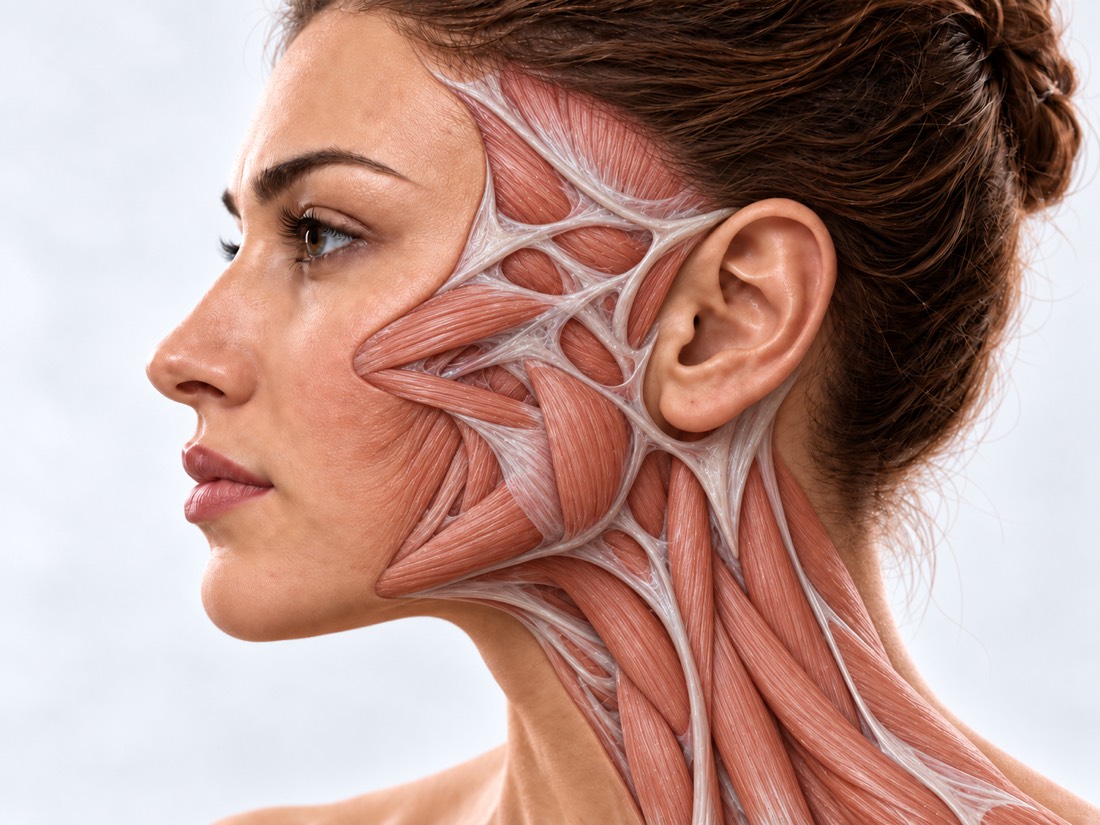
Conceptual visualization: recovery of tissues and bones of the face after injuryCONCEPTUAL VISUALIZATION
What it is
Tissue and bone defects, scars and disorders of facial functions after bullet, shrapnel and mine-explosive injuries.
What else is affected
In a Ukrainian study, 50.1% of 415 facially injured people had eye injuries.
How many operations
Usually several: one operation rarely gives a satisfactory result.
Who treats it
A plastic surgeon, and if necessary, an ophthalmologist, an ENT doctor, a dentist and a psychologist.

What remains
after facial injury.

A gunshot or mine-explosive wound to the face rarely affects one tissue: the skin, muscles, bones, and nerves are affected at the same time, and debris often remains in the tissues. Such wounds differ from ordinary ones - there is a lack of tissue, and some of them may die already after the injury.

During the war in Ukraine, the main cause of such injuries were explosions: artillery, mines, drones, rockets, bombs. In a multicenter study of 415 facial injuries treated in Kyiv and the region in 2022–2024, 96.9% were men, and combat trauma involved soft tissue in 97.1% of cases.

This page is about what remains when life is no longer threatened: tissue and bone defects, scars, asymmetry, facial expressions, chewing, speech or vision disorders. Both military and civilian apply — immediately after hospital admission or months later.

This is general information. The doctor will tell you what will suit you after the examination.

Most often
bothers

Each injury has its own set of consequences. Most often, they are combined: a bone defect — with a lack of soft tissues, a scar — with a violation of facial expressions.

01

Soft tissue defect

Missing skin, muscle or mucous membrane of the cheek or lip; the wound does not heal for a long time or has healed with traction.

Soft tissue defect

02

Bone defect

A part of the jaw, cheekbone, or orbital wall is missing: the contour of the face has changed, the teeth do not close properly, the eye is sunken.

Bone defect after injury
03

Scars

Scars tighten the eyelid, lip or corner of the mouth, make it difficult to close the eye or open the mouth.

Scars after facial injuries
04

Debris in fabrics

Fragments remained under the skin or deeper; some of them do not bother, some hurt or support inflammation.

Shrapnel in the face and neck
05

Mimicry and sensitivity

Part of the face does not move or is numb - this happens when the injury affects the nerves.

Paralysis of the facial nerve
06

Eye, hearing, chewing

Facial injuries are often combined with damage to the eyes, hearing, teeth and jaws.

Why the consequences
are difficult

The mechanism of injury depends on how much tissue is lost and how many stages are needed.

The energy of the explosion

The debris and the shock wave destroy the tissues not only along the channel, but also around it; part of the tissue dies already after the injury.

Several fabrics at once

A gunshot wound to the face combines complex bone damage with extensive soft tissue loss. According to a systematic review of civilian injuries, the lower jaw is most often affected — 46.6%.

Infection

Contaminated wounds are prone to infection. In a review of civilian wounds, infection developed after reconstruction in 13.3% of patients.

Concomitant injuries

Only 18% of those injured in the face in the Ukrainian study had an isolated facial injury; in others, other parts of the body were also affected.

When to seek medical advice?

Ancient consequences of injury - scars, defects, asymmetry - are a planned situation, they usually do not require emergency care. But a wound that is still healing and new symptoms can be dangerous.

103 immediately if:

  • bleeding from the wound does not stop, despite pressing;
  • the blood is gushing, bright red;
  • it is difficult to breathe or breathing is very frequent;
  • confusion or slurred speech;
  • blue, pale, or mottled skin or lips;
  • suddenly stopped seeing in one or both eyes;
  • sudden severe pain in the eye.

Do not delay a visit to the doctor:

On the same day: the wound is swollen, reddened, hurts more and more or pus flows from it; you feel unwell or have a fever; double vision, blurred vision, pain or redness of the eye appeared. In the coming weeks: the wound does not heal; it is difficult to cope with what has happened - psychological help after an injury is as important as treating the wound. Planned: scars, defect, asymmetry, chewing or speech disorders - for a consultation with a surgeon to draw up a plan of stages.

As planned
recovery

  1. Conversation and documents

    When and how the wounding happened, what operations have already been done, what worries you the most; discharges, descriptions of operations, CT scans and photos of the face before the injury, if available.

  2. Review

    The surgeon evaluates scars and defects, facial expressions and sensitivity, mouth opening, bite and eye position.

  3. CT

    Basic examination: shows bones, defects and debris. According to CT, reconstruction is planned.

  4. Virtual planning

    A three-dimensional model of the face is built by CT; according to a review of studies, such planning shortens the duration of surgery and improves the outcome compared to conventional surgery.

  5. Adjacent doctors

    If necessary, an examination by an ophthalmologist, ENT doctor, dentist or psychologist.

How to restore
face after injury.

Treatment is almost always staged. The updated treatment protocol for such injuries describes four phases: stabilization, wound preparation, reconstruction, and rehabilitation. A single operation rarely gives a satisfactory result - repeated interventions are usually required.

01

Wounds

Until the wounds have healed.

Cleansing
Dead tissues are removed carefully and repeatedly, preserving the living ones. Reviews advise not to delay surgical treatment, but to select the timing and method of reconstruction individually.
Infection
In a study of 21 wounded patients treated at the Kyiv Regional Hospital, infection before reconstruction was 47.7%, but had little effect on the outcome of tissue transplantation.
02

Soft tissues

Skin, muscles, mucous membrane.

Local patches
Small defects are covered with tissues of the face and neck - they are the closest in color and texture.
Free flaps
Large defects are closed with a complex of tissues from the hip, back or forearm, stitching the vessels together under a microscope. In a Ukrainian study, the hip flap took root in 90.5% of cases; all reconstructions were delayed: in half of the patients - earlier, and in half - later than 157 days after the injury.
03

Bones

Jaws, cheekbones, orbit.

Defect over 5 cm
According to a systematic review, the jaw or the middle area of the face is restored with a bone flap from the fibula; smaller defects — by bone grafting. Delayed bone grafting does not worsen the result.
Soft tissues first
The bone needs a good coating. In a study of combat defects of the lower jaw, transplanted bone from the pelvis (without its own vessels) took root in 75% of cases when soft tissues were sufficient, and only in 14.3% - even with a slight lack of them.
Contour and orbit
The bones of the face are also restored with individual implants made according to CT.
04

Functions and appearance

Mimicry
If the facial nerve is damaged, nerve operations or muscle transplantation are possible; the method is selected individually.
Scars
According to international recommendations, a combination of several methods, among them laser, gives the best chance for coarse scars.
The result
In a study of 42 patients after microsurgical reconstruction, 70% returned to work or study, 58% were satisfied; almost everyone spoke clearly, most swallowed without difficulty.
05

Psychological help

Why is this important?
According to a meta-analysis, 27% of patients had post-traumatic stress disorder after facial injuries after 1–3 months and 10% after 6–12 months. The authors emphasize early help.
Scars and mood
In people with facial scars, anxiety occurred in 26.1%, depression in 21.4%; the risk is higher if the scar is the result of violence.

How
we treat it.

Consequences of gunshot and mine-explosive injuries to the face are treated at Dr. Valikhnovskyi's Institute of Surgery in the direction of "Surgery of gunshot injuries" together with the direction of "New face". The clinic is responsible for the surgical part — wounds, tissues, bones, scars; vision, hearing and teeth are treated by specialist doctors.

CLINIC SERVICE Surgery of gunshot injuries Bullet, shrapnel, and landmine injuries — from a fresh wound to restoration of tissue, form, and function. View service

What we do for this condition

  • Surgical treatment and closure of wounds — the wound is cleaned again, if necessary under a vacuum bandage, and when it is clean, it is closed with skin or a flap.
  • Debris removal — according to indications: if the fragment hurts, causes an infection or lies next to the nerve; decision — after CT.
  • Local and perforating facial flaps — the defect is covered with tissues of the face and neck on a thin vascular pedicle — without rough tension.
  • Free microsurgical flaps — anterolateral thigh flap, radial forearm flap, fibula flap for the jaw.
  • Virtual planning and individual implants — mirror CT modeling, templates, implants made of titanium or PEEK according to the shape of the lost fragment.
  • Restoration of mimicry — cross-facial nerve plasticity, striated muscle transplantation.
  • Scars — excision, Z-plasty, laser grinding, lipofilling, expander for large areas.

Rostislav Valikhnovskyi

Plastic surgeon, candidate of medical sciences, founder of Dr. Valikhnovskyi Institute of Surgery.

How treatment works with us

  1. Photo onlineSend a photo of your face, CT scan and hospital discharges - the doctor will pre-evaluate the situation.
  2. ConsultationExamination, assessment of facial functions; if necessary, consultations of related doctors.
  3. Plan of stagesWhat to do now, and what to do after healing, in what sequence and approximately how many stages.
  4. OperationsTissues, bones, scars — in stages, with intervals between operations.
  5. RecoveryExaminations, care of scars, rehabilitation of facial expressions and chewing; if necessary, psychological support.

Common
questions

Short answers. What is right for you, the doctor will tell you during the consultation.

I was already operated on in the hospital. Can I apply?

Yes. Take statements, descriptions of operations and CT scans: the surgeon will evaluate what has been done and make a plan for the next steps.

How many operations will be needed?

Usually several. According to research, one operation rarely gives a satisfactory functional and aesthetic result. The surgeon explains the plan of stages in advance.

When can reconstruction be done?

The terms depend on the condition of the wounds and the general condition. Reviews advise not to delay unnecessarily, but the bone can be transplanted later - a delayed transplant does not worsen the result. Scars are operated mainly after ripening.

Do I need to remove all debris?

Not always. Decisions are made after an examination and a CT scan: debris that hurts, causes infection, or lies next to the nerve is removed. For more details, see the page about shrapnel in the face and neck.

Will speech and chewing return?

It depends on what is lost. In a study of 42 patients after microsurgical reconstruction, almost all spoke clearly, and most swallowed without difficulty. What is real in your case, the doctor will tell after the examination.

Do you treat civilians, not only military?

Yes, both military and civilians apply. The surgeon and administrator will explain the cost and conditions after the examination.

After an injury, it is difficult to look at yourself in the mirror. Is this normal?

Yes, this is a common reaction. In the first months after facial injuries, about 27% of patients have post-traumatic stress disorder, so psychological help is part of the treatment.

Sources

17 sources · systematic reviews, studies from Ukraine, international recommendations and NHS
showCollapse
  1. An Algorithmic Approach to the Management of Ballistic Facial Trauma in the Civilian PopulationJournal of Craniofacial Surgery, 2018doi:10.1097/SCS.0000000000004741 ↗
  2. Evidence-Based Medicine for Ballistic Maxillofacial TraumaFacial Plastic Surgery, 2023doi:10.1055/s-0043-1764347 ↗
  3. Management Protocol for Ballistic and Other High-Energy Avulsive Facial Injuries — An Update for the 21st CenturyCraniomaxillofacial Trauma & Reconstruction, 2026doi:10.3390/cmtr19010014 ↗
  4. War-related maxillofacial injuries in Ukraine: a retrospective multicenter studyArchives of Craniofacial Surgery, 2025doi:10.7181/acfs.2024.0074 ↗
  5. War as a teacher: Experiences of facial reconstruction with anterolateral thigh flap during the Ukrainian warJournal of Stomatology, Oral and Maxillofacial Surgery, 2025doi:10.1016/j.jormas.2025.102407 ↗
  6. Delayed reconstruction of the combat-related mandibular defects with non-vascularized iliac crest graftsJournal of Stomatology, Oral and Maxillofacial Surgery, 2024doi:10.1016/j.jormas.2024.101794 ↗
  7. The Different Surgical Approaches to Maxillofacial Reconstruction after Ballistic TraumaPlastic and Reconstructive Surgery Global Open, 2024doi:10.1097/GOX.0000000000006066 ↗
  8. Surgical Planning of Ballistic Facial InjuriesSeminars in Plastic Surgery, 2025doi:10.1055/s-0045-1801880 ↗
  9. Microsurgical reconstruction of complex maxillofacial gunshot wounds: Outcomes analysis and algorithmMicrosurgery, 2019doi:10.1002/micr.30418 ↗
  10. Combat Ballistic Injuries to the FaceSeminars in Plastic Surgery, 2025doi:10.1055/s-0044-1801407 ↗
  11. Traumatic maxillofacial injuries: Patterns, outcomes, and long-term follow-up of a military cohortDental Traumatology, 2023doi:10.1111/edt.12801 ↗
  12. Post-traumatic stress disorder in maxillofacial trauma victims — A systematic review and meta-analysisJournal of Stomatology, Oral and Maxillofacial Surgery, 2024doi:10.1016/j.jormas.2024.101993 ↗
  13. The association of affective disorders and facial scarring: Systematic review and meta-analysisJournal of Affective Disorders, 2018doi:10.1016/j.jad.2018.06.013 ↗
  14. Updated international clinical recommendations on scar management: part 2 — algorithms for scar prevention and treatmentDermatologic Surgery, 2014pubmed.ncbi.nlm.nih.gov/25068544 ↗
  15. Cuts and grazesNHS, 2026nhs.uk/conditions/cuts-and-grazes ↗
  16. SepsisNHS, 2026nhs.uk/conditions/sepsis ↗
  17. Vision lossNHS, 2025nhs.uk/conditions/vision-loss ↗

The figures on the page are from these sources.

VALIKHNOVSKI SURGERY PARTNERS

The consequences remained
facial injury?

Submit facial photos, CT scans and hospital discharges. The doctor will tell you what can be restored and in what sequence.

Call Send an enquiry
ONLINE ENQUIRY

Tell us how we can help.

Leave your contact details and briefly describe the situation. A coordinator will contact you to agree on the next step.

Preferred contact method