Painful point
There is a spot on the stump, touching which causes sharp pain.
 Discuss your case
Stump neuroma is a painful thickening at the end of a nerve cut during amputation. It causes a painful spot, pain from touch or pressure from the prosthetic socket, and may interfere with wearing the prosthesis. Treatment starts with the prosthetic socket, medications, and injections; if pain persists, the neuroma is excised and the nerve is transferred to the muscle.
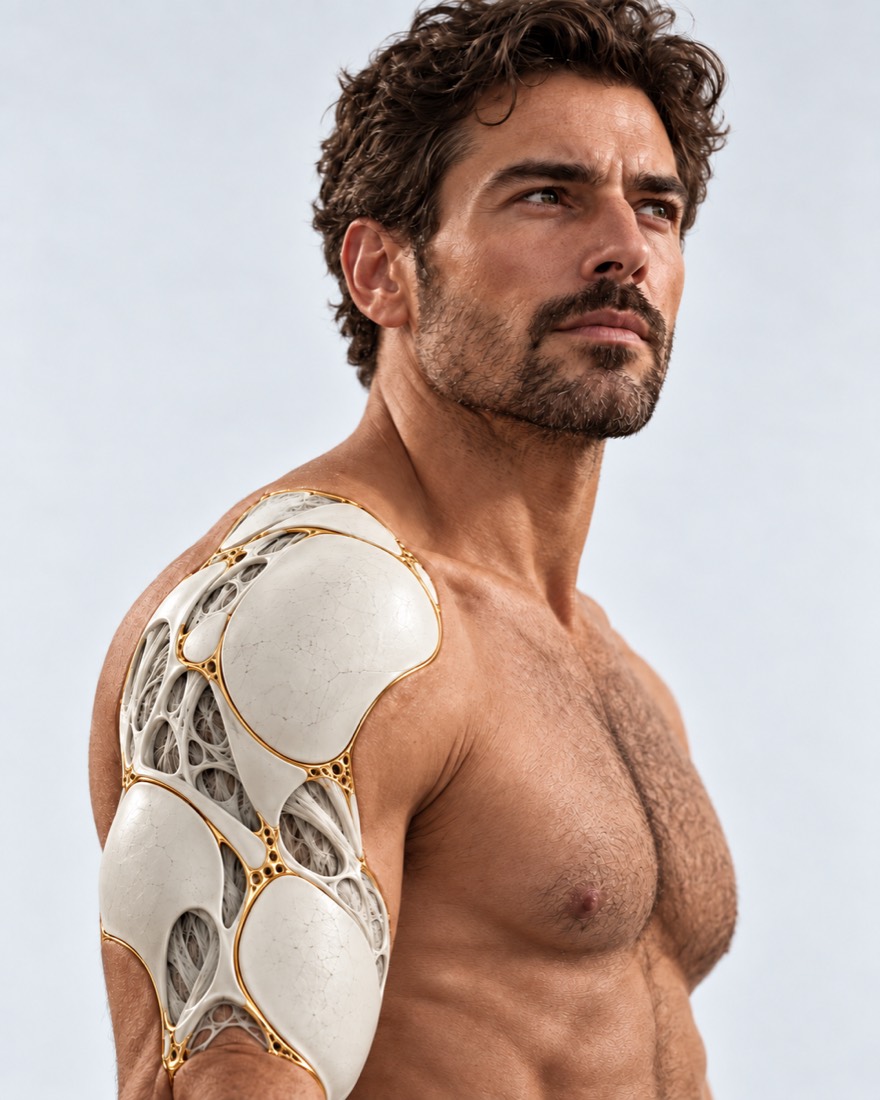 CONCEPTUAL VISUALIZATION
During an amputation, nerves are inevitably cut. The end of the nerve then tries to grow further, but has nowhere to go: the fibers grow chaotically and form a small knot — a neuroma. This is a normal part of nerve recovery after injury.
Not every neuroma hurts. It becomes a problem when it lies where the socket presses on it, or is irritated by movement and touch. Then doctors talk about a symptomatic, that is, painful, neuroma. It can interfere with wearing a prosthesis, worsen quality of life, and require taking medication.
A neuroma is just one cause of pain in the stump. Pain can also occur due to friction or rubbing from the socket, scars, or bone under thin skin. Separately, there can be phantom pain — in a limb that no longer exists. The treatment depends on what exactly hurts.
This is general information. The doctor will tell you what will suit you after the examination.
Pain from a neuroma is associated with a specific nerve and a specific spot on the stump. The signs that people most often report:
There is a spot on the stump, touching which causes sharp pain.
It hurts when the socket presses on this point; the prosthesis has to be removed or worn less.
Problematic stumpPain shoots, burns, or stabs — doctors call such pain nerve pain, or neuropathic pain.
If you lightly tap on the nerve spot, tingling or shooting pain appears along it.
The stump poorly tolerates cold — pain increases.
Alongside, there can also be phantom pain: it feels as if the lost hand or foot hurts.
Phantom painA neuroma forms from the end of a cut nerve. How often it hurts has been assessed by two meta-analyses:
After injury, the nerve regenerates irregularly or incompletely — this leads to the formation of a neuroma.
Painful neuroma — in 15% of people, stump pain for any reason — in 59%.
Lower limb amputationPainful neuroma — in 22%, stump pain for any reason — in 58%.
Upper limb amputationIn an ultrasound study of 80 patients, among 159 neuromas found, 53 were painless; pain did not depend on the size of the neuroma, age, or duration of the amputation.
Friction and wounds from the prosthetic socket, scars, bone under thin skin also cause stump pain — they must be distinguished from a neuroma.
Problematic stumpAn old neuroma usually does not require emergency care: this is a planned consultation. Urgent action is needed if signs of blood infection or a clot appear after amputation or surgery on the stump.
Immediately - to the surgeon who operated, and if it does not work - to the reception department: after a recent stump surgery, pain or swelling increases rapidly. On the same day: stump skin is hot, red, and painful; fluid or pus comes from the wound or skin; swelling of the stump increases; a pulsating pain and swelling appear in one leg or arm (possible clot); coughing up blood. Planned: painful spot on the stump, pain from the socket, shooting pain that makes it difficult to wear the prosthesis.
When and at what level the amputation was, exactly where it hurts, what kind of pain it is, whether medications and injections helped, how the prosthesis behaves.
The doctor searches for the painful point, taps along the nerve, examines the skin, scars, and places where the socket presses.
A local anesthetic is injected near the suspicious nerve: if the pain disappears temporarily, the source is most likely found.
Ultrasound shows the neuroma and its connection to the nerve and helps distinguish a painful neuroma from a non-painful one; MRI — if needed.
They evaluate the socket: whether it presses on the neuroma and what to change in the prosthesis.
There is no single universally accepted method: treatment is selected based on the cause of the pain, the location of the neuroma, and plans regarding the prosthesis.
This is usually where they start.
If the pain persists despite treatment.
If the amputation is only planned.
Stump neuroma at the Dr. Valikhnovskyi Institute of Surgery is treated in the 'Bionic Limb Prostheses' direction. The clinic performs the surgical part — neuroma excision, TMR or RPNI, stump reconstruction. Medications and pain procedures are managed by a pain doctor, and a prosthetist-partner selects the socket and prosthesis.
Plastic surgeon, candidate of medical sciences, founder of Dr. Valikhnovskyi Institute of Surgery.
Short answers. What is right for you, the doctor will tell you during the consultation.
No. In an ultrasound study of 80 patients with 159 neuromas, 53 were not painful, and the pain did not depend on the size of the neuroma. Therefore, it is important to find the one that is painful.
The diagnosis is made through conversation and examination: a painful point at the nerve site, tingling when tapped, relief after a trial injection of painkiller, confirmation by ultrasound or MRI.
Sometimes, yes. They start by fitting a socket, medications for nerve pain, and injections. If the pain persists, surgery is discussed.
To reduce this risk, the end of the nerve is not left free: it is transferred to a muscle (TMR) or wrapped in muscle (RPNI). In a review of 39 articles, neuroma symptoms occurred less frequently after TMR.
It may help. In a review of 17 studies, after TMR or RPNI, phantom pain decreased in 45–80% of patients depending on the study — that is, not in all patients.
The timing depends on the extent of the surgery and wound healing. The exact plan is made by the doctor together with the prosthetist.
Yes, TMR or RPNI can be performed during the amputation itself. The data are encouraging but mostly come from small observational studies.
The figures on the page are from these sources.
Send photos of the stump, discharge summaries, and scans. The doctor will say whether it looks like a neuroma and what can be done — with surgery or without.
Leave your contact details and briefly describe the situation. A coordinator will contact you to agree on the next step.