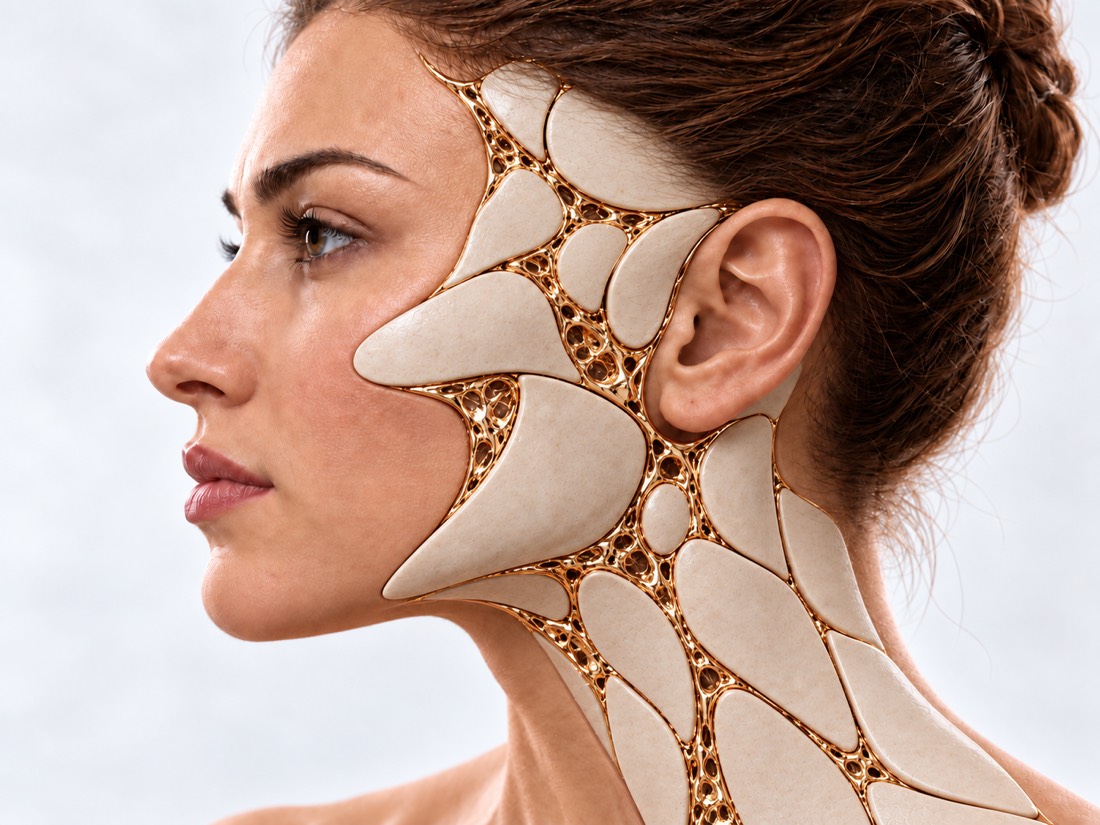
CONDITION / FACE

Lowering of the lower eyelid and corner of the eye.

Drooping of the lower eyelid is a condition where the eyelid is lower than it should be, a strip of protein is visible from under the iris, and the outer corner of the eye is rounded or shifted down. Occurs with age, after blepharoplasty or canthoplasty. The eyelid is returned to its place, strengthening the outer corner of the eye.

Conceptual visualization: the lower eyelid and the outer corner of the eyeCONCEPTUAL VISUALIZATION
What it is
The lower eyelid is lowered, the white under the iris is visible, the outer corner of the eye is rounded.
How common
After lower blepharoplasty — from 0.4% (visible, with symptoms) to 15% (any degree) in various studies.
What bothers
Dryness, tearing, discomfort in the eye, "round" eyes and asymmetry.
Who treats it
A surgeon who operates on the eyelids; the condition of the eye is evaluated by an ophthalmologist if necessary.

What is
drooping of the eyelid and corner of the eye.

Normally, the lower eyelid fits tightly to the eye, and its edge passes along the lower edge of the iris. It is held by a ligament attached to the bone near the outer corner of the eye. When the eyelid is stretched or this support is broken, the eyelid droops, a strip of protein appears under the iris, and the corner of the eye becomes rounded or shifts down.

Doctors call this a violation of the position (malposition) of the lower eyelid. It often happens and is associated with discomfort, visual disturbances and a change in appearance. Among the reasons are the age-related weakening of tissues around the eye, the consequences of lower blepharoplasty and aesthetic operations on the corner of the eye, paralysis of the facial nerve.

This page is about the support of the eyelid and the outer corner of the eye: how they are strengthened with canthopexy and canthoplasty. If, after blepharoplasty, the eyelid is turned outward or is pulled down by a scar, this is a separate page.

This is general information. The doctor will tell you what will suit you after the examination.

How
omission presents.

Changes occur in one or both eyes. The most noticeable thing is the appearance, but the eye itself can also be a concern.

01

A protein is visible

A strip of protein appears between the lower edge of the iris and the eyelid.

02

Round eye corner

The outer corner of the eye is rounded, drooped or creased - especially after an unsuccessful aesthetic canthoplasty.

03

Dryness and lacrimation

Feeling of sand in the eye, redness, tears; dry eye may appear for the first time after blepharoplasty.

04

The eye closes worse

It is difficult to close the eyelids completely, especially at night.

Lagophthalmus
05

Asymmetry

One eye looks different than the other - a lower eyelid, a different shape of the corner.

Why the eyelid?
descends

Most often, several reasons work together. The method of treatment depends on which is the main one.

Stretched eyelid

With age, the tissues around the eye weaken, and the lower eyelid stretches horizontally - it no longer fits tightly to the eye.

Blepharoplasty

The risk is higher if the eyelid was already stretched or too much skin was removed before the surgery. The eyelid can also be pulled down by scarring of the deep layers during healing.

Unsatisfactory result of blepharoplasty

Face structure

Protruding eyes and the so-called negative vector — when the eyeball protrudes forward further than the cheekbone — make the eyelid more prone to drooping.

Unsuccessful canthoplasty

Aesthetic surgery on the outer corner of the eye to change the shape of the eyes, if performed unsuccessfully, can deform the corner: round it, form a fold, expose the protein.

Paralysis of the facial nerve

When the nerve does not work, the eyelid droops, and the eye closes more poorly and dries up.

Paralysis of the facial nerve

When to seek medical advice?

Absence that has developed over weeks and months usually does not require emergency care. But if there was a recent operation or trauma to the eyelids, some signs require immediate help: bleeding into the eye socket may appear like this.

103 immediately if:

  • suddenly stopped seeing in one or both eyes;
  • sudden severe pain in or around the eye;
  • after an operation or an injury to the eyelids, the pain in or around the eye increases;
  • after surgery or trauma to the eyelids, the eye protrudes or became tense;
  • after surgery or trauma to the eyelids, the eyelids do not open;
  • after surgery or trauma to the eyelids, double vision appeared or vision worsened;
  • the face suddenly turned to one side;
  • sudden weakness of the hand - a person cannot raise both hands and hold them;
  • speech was suddenly broken.

To the doctor without delay:

On the same day: the eye is very red and painful, photophobia, blurred vision or double vision have appeared. If you recently had blepharoplasty and something unexpected appeared, immediately contact the clinic where you were operated on; with severe pain, bulging of the eye or deterioration of vision - 103. Similarly, on the same day - if weakness of one half of the face increased over several days and the eyelid or corner of the mouth drooped: the treatment of paralysis of the facial nerve works better if it is started early. Planned: the eyelid has gradually lowered, the corner of the eye has rounded, you are concerned about dryness, lacrimation or appearance - make an appointment for a consultation.

As defined,
that holds the eyelid.

  1. Conversation and documents

    When changes were noticed; whether there was blepharoplasty, canthoplasty, injury, paralysis; statement and photo before the operation, if any.

  2. Examination of the eyelids

    The eyelid is gently pulled away from the eye and watched as it quickly returns. This is how they assess how stretched it is, whether it holds the outer corner and whether the scar does not pull it.

  3. Eye examination

    How the eyelids close, does the cornea dry out; if necessary, consult an ophthalmologist.

  4. Photos and measurements

    How much protein is visible under the iris, the position and shape of the corner of the eye - for a plan and comparison.

How we treat
drooping of the eyelid.

The method depends on the cause: a stretched eyelid, scar, lack of skin or facial structure. Several techniques are often combined. After blepharoplasty, a violation of the position of the eyelids is most often noticed in the first 1–6 weeks, so the healing of the tissues is first evaluated.

01

Without surgery

For the time of healing or if it is too early to operate.

Eyelid massage
Massage of the lower eyelid is one of the methods of treating drooping after blepharoplasty; the doctor will show how to do it.
Eye protection
Moisturizing drops and ointment; if the eye does not close at night, the eyelids are sealed with a special patch.
Hyaluronic acid
Injections under the eyelid can raise it slightly: in a series of 31 patients, the protein became visible on average 1.04 mm less. The effect weakens over time, so the procedure is repeated. Swelling, redness, bruising and soreness at the injection sites are possible.
02

Operation on the corner of the eye

When the eyelid is stretched or the corner of the eye is displaced.

Canthopexy
If the eyelid is stretched moderately, the outer corner is tightened and fixed with a suture through an incision on the upper or lower eyelid, without an incision in the very corner of the eye.
Canthoplasty
If the stretch is pronounced, the eyelid is shortened and fixed again - the most common method is called a lateral tarsal strip. According to a systematic review of 15 studies (709 patients), her options had a high success rate and few relapses.
After unsuccessful canthoplasty
The corner of the eye is restored and the eyelid is stabilized. In a series of 15 patients (25 eyelids) after such an operation, the result was satisfactory, and the eye symptoms decreased in all of them.
03

If the eyelid is pulled by a scar

More complicated cases after blepharoplasty.

Spacer
The scar is dissected, and a graft-spacer is sewn under the eyelid - for example, from the mucous membrane of the palate or from cell-free dermis. Both options in a comparative study of 60 patients lifted the eyelid.
Combined operation
They combine tightening of the middle area of the face, a spacer and fixation of the corner of the eye. Such a correction is complex and not always predictable: the improvement is of varying degrees, so the plan and expectations are discussed in advance.
04

If you are planning blepharoplasty

Risks
Lowering of the eyelid happens more often if the eyelid is already stretched before the operation, the eyes are bulging or a lot of skin is removed. Therefore, before lower blepharoplasty, the eyelid must be evaluated.
Prevention
A stretched eyelid is strengthened during the same operation — canthopexy or canthoplasty. Access from the inside of the eyelid, according to a review of studies, gives a very low percentage of violations of its position.

How
we treat it.

Drooping of the lower eyelid and the outer corner of the eye are treated at Dr. Valikhnovskyi's Institute of Surgery in the direction of "Treatment of complications of aesthetic operations" — in particular, after blepharoplasty or canthoplasty in another clinic. The clinic is responsible for eyelid surgery; if the cornea is damaged, it is treated by an ophthalmologist.

CLINIC SERVICE Treatment of complications of aesthetic operations Skin necrosis, dehisced wounds, capsular contracture, liposuction irregularities, and gross scarring. View service

What we do for this condition

  • Canthopexy - the outer corner of the eye is tightened and fixed with a suture so that the eyelid again fits tightly to the eye.
  • Canthoplasty and lateral tarsal strip — the stretched eyelid is shortened and fixed to the outer corner of the eye again.
  • Spacers and grafts — if the eyelid is pulled by a scar, it is dissected, and a graft or spacer is sewn under the eyelid.
  • Repeat blepharoplasty — correction of the result of the previous surgery on the eyelids.
  • Mesh materials — in difficult cases, a mesh implant gives the lower eyelid additional support.

Rostislav Valikhnovskyi

Plastic surgeon, candidate of medical sciences, founder of Dr. Valikhnovskyi Institute of Surgery.

How treatment works with us

  1. Photo onlineSend a photo of the eyes directly and from the side and, if available, an extract from the clinic where the operation was performed.
  2. ConsultationExamination of the eyelids and eye, stretching tests, measurements; if necessary, consult an ophthalmologist.
  3. PlanWhat exactly lowered the eyelid and what to do: wait, massage or surgery - and when.
  4. SurgeryCanthopexy, canthoplasty, if necessary, a spacer — the techniques are selected according to the cause.
  5. RecoveryThe first weeks — swelling and bruises; the doctor will explain how to care for the eye and when to come for an examination.

Common
questions

Short answers. What is right for you, the doctor will tell you during the consultation.

Will the drooping of the eyelid pass after blepharoplasty exactly?

In the first weeks, the tissues are still healing, so they first assess how the position of the eyelid changes; among the methods of treatment is massage. If the eyelid does not return to its place, it is corrected by surgery. How long to wait, the doctor will tell after the examination.

How does canthopexy differ from canthoplasty?

Canthopexy is suturing of the outer corner of the eye when the eyelid is stretched moderately. Canthoplasty - the eyelid is shortened and fixed again; it is chosen when the stretching is pronounced.

Is it possible to do without surgery?

Massage, eye drops and taping protect the eye while it heals. Hyaluronic acid injections can lift the eyelid slightly, but the effect wears off over time. To strengthen the corner of the eye for a long time, surgery is usually required.

I had canthoplasty to reshape my eyes and the corner was rounded. What to do?

The corner of the eye can be restored and the eyelid stabilized. In a series of 15 patients after unsuccessful aesthetic canthoplasty, the result was satisfactory in all of them. The doctor will tell you what will suit you after the examination.

How often does the eyelid droop after blepharoplasty?

Varies between studies: in a series of 111 patients operated on between 1985 and 1990, 15% had some degree of prolapse, and in a cohort of 2007 patients with marked prolapse with symptoms, 0.4%.

Can the drop come back after surgery?

This is possible, although according to a systematic review, there are few recurrences after variants of the lateral tarsal strip. Correction after blepharoplasty is considered difficult and not always predictable, so expectations are discussed in advance.

Do you need an ophthalmologist?

So, if the eye is red, hurts or vision has worsened: the condition of the cornea is assessed by an ophthalmologist. If vision has suddenly disappeared or worsened after recent eyelid surgery, call 103. The surgeon will correct the position of the eyelid.

Sources

18 sources · systematic reviews, reviews, research and NHS
showCollapse
  1. Towards optimal management of lower eyelid malpositions: A systematic review of treatment effectiveness and safetyClinics (São Paulo), 2025doi:10.1016/j.clinsp.2024.100547 ↗
  2. Blepharoplasty complicationsPlastic and Reconstructive Surgery, 2010doi:10.1097/PRS.0b013e3181ce17e8 ↗
  3. Lower Eyelid Blepharoplasty: Minimizing Complications and Correction of Lower Eyelid MalpositionFacial Plastic Surgery, 2023doi:10.1055/s-0043-1761912 ↗
  4. Management of Postblepharoplasty Lower Eyelid RetractionFacial Plastic Surgery Clinics of North America, 2019doi:10.1016/j.fsc.2019.07.014 ↗
  5. Surgical preferences for lateral canthoplasty and canthopexyCurrent Opinion in Ophthalmology, 2014doi:10.1097/ICU.0000000000000094 ↗
  6. Involutional ectropion: etiological factors and therapeutic managementInternational Ophthalmology, 2023doi:10.1007/s10792-022-02475-3 ↗
  7. Lower Lid Tightening Procedures: How and WhenClinics in Plastic Surgery, 2025doi:10.1016/j.cps.2024.07.003 ↗
  8. Traditional Lower Blepharoplasty: Is Additional Support Necessary? A 30-Year ReviewPlastic and Reconstructive Surgery, 2011doi:10.1097/PRS.0b013e3182043a88 ↗
  9. Postblepharoplasty ectropion. Prevention and managementArchives of Otolaryngology–Head & Neck Surgery, 1991doi:10.1001/archotol.1991.01870200046006 ↗
  10. Measurement of Change in Lower Eyelid Position in Patients Undergoing Transcutaneous Skin-Muscle Flap Lower Eyelid BlepharoplastyJAMA Facial Plastic Surgery, 2016doi:10.1001/jamafacial.2016.0673 ↗
  11. Lower eyelid blepharoplasty: A comparison of transconjunctival, transcutaneous, and combined blepharoplasty techniquesHNO, 2026doi:10.1007/s00106-026-01764-y ↗
  12. Preventing Retraction With Use of Primary Eyelid Spacer Grafts in Cosmetic Lower Lid BlepharoplastyAesthetic Surgery Journal, 2023doi:10.1093/asj/sjad183 ↗
  13. Restoration of the Lateral Canthus and Stabilization of the Lower Eyelid After Failed Esthetic Lateral CanthoplastyJournal of Craniofacial Surgery, 2023doi:10.1097/SCS.0000000000009630 ↗
  14. Treatment of lower eyelid retraction by expansion of the lower eyelid with hyaluronic acid gelOphthalmic Plastic and Reconstructive Surgery, 2007doi:10.1097/IOP.0b013e318137aa41 ↗
  15. Comparison of the efficacy of hard palate grafts with acellular human dermis grafts in lower eyelid surgeryPlastic and Reconstructive Surgery, 2005doi:10.1097/01.prs.0000177694.39466.b2 ↗
  16. Eyelid surgeryNHS, 2023nhs.uk/tests-and-treatments/cosmetic-procedures/cosmetic-surgery/eyelid-surgery ↗
  17. Vision lossNHS, 2025nhs.uk/conditions/vision-loss ↗
  18. Bell's palsyNHS, 2023nhs.uk/conditions/bells-palsy ↗

The figures on the page are from these sources.

VALIKHNOVSKI SURGERY PARTNERS

The eyelid drooped
has the corner of the eye changed?

Send a photo of your eyes and, if available, a statement from the clinic where you were operated on. The doctor will tell you what is holding the eyelid and how it can be lifted.

Call Send an enquiry
ONLINE ENQUIRY

Tell us how we can help.

Leave your contact details and briefly describe the situation. A coordinator will contact you to agree on the next step.

Preferred contact method