CONDITION / FACE

Papillomas and keratomas on the face.

Papillomas on the face are commonly called soft skin "bumps" and viral warts, and keratomas are brown waxy spots and bumps. They are mostly benign, but it is important to distinguish them from actinic keratosis, which can turn into skin cancer.

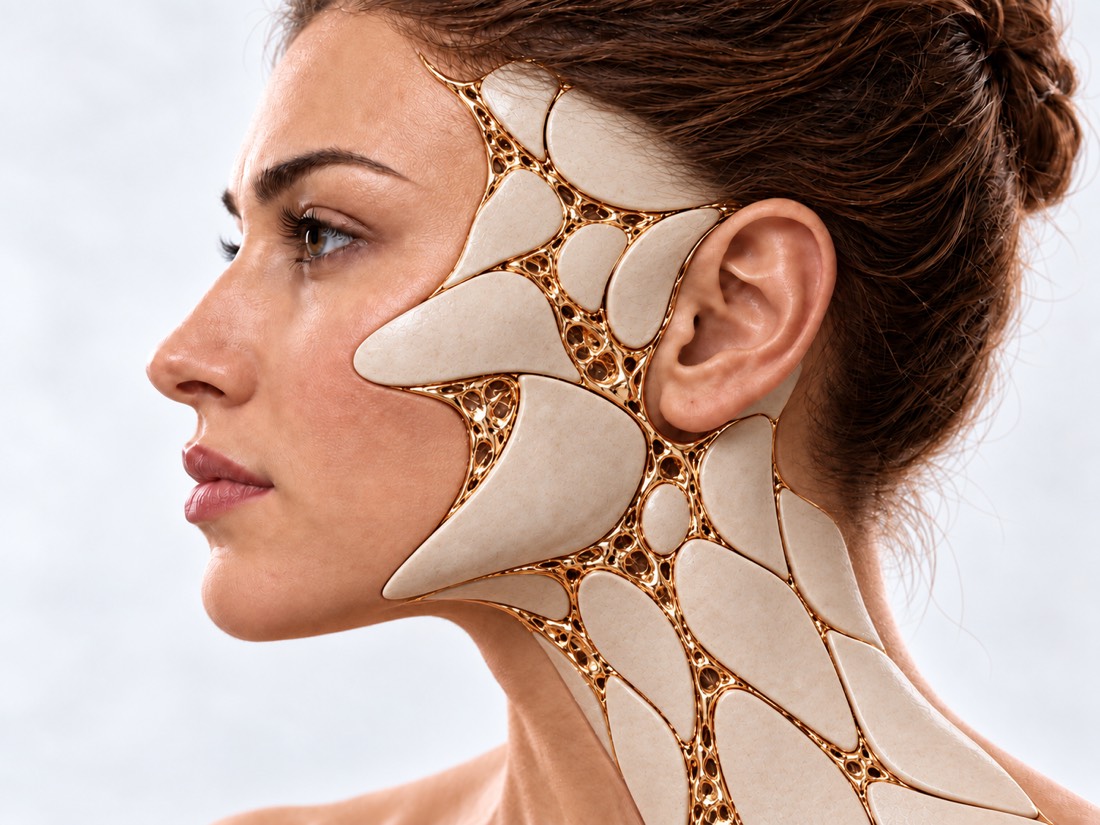
Conceptual visualization: facial skinCONCEPTUAL VISUALIZATION
What it is
Benign growths of the skin: "bumps", warts, seborrheic keratomas.
The main thing
Seborrheic keratoma is benign, actinic keratosis is a precancerous condition.
Whether to delete
Mostly by choice; mandatory - if the formation changes or there is doubt.
Who treats it
The diagnosis is made by a dermatologist; removed by a dermatologist or surgeon.

What is
papillomas and keratomas.

Various formations are called "papilloma" in everyday life. Most often, it is a soft skin "bump" of skin color or a little darker - doctors call it an acrochordon. It is very common, usually small and harmless, and on the face it often appears on the eyelids. Sometimes a viral wart is called a "papilloma".

Keratoma is most often seborrheic keratosis: a waxy brown or black spot or bump. It is the most common benign skin tumor and most often appears on the face and upper body.

Actinic, or solar, keratosis should be distinguished from seborrheic keratosis. These are dry, rough spots on the skin that have been damaged by the sun for years. Actinic keratosis is a precancerous condition: it occasionally turns into skin cancer.

The opposite also happens: melanoma can look like an ordinary keratoma. Therefore, the removed formations are examined under a microscope.

This is general information. The doctor will tell you what will suit you after the examination.

How are they
look like

An accurate diagnosis is made by a doctor, often with a dermatoscope. But usually these formations look like this.

01

"Vysulka"

Soft, skin-colored or slightly darker, as if hanging from the skin; from 2 mm to 5 cm. It usually does not hurt. Often — on the eyelids and neck.

Neoplasms of the eyelids

02

Wart

Hard and rough. There are also flat warts - round, yellowish, often several of them.

03

Seborrheic keratoma

A waxy brown or black spot or bump. Most often — on the face and body.

04

Actinic keratosis

Dry, rough, emery-like patch 1–2 cm: skin-colored, pink, red, or brown, may itch. Appears where the skin is often exposed to the sun.

Precancerous skin diseases

Why they
appear

Each type has its own reason, and it depends on how carefully the formation should be monitored.

Age and heredity

Seborrheic keratosis is associated with age, genetic predisposition, and possibly UV exposure.

the sun

Actinic keratosis is the result of long-term ultraviolet exposure, so it appears on the face, ears, and scalp.

Friction, weight, hormones

"Bums" more often appear where the skin rubs, as well as with obesity, type 2 diabetes and during pregnancy. They are associated with insulin resistance.

Virus

Warts are caused by a virus. They should not be combed or touched during shaving.

When to seek medical advice?

Papillomas and keratomas usually do not require emergency care. Immediately - only when the injured formation is bleeding profusely.

103 immediately if:

  • bleeding from an injured papilloma or keratoma does not stop, even though you press the wound tightly;
  • the blood spurts, bright red and hard to stop.

To the doctor without haste, but also without delay:

On the same day: the injured formation is reddened, swollen, hurts more and more, or pus is released from it. Urgently, without waiting for a scheduled appointment, to a dentist or maxillofacial surgeon: a rough spot appeared on the lip that does not go away. In the coming days: the formation grows, bleeds, changes color or appearance, hurts or turns into a nodule; a wart appeared on his face. Planned: "bumps", warts or keratomas do not change, but interfere - stick, irritate or do not like the look.

How we make the
diagnosis

  1. Conversation

    When did the formation appear and did it change; how much have you been in the sun; had skin cancer

  2. Review

    The doctor recognizes most of the formations by appearance.

  3. Dermatoscopy

    Examination through a magnifying device with illumination helps to distinguish a keratoma from a melanoma or other tumor.

  4. Histology

    If there is any doubt, the formation is removed and examined under a microscope: a melanoma similar to a keratoma is often indistinguishable even to an experienced dermatologist.

How to delete
papillomas and keratomas.

Benign growths and seborrheic keratomas do not necessarily need to be removed: they are mostly done at will when they are in the way. The method is chosen according to the type, size and place of formation.

01

Seborrheic keratoma

The choice is between the result, the trace and the possibility of histology.

Scraping
Keratoma is scraped off with a special spoon (curettage). In a randomized trial of 123 keratomes, 87.5% were completely removed versus 55% after 532 nm laser and 50% after freezing; tissue can be examined.
Laser and electrocoagulation
On the face, CO2 laser, erbium laser, and electrocoagulation gave comparable results — better than freezing. In a review of 22 studies, such lasers removed up to 90% of keratome in one session.
Freezing
The simplest method, but less effective: after one session, 68% were healed by keratome, while after the erbium laser - all.
Creams
There are still no means that would reliably match the removal.
02

"Bums" and warts

"Extrusions"
They are cut with a surgical blade or scissors, frozen or removed with heat. Once removed at that location, they usually do not return.
Warts
They often pass by themselves, even in months or years. Pharmaceutical products cannot be used on the face; a wart on the face is treated by a dermatologist.
Do not delete yourself
The risk is infection, bleeding and scarring.
After removal
Scarring or darkening of the skin is possible, especially on dark skin; it usually goes away, but sometimes it stays.
03

Actinic keratosis

They treat it because it is a precancerous condition.

Sun protection
Mandatory part of treatment: cream with SPF at least 30, hat, no tanning bed.
Creams and freezing
The guidelines recommend creams with imiquimod or 5-fluorouracil and freezing; photodynamic therapy is also possible.
Excision
If the spot thickens, bleeds or grows, it is removed and examined.
risk
Transition to cancer — from 0% to 0.075% per spot per year; in those who already had non-melanoma skin cancer, up to 0.53% per spot.

How
we treat it.

Papillomas and keratomas on the face at Dr. Valikhnovskyi's Institute of Surgery are removed in the direction of "New face" - when the formation raises doubts, interferes or is located where it is important to preserve facial features. The removed tissue is examined. If the histology shows skin cancer, then proceed according to the oncologist's plan; a dermatologist treats actinic keratosis with creams and photodynamic therapy.

CLINIC SERVICE A new face Form, symmetry, facial expressions and functions after injuries, wounds, burns, removal of tumors and congenital changes. View service

What we do for this condition

  • Surgical removal with histology — formations are removed and examined under a microscope; what to do next depends on the conclusion.
  • Local patches — if a defect remains after the removal of a larger formation, it is covered with skin from the face or neck - the closest in color and texture.
  • Reconstruction in one operation — if the edges of the cut are clean, the wound is closed immediately; if not, after histology.

Rostislav Valikhnovskyi

Plastic surgeon, candidate of medical sciences, founder of Dr. Valikhnovskyi Institute of Surgery.

How treatment works with us

  1. Photo onlineSend clear photos of formations from up close and from afar - the doctor will pre-evaluate the situation.
  2. ConsultationExamination of formations and facial skin; if necessary, consult a dermatologist.
  3. PlanWhat formations should be removed, in what way and how to close the wound.
  4. RemovalFormations are removed and sent for histological examination.
  5. HealingThe doctor explains the histological findings and how to care for the removal site.

Common
questions

Short answers. What is right for you, the doctor will tell you during the consultation.

Do papillomas and keratomas turn into cancer?

"Bulks" and seborrheic keratomas are benign. Precancerous actinic keratosis, although it rarely turns into cancer. It happens that keratoma is mistaken for melanoma: among 9,204 formations that doctors thought were keratoma, 0.66% turned out to be melanoma.

How does seborrheic keratosis differ from actinic keratosis?

Seborrheic - a waxy brown spot or tubercle, benign. Actinic - a dry, rough patch on sun-damaged skin; it is a precancerous condition, it is treated.

Is it possible to remove the papilloma yourself?

No: risk of infection, bleeding and scarring. In addition, only a doctor can distinguish it from a formation that needs to be investigated.

Will the papilloma return after removal?

The "protrusion" in the same place usually does not return. After laser removal of seborrheic keratoma, recurrences per year ranged from 0% to 6%.

Will there be a trace?

Scarring or darkening of the skin is possible, especially on dark skin. It's usually temporary, but sometimes it stays.

Is it possible to remove warts on the face with pharmaceutical products?

No, they are not used on the face. It is better to show a wart on the face to a dermatologist; often it passes by itself, but in months or years.

Are "prolapses" related to diabetes?

They are associated with insulin resistance and type 2 diabetes. If there is a lot of "swelling", discuss with your doctor whether you should check your blood sugar.

Sources

17 sources · reviews, guidelines and research
showCollapse
  1. Seborrheic keratosisJournal der Deutschen Dermatologischen Gesellschaft, 2023doi:10.1111/ddg.14984 ↗
  2. Prevalence of melanoma clinically resembling seborrheic keratosis: analysis of 9204 casesArchives of Dermatology, 2002doi:10.1001/archderm.138.12.1562 ↗
  3. Seborrheic keratosis-like melanoma: a diagnostic challengeMelanoma Research, 2021doi:10.1097/CMR.0000000000000756 ↗
  4. The natural history of actinic keratosis: a systematic reviewBritish Journal of Dermatology, 2013doi:10.1111/bjd.12420 ↗
  5. Guidelines of care for the management of actinic keratosisJournal of the American Academy of Dermatology, 2021doi:10.1016/j.jaad.2021.02.082 ↗
  6. Evidence- and consensus-based (S3) Guidelines for the Treatment of Actinic Keratosis - International League of Dermatological Societies in cooperation with the European Dermatology Forum - Short versionJournal of the European Academy of Dermatology and Venereology, 2015doi:10.1111/jdv.13180 ↗
  7. Efficacy and safety of cryotherapy, electrodesiccation, CO2 laser, and Er:YAG laser in the treatment of seborrheic keratosisDermatologic Therapy, 2021doi:10.1111/dth.15083 ↗
  8. Effectiveness of erbium:YAG laser and cryosurgery in seborrheic keratoses: Randomized, prospective intraindividual comparison studyJournal of Dermatological Treatment, 2015doi:10.3109/09546634.2015.1024597 ↗
  9. Practical Approaches for Seborrheic Keratosis Treatment: Curettage Versus 532-nm Lithium Borate Laser Versus Cryotherapy: A Prospective Interventional StudyLasers in Surgery and Medicine, 2025doi:10.1002/lsm.70042 ↗
  10. Advances in Laser Treatments for Seborrheic Keratosis: A Scoping Review of Efficacy, Safety, and Patient OutcomesDermatologic Surgery, 2026doi:10.1097/DSS.0000000000004868 ↗
  11. Efficacy and safety of topical treatments for seborrheic keratoses: a systematic reviewJournal of Dermatological Treatment, 2023doi:10.1080/09546634.2022.2133532 ↗
  12. Topical treatments for cutaneous wartsCochrane Database of Systematic Reviews, 2012doi:10.1002/14651858.CD001781.pub3 ↗
  13. Association of acanthosis nigricans and skin tags with insulin resistanceAnais Brasileiros de Dermatologia, 2012doi:10.1590/s0365-05962012000100012 ↗
  14. Skin tagsNHS, 2023nhs.uk/conditions/skin-tags ↗
  15. Actinic keratoses (solar keratoses)NHS, 2023nhs.uk/conditions/actinic-keratoses ↗
  16. Warts and verrucasNHS, 2023nhs.uk/conditions/warts-and-verrucas ↗
  17. Cuts and grazesNHS, 2026nhs.uk/conditions/cuts-and-grazes ↗

The figures on the page are from these sources.

VALIKHNOVSKI SURGERY PARTNERS

Papilloma or keratoma
does it bother you?

Send a photo of the formation. The doctor will tell you what it is and whether it should be removed.

Call Send an enquiry
ONLINE ENQUIRY

Tell us how we can help.

Leave your contact details and briefly describe the situation. A coordinator will contact you to agree on the next step.

Preferred contact method