CONDITION / FACE

Paralysis of the facial nerve.

Paralysis of the facial nerve — weakness or immobility of the muscles of half of the face: the corner of the mouth drops, the eye does not close. Most often, movement returns on its own or with medication, and if the paralysis is long-lasting, symmetry and a smile are restored by surgery.

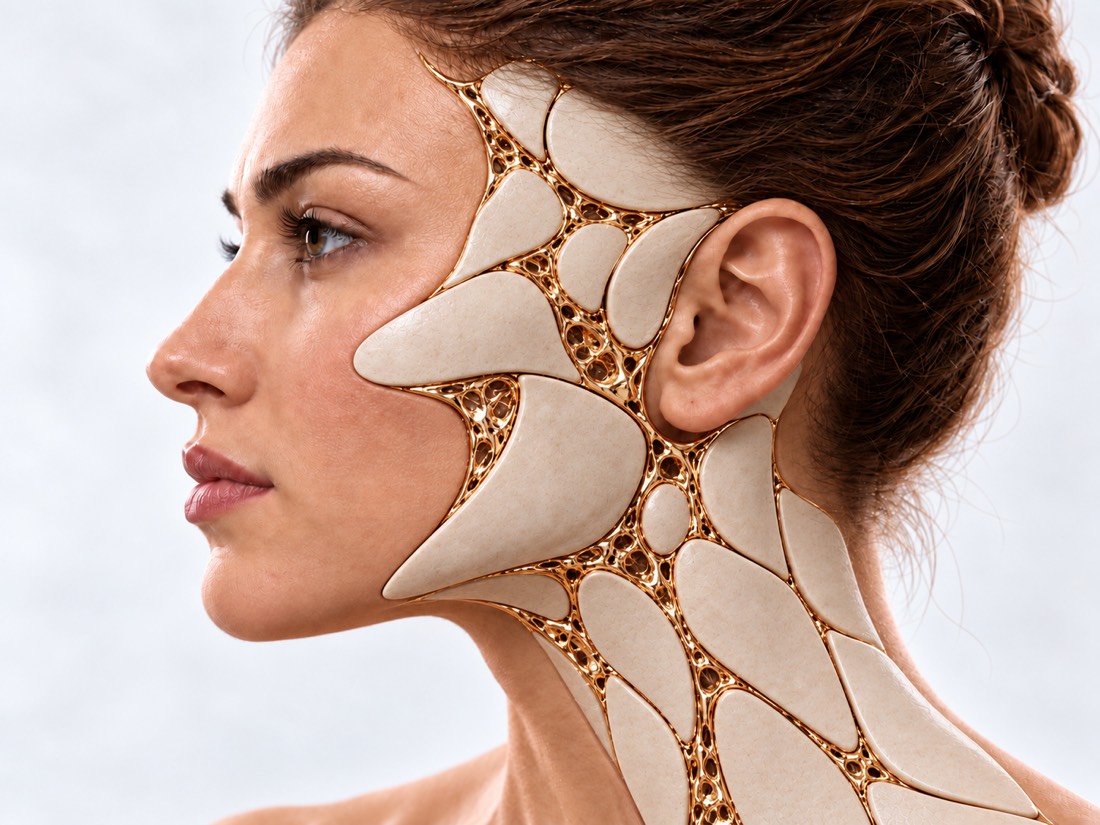
Conceptual visualization: restoring symmetry and facial expressionsCONCEPTUAL VISUALIZATION
What it is
The facial nerve stops controlling the muscles of half the face.
Most often
Bell's palsy — 38% of cases at the center, which has treated nearly 2,000 patients.
Forecast
In a large study of untreated paralysis (mostly Bell's palsy), facial expression fully returned in 71%.
Who treats it
Fresh paralysis - neurologist or ENT; long-term plastic surgeon.

What is
paralysis of the facial nerve.

The facial nerve controls facial muscles: thanks to it, we smile, raise our eyebrows and close our eyes. If the nerve does not work, the muscles of half the face weaken or do not move at all. Doctors distinguish between paresis (partial weakness) and paralysis (complete loss of movement).

Most often, Bell's palsy is a sudden weakness of one half of the face for no apparent reason. It usually passes by itself, but until the eye closes, it must be protected. Other causes are removal of tumors, injuries, herpes zoster, congenital paralysis.

If the movement has not returned, the face remains asymmetrical, the eye is less protected, it is more difficult to speak, eat and drink. Doctors call paralysis long when it lasts more than two years. Then mimicry is no longer waited for, but restored by surgery.

This is general information. The doctor will tell you what will suit you after the examination.

How
paralysis presents.

Usually one half of the face is affected. With Bell's palsy, weakness increases over several days. The most common symptoms are:

01

The face is distorted

The corner of the mouth, eyebrow or eyelid drops; it is difficult to smile, to gain air in the cheeks.

02

The eye does not close

The eyelids do not close completely, the eye is dry or constantly watery - the cornea is unprotected.

Lagophthalmus
03

The lower eyelid drooped

The eyelid is not held by a muscle, it moves away from the eye and turns out.

Ectropion
04

Mouth and language

Saliva or liquid flows from the corner of the mouth, food gets stuck behind the cheek, some sounds are more difficult to pronounce.

05

Involuntary movements

When the nerve is restored incorrectly, the eye squints during a smile, the face tightens. This is synkinesis.

06

Other feelings

Dry mouth, change in taste, pain behind the ear, unpleasant sensitivity to loud sounds.

Why the nerve?
stops working

Both prognosis and treatment depend on the cause. In a center that analyzed 1,989 patients with paralysis, the distribution was as follows:

Bell's palsy

The reason is not clear; it accounted for 38% of cases. Most often, it goes away on its own, but not in everyone.

Infections

Herpes zoster — 7%, Lyme disease — 4%.

Congenital paralysis

It occurs in children from birth - 5% of cases.

When to seek medical advice?

If the face is suddenly crooked, Bell's palsy cannot be distinguished from a stroke at home - call 103. Paralysis that lasts months or years usually does not require emergency care: it is a scheduled consultation.

103 immediately if:

  • the face suddenly tilted to one side - the corner of the mouth or eyelid dropped;
  • a person cannot raise both hands and hold them;
  • speech suddenly became slurred or confused;
  • sudden weakness or numbness of an arm or leg on one side;
  • sudden deterioration or loss of vision in one or both eyes;
  • confusion of consciousness;
  • signs of a stroke have come and gone — call 103 anyway.

Do not delay a visit to the doctor:

Immediately - to the reception department: a fresh wound on the face, after which part of the face does not move; the eye is red, and the vision has changed or it has become painful to look at the light. On the same day: if a stroke has been ruled out, and half of the face has weakened in a few days, see a doctor: anti-inflammatory drugs (corticosteroids) work better if you start them in the first 72 hours. On the same day - and if the eye hurts a lot and is red. In the coming weeks: if it doesn't get better after 3 weeks, go to the doctor again; if the movement has not returned completely in 3 months - to a facial nerve specialist. Planned: asymmetry, non-closing of the eye, involuntary movements left after paralysis.

As estimated,
what can be returned

  1. Conversation

    When did the paralysis start, how did it grow, were there any operations, injuries, tumors; what has already been treated and what has changed.

  2. Facial examination

    The doctor asks you to raise your eyebrows, close your eyes, and smile - this is how he evaluates each area separately: forehead, eye, cheek, mouth.

  3. eye

    Are the eyelids closed, is the cornea dry; if not closed - an ophthalmologist's examination.

  4. Examination of the nerve

    If necessary, nerve and muscle conduction studies (electromyography) or MRI if the cause is unclear.

  5. Photo and video

    The face at rest and in motion — for plan and comparison.

How we treat
paralysis of the facial nerve.

Treatment depends on how much time has passed and whether there is hope that the nerve will recover on its own. The eye is protected at all stages.

01

Fresh paralysis

The first days and weeks.

Corticosteroids
With Bell's palsy, they are prescribed in the first 72 hours. In a review of 7 studies (895 patients), movement did not return completely in 17% of those who took medication and in 28% without it.
Antiviral
They do not prescribe by themselves; the doctor may add them to corticosteroids.
Eye protection
Drops during the day, ointment and plaster at night, so that the cornea does not dry out.
Suture of the nerve
If the nerve is cut during the injury, it is stitched. The earlier, the better the result, but the seam does not return the usual facial expression, and the improvement may last a year or longer.
02

Restoring movement

If the movement has not returned.

Exercises
Physical therapy may halve the proportion of patients who do not regain movement, but the evidence is still weak.
Botulinum toxin
Reduces involuntary movements with synkinesis; the dose is selected individually.
Operations on the nerve
The nerve is sutured, a graft is inserted, or a neighboring nerve is connected. In a review of 54 studies (1,358 patients), satisfactory motion was achieved in 43–66% of patients, depending on the method.
Muscle transplant
If the facial muscles have already atrophied, a thigh muscle is transplanted to the face. The corner of the mouth during a smile rose by an average of 5–8 mm, depending on which nerve the muscle was connected to.
03

Prolonged paralysis

When the muscles do not return, and symmetry is needed.

Static operations
The corner of the mouth and cheek is suspended with a strip of own fascia or tendon. They do not reverse movement, but immediately improve symmetry at rest; they can be combined with a muscle transplant.
eye
A gold or platinum cargo is sewn into the upper eyelid. According to a review of 26 studies (1,205 patients), complete or almost complete closure — in 83–92%, complications — in 5–15%, most often the load shifts.
Lower eyelid
The drooping eyelid is pulled up and fixed to the outer corner of the eye.

How
we treat it.

Paralysis of the facial nerve is treated in the "New Face" direction at Dr. Valikhnovskyi's Institute of Surgery. The clinic is responsible for surgery - nerve, muscle, static operations and eyelids. Fresh Bell's palsy is treated by a neurologist or an ENT doctor, the cornea by an ophthalmologist.

CLINIC SERVICE A new face Form, symmetry, facial expressions and functions after injuries, wounds, burns, removal of tumors and congenital changes. View service

What we do for this condition

  • Suture of the facial nerve — it is better to sew up a severed nerve as early as possible, in the first days; nerve operations are possible for about a year.
  • Cross-facial nerve plasticity — a nerve graft from the lower leg connects the healthy facial nerve to the affected side and transmits facial impulses.
  • Transplantation of the striated muscle (gracilis) — a muscle from the thigh is transplanted to the face, vessels are sutured and a nerve is connected — the transplanted muscle raises the corner of the mouth.
  • Static operations — with prolonged paralysis, symmetry at rest is improved, in particular by hanging the corner of the mouth with a strip of thigh fascia.
  • Eyelid operations — a golden load in the upper eyelid when it is not closed, a lateral tarsal strip and canthoplasty for a drooping lower eyelid.
  • Rehabilitation — exercises for the face; with synkinesia — training and botulinum toxin.

Rostislav Valikhnovskyi

Plastic surgeon, candidate of medical sciences, founder of Dr. Valikhnovskyi Institute of Surgery.

Publications by topic

  • "The effectiveness of static reconstructive methods in the treatment of long-term paralysis of the facial nerve" — Hospital Surgery, 2025 (DOI).

How treatment works with us

  1. Photos and videos onlineSend a photo of your face at rest and a video of you smiling and closing your eyes - the doctor will pre-evaluate the situation.
  2. ConsultationExamination of the face by zones, assessment of the eye, age of paralysis and previous treatment.
  3. PlanWhat should be really returned - movement or symmetry at rest - and in what sequence: eye, mouth, eyebrow.
  4. SurgeryOne or more, depending on the plan; dynamic methods are often stepwise.
  5. RecoveryAfter a muscle transplant, movement does not appear immediately; the doctor will explain the exercises and the examination schedule.

Common
questions

Short answers. What is right for you, the doctor will tell you during the consultation.

Does Bell's palsy go away on its own?

Most often yes. In a study of 2,570 cases of untreated facial nerve palsy (mostly Bell's palsy), function returned in 85% within 3 weeks, and facial expression fully recovered in 71%. Corticosteroids in the first 72 hours reduce the risk of incomplete recovery.

How to distinguish Bell's palsy from a stroke?

At home - no way. If the face is suddenly crooked, especially if there is arm weakness or speech impairment, call 103.

When is it too late for nerve surgery?

The sooner the nerve is sutured, the better the result. In long-term paralysis, when the muscles have atrophied, muscle transplantation or static operations are used.

Can you bring back the smile?

Often partly so. A transplanted muscle from the hip raises the corner of the mouth when smiling; on average - by 5–8 mm. No method returns normal facial expressions.

What to do if the eye does not close?

Protect the cornea: drops, ointment, patch for the night. If the paralysis is prolonged, a load is sewn into the upper eyelid, and the lower one is tightened.

Does exercise help?

Physical therapy probably improves recovery, but the quality of the studies is low. Exercises are selected by a rehabilitation specialist.

Is a static operation necessary, if possible a dynamic one?

Static operations do not restore motion, but immediately improve symmetry at rest. They are chosen when dynamic methods are not suitable for age, health or muscle condition, or combined with them.

Sources

19 sources · guidelines, systematic reviews, cohorts, NHS and author article
showCollapse
  1. Clinical practice guideline: Bell's palsyOtolaryngology–Head and Neck Surgery, 2013doi:10.1177/0194599813505967 ↗
  2. Corticosteroids for Bell's palsy (idiopathic facial paralysis)Cochrane Database of Systematic Reviews, 2016doi:10.1002/14651858.CD001942.pub5 ↗
  3. Etiology, diagnosis, and management of facial palsy: 2000 patients at a facial nerve centerThe Laryngoscope, 2014doi:10.1002/lary.24542 ↗
  4. Bell's palsy: the spontaneous course of 2,500 peripheral facial nerve palsies of different etiologiesActa Oto-Laryngologica. Supplementum, 2002pubmed.ncbi.nlm.nih.gov/12482166 ↗
  5. Bell's palsy: aetiology, clinical features and multidisciplinary careJournal of Neurology, Neurosurgery, and Psychiatry, 2015doi:10.1136/jnnp-2014-309563 ↗
  6. Periocular Reconstruction in Patients with Facial ParalysisOtolaryngologic Clinics of North America, 2016doi:10.1016/j.otc.2015.10.011 ↗
  7. Facial Nerve Injury and Repair: A Practical Review for Cutaneous SurgeryDermatologic Surgery, 2019doi:10.1097/DSS.0000000000001773 ↗
  8. Facial nerve reconstruction for flaccid facial paralysis: a systematic review and meta-analysisFrontiers in Surgery, 2024doi:10.3389/fsurg.2024.1440953 ↗
  9. Donor nerve selection in free gracilis muscle transfer for facial reanimation. A systematic review and meta-analysis of clinical outcomesJournal of Plastic, Reconstructive & Aesthetic Surgery, 2023doi:10.1016/j.bjps.2023.04.014 ↗
  10. Static Sling Options for Facial Paralysis: Now Versus 10 Years AgoFacial Plastic Surgery Clinics of North America, 2021doi:10.1016/j.fsc.2021.03.010 ↗
  11. Management of Long-Standing Flaccid Facial Palsy: Static Approaches to the Brow, Midface, and Lower LipOtolaryngologic Clinics of North America, 2018doi:10.1016/j.otc.2018.07.010 ↗
  12. Upper Eyelid Static Surgical Approaches for the Treatment of Facial Palsy-Induced Lagophthalmos: A Systematic ReviewJournal of Clinical Medicine, 2025doi:10.3390/jcm14134688 ↗
  13. Physical therapy for peripheral facial palsy: A systematic review and meta-analysisAuris Nasus Larynx, 2024doi:10.1016/j.anl.2023.04.007 ↗
  14. Botulinum toxin A treatment in facial palsy synkinesis: a systematic review and meta-analysisEuropean Archives of Oto-Rhino-Laryngology, 2023doi:10.1007/s00405-022-07796-8 ↗
  15. Bell's palsyNHS, 2023nhs.uk/conditions/bells-palsy ↗
  16. Symptoms of a strokeNHS, 2024nhs.uk/conditions/stroke/symptoms ↗
  17. Red eyeNHS, 2025nhs.uk/symptoms/red-eye ↗
  18. Cuts and grazesNHS, 2026nhs.uk/conditions/cuts-and-grazes ↗
  19. Effectiveness of static reconstructive methods in the treatment of long-term paralysis of the facial nerveHospital surgery. Magazine named after L. Ya. Kovalchuk, 2025doi:10.11603/2414-4533.2025.3.15623 ↗

The figures on the page are from these sources.

VALIKHNOVSKI SURGERY PARTNERS

The face does not move
is it skewed?

Submit a photo and short video of your face. The doctor will tell you what can be returned - movement or symmetry - and in what way.

Call Send an enquiry
ONLINE ENQUIRY

Tell us how we can help.

Leave your contact details and briefly describe the situation. A coordinator will contact you to agree on the next step.

Preferred contact method