The arm won’t lift
A scar in the armpit prevents lifting the arm up or moving it to the side.
 Discuss your case
Post-burn contracture is a condition where a scar from a burn tightens the skin and prevents fully raising the arm, straightening the elbow, fingers, or knee. The scar band is either cut or excised, the skin deficit is covered, and after surgery, splints and rehabilitation exercises with a specialist are necessary.
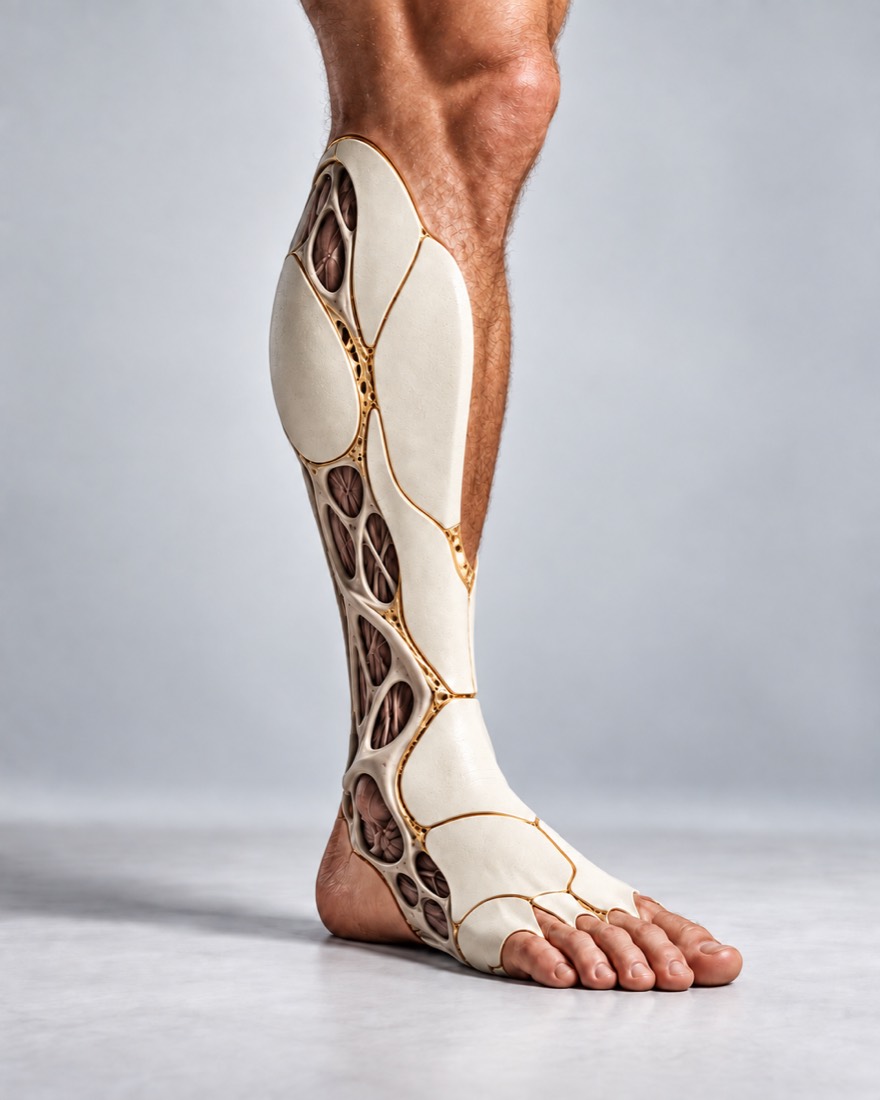 CONCEPTUAL VISUALIZATION
After a deep burn, the wound heals with a scar. Over time, the scar contracts and becomes less elastic than normal skin. If it is located over a joint — in the armpit, at the elbow flexion, on the wrist, fingers, under the knee, or on the foot — it tightens the skin and prevents fully straightening the joint or raising the arm. This is a contracture.
According to the NHS definition, a contracture scar feels tight, it is difficult or painful to move in that area, and it usually occurs after a burn. According to a systematic review, limited joint movement can interfere with everyday activities — for example, dressing or washing.
This page is about contractures of the trunk and limbs: armpits, elbow, wrist, hand, knees, feet. For tightening on the face and neck — see the separate page "Post-burn scar contractures of the face and neck." If movement is limited after an injury without a burn — see "Post-traumatic contracture."
This is general information. The doctor will tell you what will suit you after the examination.
A contracture may be a narrow band or a broad stiff area of a scar. This determines how it is treated.
A scar in the armpit prevents lifting the arm up or moving it to the side.
A scar at the bend keeps the joint bent, and it is impossible to fully straighten it.
Fingers do not straighten or spread, difficult to grasp an object or open the hand.
Post-traumatic contractureDuring movement, the scar stretches like a string, turns white, and pulls.
According to the NHS, a scar may itch, hurt, or cause discomfort.
Hypertrophic scarScar over a joint cracks, weeps, or develops wounds that do not heal — such an area should be shown to a doctor.
Unstable scarContracture is a consequence of excessive scarring and constant contraction of the scar.
According to systematic review, contractures are more common after more severe burns and flame burns.
According to the same review, the neck and upper limb are more often affected, and contractures are also more common in children and women.
In a study of 1031 children with major burns, 23% had at least one contracture at the time of discharge. Most often — the shoulder (27.9%) and elbow (17.6%). The authors note that as the child grows, there may be more contractures.
According to a systematic review, at the time of discharge, contracture was present in 38–54% of patients, and over time after the burn — in a smaller proportion. The study data vary greatly.
An old contracture — a planned situation: it usually does not require emergency care. A fresh burn should be immediately cooled with cool running water for 20 minutes. Medical care is needed if the burn just occurred and it is serious, or if signs of severe infection appear.
Immediately - to the surgeon who operated, and if it does not work - to the reception department: after surgery, pain or swelling at the operation site increases rapidly; the transplanted flap has changed color (pale, blue, or darkened) or has become cold. On the same day: fresh small burn, if you do not know how to treat it, or if it is in a child under 5 years old — consult a doctor; a scar or wound after surgery has become red, painful, hot to touch, or is oozing pus — see a doctor the same day. In the coming weeks: a sore or area on an old scar is painful, itchy, bleeding, or forming a scab for more than 4 weeks or is growing and changing color — see a doctor. Planned: A scar tightens the skin and restricts movement, hurts or interferes with life — consult a plastic surgeon.
When the burn occurred, how it was treated, which surgeries have already been performed, what interferes the most: movement, pain, itching, or appearance.
The surgeon assesses whether it is a narrow band or a wide stiff area, what the surrounding skin is like, and where tissue can be taken from.
They measure how much the joint bends and straightens, and how this interferes with daily activities.
Discharge summaries from the burn unit, photos of scars in motion; for the hand — evaluation of grip and fine movements.
The rehabilitation specialist evaluates movement and strength; hand and foot contractures — together with the 'Restoration of the Hand and Foot' track.
The goal of treatment is to restore movement and function, and only then improve appearance. There is no consensus on when to choose which method: according to a systematic review, there are few studies and they are of low quality, so the approach is selected individually.
What is done with the scar itself.
Post-burn contractures at the Valikhnovskyi Surgery Institute are treated in the direction of 'Reconstruction after Burns': first restoring movement and function, then working on appearance. Contractures of the hand and foot are restored together with the 'Hand and Foot Recovery' direction. A fresh burn is treated in the emergency department or burn unit.
Plastic surgeon, candidate of medical sciences, founder of Dr. Valikhnovskyi Institute of Surgery.
Short answers. What is right for you, the doctor will tell you during the consultation.
The scar changes gradually: according to the NHS, most scars fade over time, and this can take up to 2 years or more. However, if the contracture interferes with movement, surgery is sometimes done earlier. The timing is determined by the surgeon after examination.
Usually not. In a meta-analysis of free flaps, reconstruction was performed on average 94.7 months (almost 8 years) after the burn. An old contracture can be operated on if the overall condition allows.
It can. In a study of axillary contractures, recurrence was 30%. Splints and physiotherapy after surgery are part of the treatment.
According to the meta-analysis, fractional CO2 laser significantly improved burn scars, and splints, according to the guideline, are considered to increase movement. If there is not enough skin to extend the joint, the deficiency is surgically covered — with a flap or graft.
From the patient's own body — for example, from the thigh, buttock, or abdomen. The donor site heals but also leaves a mark.
Yes. In a study of 1031 children with major burns, 23% had at least one contracture at the time of discharge. The authors note that as the child grows, contractures may increase, so scars are regularly monitored. If a scar interferes with growth, surgery is performed earlier, without waiting for it to mature.
Such an area should be shown to a doctor. According to a systematic review of 1016 patients, cancer in chronic wounds and scars is rare; among people with such cancer, 68% developed it at the site of a burn. If a wound does not heal for more than 4 weeks — do not delay a check-up.
The figures on the page are from these sources.
Send a photo of the scar in motion and discharge summaries. The doctor will advise how to release the joint and what is needed for it.
Leave your contact details and briefly describe the situation. A coordinator will contact you to agree on the next step.