Swelling
The entire arm or leg or part of it swells; clothes, shoes, or a watch become tight. At first, the swelling may come and go.
 Discuss your case
Post-traumatic lymphedema is a persistent swelling of the arm or leg that appears when an injury damages the lymphatic pathways. It cannot be cured completely and permanently, but the swelling can be managed: first come compression and lymphatic drainage, and when they are insufficient, microsurgery of the lymphatic vessels is indicated.
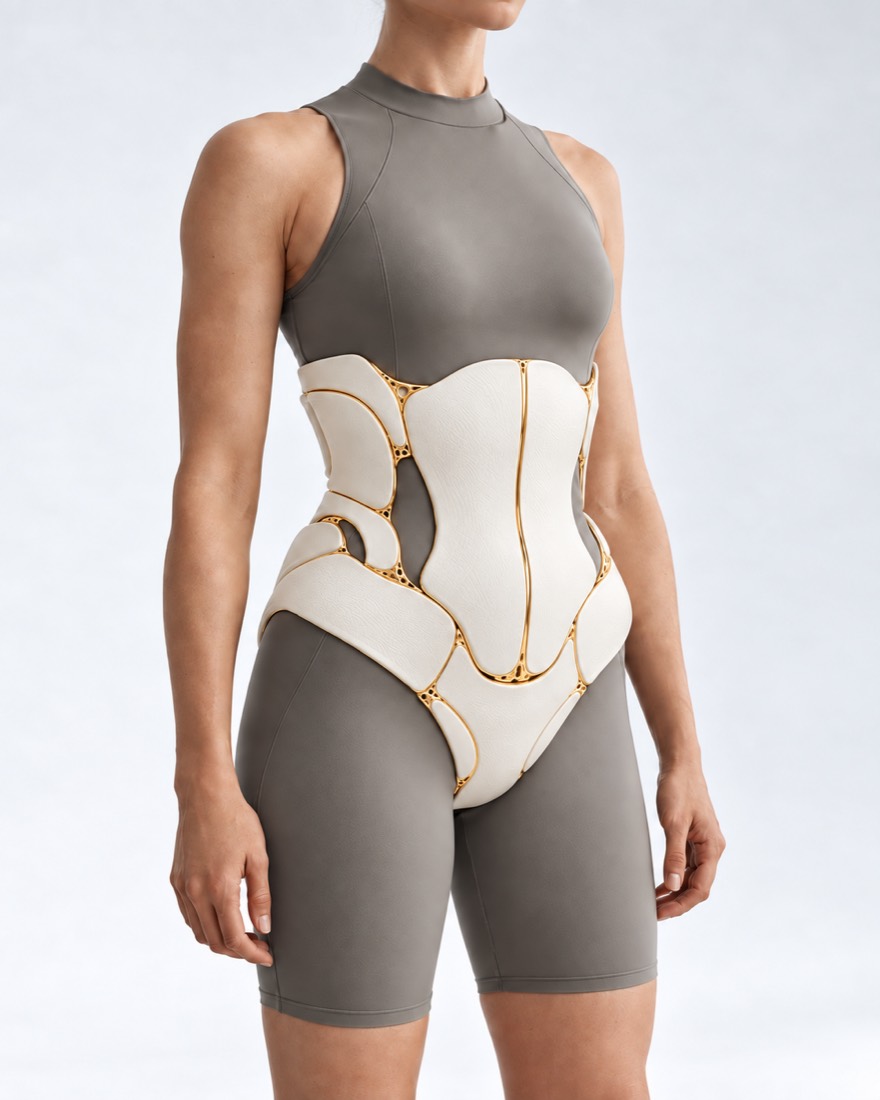 CONCEPTUAL VISUALIZATION
The lymphatic system is a network of thin vessels and nodes that remove excess fluid from tissues and help fight infection. When an injury, surgery, or infection damages these vessels, fluid accumulates, and the limb swells. This is how secondary lymphedema develops: it can be caused by trauma, infection, inflammation of the limb, or lack of movement.
Lymphedema is a long-term condition. At first, the swelling is soft, leaves a pit when pressed, is greater in the evening, and decreases overnight. Without treatment, the swelling usually becomes firmer and more persistent, so it is important to notice it and start treatment as early as possible.
Doctors often do not recognize post-traumatic lymphedema. A review of studies on it found mostly case reports and small series, so there is less data than on lymphedema after cancer treatment. However, according to guideline reviews, the cause of lymphedema has little effect on treatment recommendations.
This is general information. The doctor will tell you what will suit you after the examination.
The signs develop gradually, over weeks and months after the injury. The most important of them is swelling that does not go away.
The entire arm or leg or part of it swells; clothes, shoes, or a watch become tight. At first, the swelling may come and go.
The limb aches, feels heavy, and it is harder to move it.
The skin becomes firm, stretched, and thicker, folds appear, sometimes growths resembling warts, or fluid seeps through the skin.
In a study of 420 patients with limb lymphedema, cellulitis (bacterial skin infection) was present in 12.6%, and in 56.6% of them it recurred.
After an injury, lymphedema can be combined with scars that tighten the skin and hinder movement.
Cicatricial deformation of the bodyA prolonged condition that changes appearance can be depressing; this should be mentioned to a doctor.
Lymphedema appears where the injury has destroyed the lymphatic vessels in the skin and subcutaneous tissue.
In the review of studies on lymphedema after injury, burns were most often described (12 out of 19 records), car accidents (7), skin avulsions—degloving (6), and open tibial fractures (4).
In a study of 94 patients with open leg fractures and soft tissue damage, signs of lymphedema were present in 55%, and 14% reported recurrent skin infections.
In the same study on lymphedema, obesity, the number of surgeries, infections, and compartment syndrome — a dangerous increase in pressure in the limb muscles — were associated.
Cellulitis sometimes itself causes lymphedema, and the lack of movement in the limb worsens fluid outflow.
Long-standing persistent swelling is a planned situation and usually does not require urgent care. But a limb with lymphedema is more prone to infection, and sudden swelling of one leg or arm may be a venous thrombosis.
Immediately - to the surgeon who operated, and if it does not work - to the waiting room: After surgery on a limb, the pain or swelling increases instead of decreasing. On the same day: The skin on the limb has turned red, hurts, is hot, and the swelling has increased — this happens with cellulitis, and early antibiotics prevent it from developing; one leg or arm suddenly hurts with pulsating pain and is swollen — possible venous thrombosis. In the coming days: If there is no improvement on antibiotics after 2–3 days — see the doctor again. Planned: Swelling that does not go away for weeks, heaviness, skin hardening — see a doctor: it is better to start treating lymphedema as early as possible.
What was the injury, what surgeries and infections occurred, when did the swelling appear, and does skin inflammation occur.
The doctor examines the limb and measures its circumference. According to most guidelines, a volume difference of more than 10% compared with the other limb confirms lymphedema.
The doctor rules out other causes, including vein thrombosis, and evaluates blood circulation: compression is not suitable for everyone, for example, in cases of arterial problems in the legs.
Before microsurgery, lymph outflow is assessed using special imaging — MR lymphangiography or lymphography with a fluorescent dye (ICG) — to identify functional lymphatic vessels.
The surgeon evaluates scars, tissue defects, and the condition of the skin — this determines what kind of surgery can be offered.
Lymphedema cannot be completely cured, but symptoms can usually be controlled. Treatment begins without surgery; microsurgery is considered when anti-swelling therapy does not give sufficient results. The International Society of Lymphology recognizes that no treatment method has yet undergone a proper meta-analysis.
The basis of treatment according to guidelines.
When conservative treatment does not help.
Post-traumatic lymphedema at the Dr. Valikhnovskyi Institute of Surgery is treated under the 'New Body' program, particularly as part of comprehensive recovery after injuries. First — compression and lymphatic drainage; lymphovenous anastomoses — when indicated. Cellulite and thrombosis are treated by the relevant specialist, the clinic is responsible for its part of the treatment.
Plastic surgeon, candidate of medical sciences, founder of Dr. Valikhnovskyi Institute of Surgery.
Short answers. What is right for you, the doctor will tell you during the consultation.
Lymphedema is a long-term condition, and without treatment, the swelling usually becomes firmer and more persistent. Therefore, it is better to show it to a doctor as early as possible.
Ultimately — no: no method, including surgery, cures lymphedema. Research shows that lymphovenous anastomoses can reduce the severity of lymphedema and help decrease limb size in some people. After surgery, compression garments usually still need to be worn, often continuously. Whether surgery is suitable, a surgeon will say after examining and performing tests on the lymphatic vessels.
It is used as part of anti-edema therapy along with compression, exercises, and skin care. Separately from the rest of the therapy, research results are contradictory.
After the intensive phase, garments are worn during the maintenance phase so that swelling does not return; with lymphedema — often for a long time or continuously. With cellulite, compression stockings are not worn until it improves.
Movement helps lymph flow; the exercise plan is made according to your limb and capabilities. Doctors often recommend swimming, cycling, and walking, as well as raising the limb whenever possible.
If the skin is red, painful, hot, and swollen — see a doctor the same day. If very high fever, chills, purple spots, rapid heartbeat, or confusion are added — call 103.
The most common complication is cellulitis: fluid in the tissues makes the limb more susceptible to infection. A prolonged condition can also affect mood — this should be mentioned to the doctor.
The figures on the page are from these sources.
Send a photo of the limb and discharge after injury and surgery. The doctor will tell you where to start and whether surgery is needed.
Leave your contact details and briefly describe the situation. A coordinator will contact you to agree on the next step.