Skin problems
In a study of 337 leg stumps, ulcers, irritation, cysts, calluses, and warty skin growths accounted for 79.5% of all skin problems.
 Discuss your case
Problematic stump — a stump after amputation that hurts, develops sores, or does not allow proper wearing of a prosthesis. The reasons are different: skin, bone, soft tissues, or nerves. First, solutions are sought with the prosthetist, and when this is not enough — the surgeon performs stump revision.
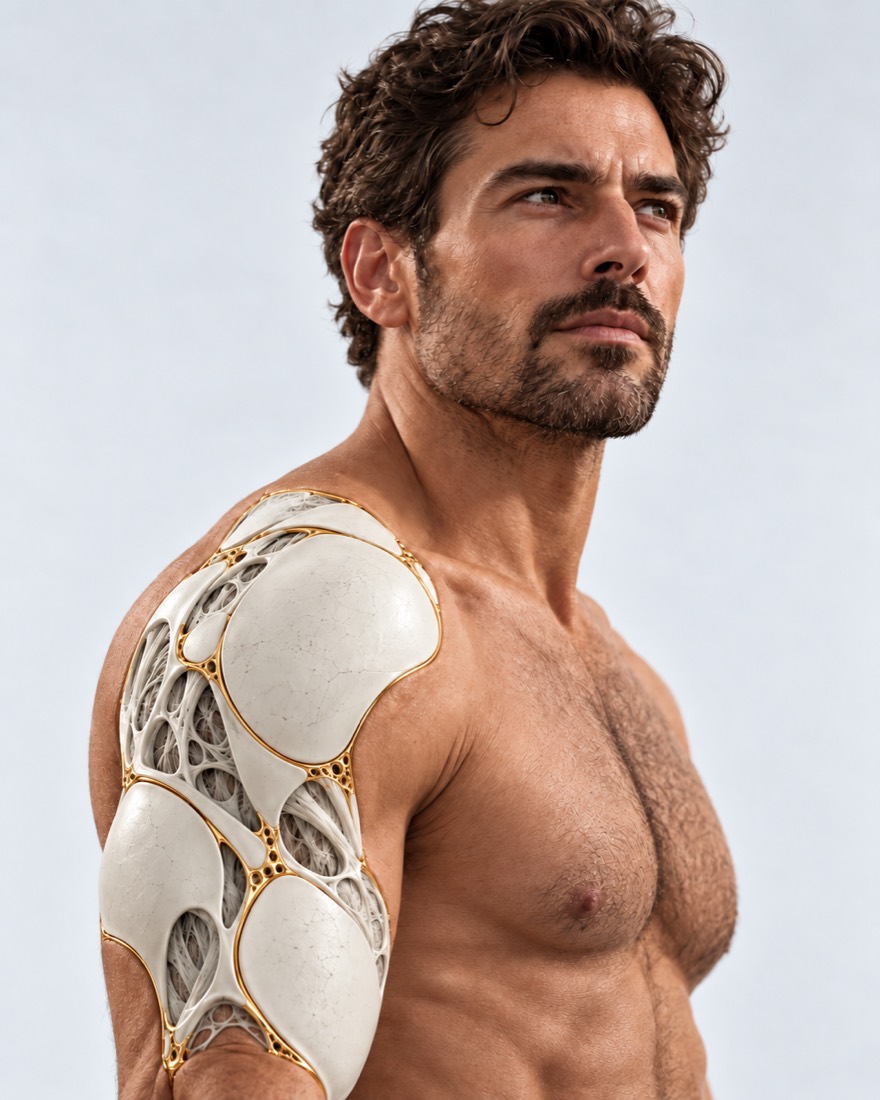 CONCEPTUAL VISUALIZATION
After amputation, the surgeon shortens and smooths the bone so that it is covered by a sufficient layer of soft tissues and muscles, and the muscles are sewn to the bone — this strengthens the stump. The stump then holds the prosthesis and bears the load.
A problematic stump is called such when it hurts, develops sores and rubs, the bone protrudes under the skin, extra tissue or scars remain, or the prosthetic socket rubs or does not fit. Because of this, a person wears the prosthesis less often and walks less.
Some problems are solved by a prosthetist—with a new or modified socket. When the cause is in the stump itself, a revision is needed: a surgery during which the bone, soft tissues, scars, or nerves are corrected so that the stump fits the prosthesis again.
This is general information. The doctor will tell you what will suit you after the examination.
Problems often occur together: a bone spur presses on the skin, and a wound forms at the pressure site.
In a study of 337 leg stumps, ulcers, irritation, cysts, calluses, and warty skin growths accounted for 79.5% of all skin problems.
An extra bone in the soft tissues of the stump (heterotopic ossification) can cause pain and skin wounds and interfere with fitting a prosthesis.
Scars that crack and do not heal, bone under thin skin, or excess soft tissue prevent the socket from fitting tightly.
Unstable scarThe causes vary: friction or sores where the stump touches the prosthesis, nerve damage during surgery, neuroma — thickening of the end of a cut nerve.
Stump neuromaThe limb that is no longer there hurts. According to study reviews, from a quarter to half of people after amputation may have long-term stump pain, phantom pain, or phantom sensations.
Phantom painAfter a high thigh amputation, the stump may bend and move sideways due to muscle imbalance — this interferes with fitting the prosthesis.
The reason lies in the load from the prosthesis, the injury itself, or in how the stump healed.
The prosthesis fits tightly to the stump, which increases the risk of chafing, pressure, and skin softening from sweat. A poorly fitted socket worsens this, especially with weakened immunity or vascular problems.
In the same study, in 213 stumps, extra bone was more often formed when the amputation was done in the injury area and after explosive injuries.
In the US trauma center database, 41.8% of 2,879 patients after traumatic leg amputation required at least one re-amputation; it was predicted, in particular, by crush injuries and compartment syndrome.
The stump wound heals better when swelling, comorbidities, and nutrition are controlled; the faster it heals, the higher the chances of getting and using a prosthesis.
Chronic stump problems — chafing, calluses, bone spur, prosthesis that does not fit — are planned situations and usually do not require emergency care. But stump infection can progress to sepsis, and thrombosis is possible after surgery.
Immediately - to the surgeon who operated, and if it does not work - to the waiting room: After surgery, pain or swelling of the stump increases instead of decreasing. On the same day: The skin of the stump is warm, red and painful, fluid or pus is leaking from the wound, swelling is increasing — contact your doctor the same day; one leg suddenly hurts with a throbbing pain and is swollen — possible vein thrombosis; thoughts of suicide appear — contact a doctor or psychologist the same day. In the coming weeks: Depression, anxiety, nightmares, memories of trauma — tell a doctor or psychologist. Planned: chafing, blisters, recurring sores, protruding bone, pain while walking in the prosthesis, the socket does not hold — to the prosthetist and surgeon.
When and at what level the amputation was, which surgeries have already been done, what is happening with the prosthesis, and exactly when it hurts or rubs.
The surgeon examines the skin, scars, and soft tissues, looks for painful points; preferably — together with the prosthetist and with the prosthesis.
X-ray shows the end of the bone and any excess bone in the soft tissues.
The doctor determines where the pain comes from: from socket friction, neuroma, or phantom pain.
Blood circulation, comorbidities, and nutrition affect healing, so they are taken into account in the plan.
Treatment depends on the cause. First, they try adjusting the prosthesis and skin care; surgery is considered when this is not enough or the cause is in the bone, tissues, or nerves. The stump is managed jointly by a surgeon, prosthetist, and rehabilitation specialist, and if necessary — a dermatologist and psychologist.
When the cause is in the stump itself.
The problematic stump at the Doctor Valikhnovskyi Institute of Surgery is treated in the direction of "Bionic Limb Prostheses." The clinic performs the surgical part; the prosthesis is selected and manufactured by a partner prosthetist, and the plan is made together. Skin diseases are treated by a dermatologist, and psychological help is provided by a psychologist.
Plastic surgeon, candidate of medical sciences, founder of Dr. Valikhnovskyi Institute of Surgery.
Short answers. What is right for you, the doctor will tell you during the consultation.
Not necessarily. First, the prosthetist modifies the socket, and you take care of the skin. If sores return, the bone protrudes, or scars interfere, the surgeon will assess whether a stump revision is needed.
It is extra bone in the soft tissues of the stump — heterotopic ossification. In one study, it was found in 63% of stumps after traumatic and combat amputations. For many, it does not bother them or a prosthesis adjustment suffices; when it hurts and injures the skin, it is excised.
Pain can come from rubbing or sores under the socket, from a damaged nerve, neuroma, or be phantom. The cause is determined by the doctor during an examination, with the prosthesis and imaging.
This is one option: the prosthesis is attached to a pin in the bone, without a socket. According to studies, results after surgery improve, but infections and complications are common, so the method is not suitable for everyone.
Wash the residual limb daily with mild unscented soap, dry it thoroughly, do not keep it in water for a long time, change the liners daily and inspect the skin. Wash the socket regularly.
If the skin is warm, red, and painful, and there is fluid or pus — see a doctor the same day. If there is also very high fever, chills, purple spots, rapid breathing, or confusion — call 103.
Late is not always: nerve surgeries (TMR or RPNI) are performed not only during amputation but also later. Whether stump revision is needed will be determined by the surgeon after an examination together with the prosthetist.
The figures on the page are from these sources.
Send a photo of the stump, images, and describe what is wrong with the prosthesis. The doctor will tell you whether adjusting the socket is enough or if surgery is needed.
Leave your contact details and briefly describe the situation. A coordinator will contact you to agree on the next step.