"Silent" break
Breasts look and feel as before; the gap is found only on MRI or ultrasound.
 Discuss your case
Breast implant replacement or removal is needed when the implant has ruptured, shifted, or turned, as well as for some other complications. Rupture of a silicone implant is mostly "silent": it is found on MRI or ultrasound, not by touch. Such operations are also performed when the implants were placed in another clinic.
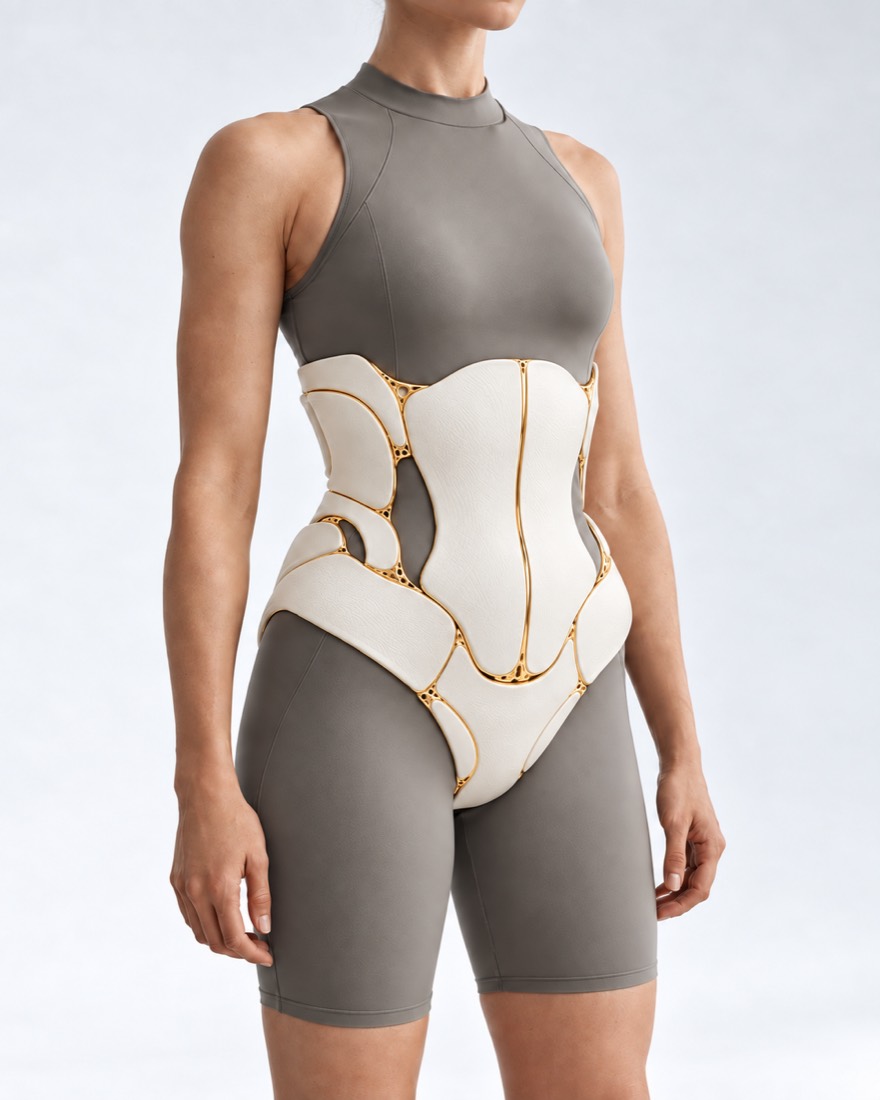 CONCEPTUAL VISUALIZATION
Breast implants are not permanent. According to the NHS, they will most likely need to be replaced at some point; some women need repeat surgery after about 10 years — because of a problem with the implant or because the breasts themselves have changed.
A rupture is a break or hole in the implant shell. When the saline implant ruptures, the solution is safely absorbed into the tissue and the breast is reduced immediately or in a few days. The silicone gel usually remains inside the scar capsule around the implant, and the rupture itself usually does not manifest itself in any way - it is called "silent".
Displacement — when the implant is out of place: higher, lower, or sideways. Rotation is when the anatomic (teardrop) implant turns inside the breast and the shape becomes incorrect.
Separate from rupture, there is a rare lymphoma associated with implants, BIA-ALCL. This is not breast cancer, but a tumor of cells of the immune system; it is found in the fluid or capsule around the implant.
If the implants were placed in another clinic, this is not an obstacle: the doctor evaluates what is available now and makes a plan.
This is general information. The doctor will tell you what will suit you after the examination.
Rupture of a silicone implant often does not reveal itself. But sometimes there are changes that should be shown to the surgeon.
Breasts look and feel as before; the gap is found only on MRI or ultrasound.
Breasts have shrunk or changed shape, hard nodules, asymmetry, pain, tingling, swelling, numbness or burning.
Breasts decrease immediately or within a few days, the implant loses its shape.
Rupture may be accompanied by sealing of the capsule around the implant.
Capsular contractureThe implant has noticeably shifted, the shape of the breast has become irregular or asymmetrical.
Years after the operation, one breast, sometimes both, will become noticeably larger or firmer within a few weeks. There is often no pain.
Often there are several reasons. Here are the ones called by the FDA and the studies.
Based on a review of manufacturers' data, the most common cause of rupture is damage to the implant by tools during placement.
The longer the implant is in place, the more likely it is to break: the shell ages over time.
Impact, strong pressure on the breast, as well as punctures or biopsies of the breast can damage the membrane.
A sealed capsule can cause rupture, and rupture is associated with contracture: in a study of 105 women with one ruptured implant, contracture occurred in 50% of ruptured breasts and 24% of intact breasts. The relationship was observed only for implants with a less dense (low cohesive) gel.
The implant can dislodge under its own weight, after trauma, or due to contracture.
In a retrospective study of 1134 women, the anatomical implant returned in 11% after two-stage reconstruction (with an expander) and in 5% after one-stage reconstruction.
Rupture, displacement or rotation of the implant are planned situations: they usually do not require emergency care. Do not delay signs of complications after surgery and late breast enlargement years after it.
Immediately - to the surgeon who operated; if it is not possible to contact - to the reception department: after surgery, severe pain or increasing pain; in the first days after the operation, the breasts increase rapidly, become tense and painful. On the same day: to the surgeon who operated, or if this is not possible, to any surgeon, if in the first weeks after the operation there is a burning sensation, unusual swelling of the breast or a change in the color of the skin; the wound is reddened, pus flows from it, the stitches have come apart, or the implant is visible through the skin. Likewise, on the same day, see a doctor (family or in the reception department) if one leg (usually the calf) or arm hurts and is swollen, or you cough up blood: these may be signs of a blood clot. In the coming days: if a year or more after the operation, one or both breasts have noticeably increased in a few weeks, compaction or swelling around the implant has appeared - contact the surgeon who placed the implants or another plastic surgeon: such changes must be examined. Likewise, do not delay if your breasts have suddenly shrunk, changed their shape, or have hard lumps. Planned: "silent" rupture found on MRI or ultrasound, displacement, rotation or desire to replace old implants.
When the implants were placed, the manufacturer and model - from the implant card or statement. These data should be stored all the time while the implants are in place.
The surgeon evaluates the shape, symmetry, density of the breast and the position of the implant. But you can't find a "quiet" gap to the touch.
In a meta-analysis of 20 studies (1987 patients), ultrasound detected 73.7% of ruptures, and whole implants were correctly recognized as whole in 87.8% of cases.
According to the FDA, the most accurate way to find a "silent" rupture is a silicone implant. However, in most studies, MRIs were performed on women already with complaints, so the accuracy of a routine check-up may be lower.
If fluid appears around the implant years after surgery, it is taken under ultrasound guidance and investigated to rule out BIA-ALCL.
The main question is whether to replace the implants, remove them without replacement or observe for the time being, and whether to remove the capsule together with them. The answer depends on what happened, on complaints and wishes.
A rare lymphoma near the implant.
Replacement and removal of implants at Dr. Valikhnovskyi's Institute of Surgery is carried out in the direction of "Breast reconstruction" - in particular, when the implants were placed in another clinic. If BIA-ALCL is confirmed, the clinic is responsible for the surgical part, and chemotherapy or radiation therapy, if needed, is administered by the oncologist.
Plastic surgeon, candidate of medical sciences, founder of Dr. Valikhnovskyi Institute of Surgery.
Short answers. What is right for you, the doctor will tell you during the consultation.
The silicone gap is mostly imperceptible. It is most accurately found by MRI; Ultrasound is an acceptable alternative for examination without complaints. The doctor will tell you how often to be checked.
The gel mostly remains in the capsule around the implant. But if it goes into the tissues, it is difficult to remove it, and the rupture is associated with contracture. According to the NHS, a ruptured implant will have to be removed; when - decide with the surgeon.
The FDA does not recommend removal of uncomplaining implants because of the risk of BIA-ALCL alone. European experts allow removal of the capsule as a risk reduction measure, but this decision is individual - discuss it with the surgeon.
The reason may be fluid around the implant — late seroma. It must be examined, because this is how BIA-ALCL most often manifests itself. This is not a reason for a 103, but see a surgeon in the next few days.
You can. Breasts may sag after this, indentations or wrinkles may appear on the skin. You can partially restore the volume with your own fat - this is discussed at the consultation.
Not always. Capsule removal is a major operation with a higher risk of complications. It is performed according to indications, in particular for BIA-ALCL, tumor or calcification of the capsule or severe contracture.
It is impossible to predict this. The causes of such symptoms are poorly understood; in a meta-analysis after implant removal, most women did not achieve complete improvement.
The figures on the page are from these sources.
Send a photo, implant card, and ultrasound or MRI results, if available. The doctor will tell you what to do.
Leave your contact details and briefly describe the situation. A coordinator will contact you to agree on the next step.