CONDITION / JAWS, MOUTH AND NECK

Cleft of the alveolar process.

Cleft gums - a gap in the gums and bone of the upper jaw, with which a child is born with a cleft lip. It is closed with a bone graft, most often at the age of 8-12, so that the adjacent teeth have support, and the opening between the mouth and the nose is closed.

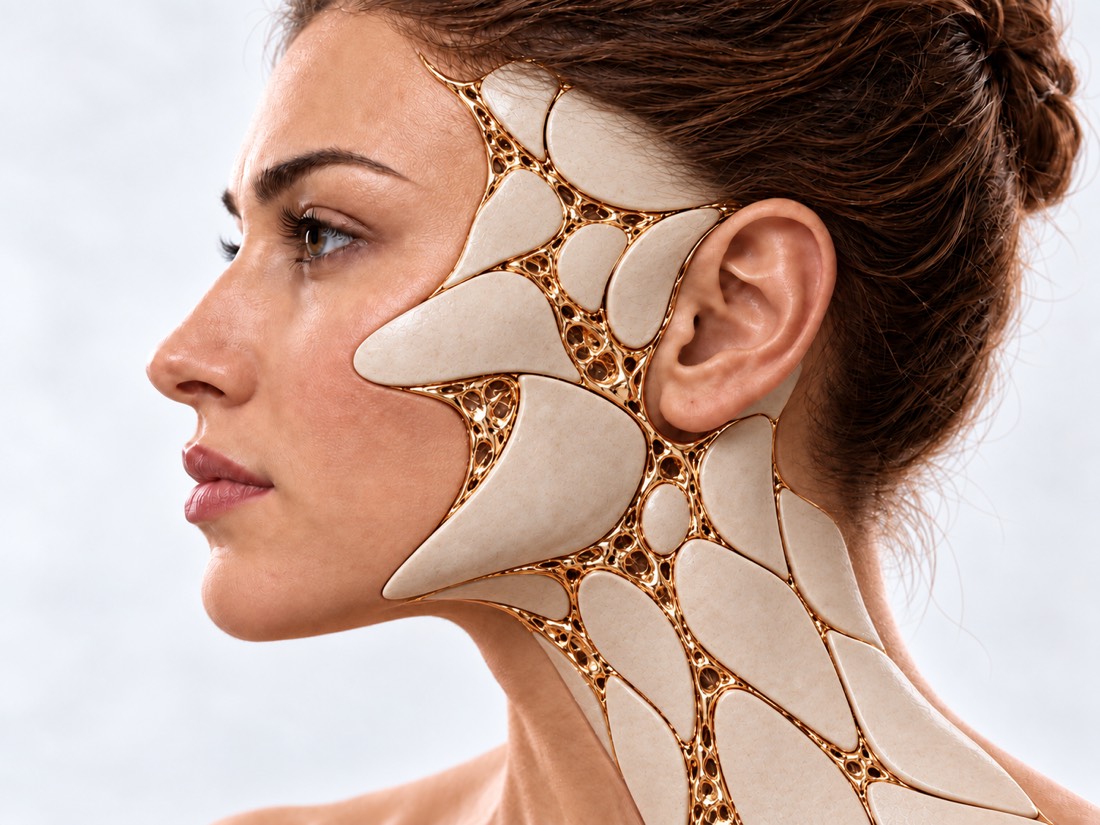
Conceptual visualization: restoration of gums and upper jaw in case of cleftCONCEPTUAL VISUALIZATION
What it is
Cleft in the gums and bone of the upper jaw with cleft lip, with or without cleft palate.
What prevents
The teeth near the gap grow crookedly or are missing, the jaw bone is not solid, there may be a hole in the nose.
How we treat
The bone is transplanted into the gap - bone plastic; the orthodontist guides the child both before and after the operation.
when
Most often, at the age of 8-12 years - before or immediately after the eruption of a permanent canine next to the gap.

What is
clear cleft.

The gums of the upper jaw are held on the bone - the alveolar process, in which the teeth sit. If the cleft lip goes deeper, the cleft also passes through this bone. Doctors describe it as a bony defect in the arch of the upper jaw that narrows inward, like a watering can.

The bony arch of the jaw is interrupted due to the gap. The nearby teeth lack support, so they cut in at an angle or out of place, some tooth may be missing, or an extra one may appear. The wing of the nose on the side of the cleft also rests on this bone, and without it it can appear flattened. Sometimes an opening remains between the mouth and the nose - a fistula.

The lip is closed in the first months of life, and the gap in the bone is closed later: most often at the age of 8–12, when a permanent canine erupts next to it. This operation is called secondary bone plastic.

This is general information. What will suit your child or you, the doctor will tell after the examination.

How it
presents.

The gap in the bone itself is not visible from the outside: it is noticed by the teeth, gums and the shape of the nose, and it is accurately assessed on the pictures.

01

Teeth near the gap

The teeth on both sides of the gap are often tilted or shifted, some tooth is missing or there is an extra one.

02

A recess in the jaw

At the site of the split, the gum has a depression or furrow, the dental arch is interrupted.

03

A hole in the nose

A fistula may remain between the mouth and nose. Closing it is one of the tasks of bone plastic surgery.

Cleft palate
04

Wing of the nose

Without bony support, the wing of the nose on the side of the cleft may be flattened or lower.

Lip and nose deformities
05

Caries

Children with clefts are more vulnerable to tooth decay, so oral hygiene and regular dental visits are especially important.

Where does the gap come from?
and why it is not closed immediately.

Cleft gums are a part of congenital cleft lip. Why it is closed not in infancy, but in school age, explains the growth of the face.

Congenital cleft

A cleft in the gum is formed before birth together with a cleft lip. About the causes and risk factors - on the page about cleft lip.

Cleft lip

Palate

The cleft can extend further - to the palate. Then the treatment plan is longer.

Cleft palate

Face growth

Early methods — boneless gum closure and infant bone grafting — fell out of favor because they disrupted facial growth and remain controversial.

Permanent canine

The tooth next to the gap should cut through the bone. Therefore, the timing of the operation is associated with the eruption of this tooth.

When to seek medical advice?

Cleft gums themselves do not require emergency care: they are treated on a regular basis. Urgent help may be needed only after surgery - due to bleeding, difficulty breathing or signs of severe infection.

103 immediately after surgery if:

  • heavy bleeding from the mouth or from the wound where the bone was taken does not stop, although you press it tightly with a clean cloth for more than 10 minutes;
  • blood spurts, bright red, and hard to stop;
  • bleeding from the nose lasts longer than 10-15 minutes or is very strong;
  • the child swallows so much blood that it makes him sick and vomits;
  • it is difficult to breathe or breathing is very frequent;
  • confusion, slurred speech, the person speaks illogically;
  • the skin has become bluish, pale or marbled;
  • very high or very low temperature: the body is hot or cold to the touch, shakes a lot;
  • a rash that does not fade when pressed.

Do not delay if:

Immediately - to the surgeon who operated, and if it does not work - to the waiting room: bleeding from a wound in the mouth or where the bone was taken is weak, but does not stop; pain and swelling in the mouth or where the bone was taken is severe or increasing, and pain relievers do not help. On the same day - call the surgeon: the seam in the mouth has come apart, pus is coming out of the wound, there is pain with an unpleasant taste in the mouth, the temperature has risen, or the child generally feels bad. Planned: the child has a cleft lip that goes into the gums - show it to the surgeon and orthodontist in advance, before the eruption of permanent canines, in order to plan a bone graft in time.

How to prepare
to plastic

  1. Review of the surgeon and orthodontist

    The condition of the teeth and gums, whether there is a fistula, how the parts of the jaw are located. A surgeon and an orthodontist manage the cleft together.

  2. Photographs and tomography

    X-rays and computed tomography (CT) show the width and volume of the cleft and the position of the teeth, particularly the canines.

  3. Canine condition

    In the review of 17 articles, 9 advised to operate before the eruption of the permanent canine, 8 — to focus on the age of 7–12 years.

  4. Orthodontic training

    Sometimes surgery requires braces or jaw extensions. There is still not enough research on the benefits of such treatment.

  5. Healthy teeth

    Caries are treated and hygiene is improved before surgery: in a review of studies, good oral hygiene could influence the success of plastic surgery.

How to close
a gap in the bone.

The main method is secondary bone plastic surgery: the bone is moved into the gap to restore a solid arch of the jaw, provide support for the teeth and wing of the nose, and close fistulas. The surgeon and the orthodontist agree on the terms and preparation.

01

Bone plastic

Operation under general anesthesia.

What are they doing?
The gap is filled with bone, and the opening between the mouth and nose, if any, is closed. Most often, spongy bone is taken from the crest of the iliac bone — the upper edge of the pelvis.
when
In a review of 9 articles, the highest proportion of graft engraftment — 71–89% — was given by surgery at 8–12 years of age, before or immediately after eruption of a permanent canine. The risk that the canine would remain in the bone and not cut through was the smallest at that time — 5–19%. The team can change the terms to suit the needs of a particular child.
Sooner or later
In a review of 19 studies, the authors suggest that early plastic surgery, around 5–6 years of age, may also be an acceptable option, but this conclusion is based on only one study and needs confirmation. Plastic surgery is done even after 12 years; according to a meta-analysis of 9 studies, the evidence in favor of surgery before the age of 12 years is of very low quality.
02

What the operation gives

Bone and teeth
In a meta-analysis of 8 studies, plastic surgery was recognized as successful after a year or more in 76.52% of cases. According to tomography, the gap was filled with bone by approximately 63.38%, the canine independently cut through the transplanted bone in 80.89%.
The width of the gap
In a review of 23 publications, it was not possible to establish whether a narrow slit gives a better result than a wide one. The authors suggest that oral hygiene and canine eruption are important.
Complications
In a review of 17 articles, the most frequent complication was the separation of the wound in the mouth, followed by infection in the area of the transplanted bone. In a meta-analysis of 5 studies, autologous platelet concentrate reduced the risk of wound dehiscence (relative risk 0.33), but the authors request higher quality studies.
Jaw growth
In a review of 7 studies, the maxilla grew less after bone grafting than in people without a cleft. Comparison with cleft patients without plastic surgery was not possible due to large differences between studies.
03

What fills the gap

Own bone
Bone from the iliac crest is the most common, but its removal gives an additional wound. In a review of 15 articles, all analgesia regimens at this site were adequate; children returned to school after an average of 12.6 days, to sports no later than a month later.
Substitutes
To avoid bone harvesting, donor bone, artificial materials, and the BMP protein, which stimulates bone growth, are being studied. In a meta-analysis of 10 randomized trials (186 patients), autologous bone from the pelvis produced better bone height gain, substitutes alone resulted in less traumatic surgery but worse density, and the combination of autologous bone and substitute produced the highest density and bone volume preservation at 6 and 12 months.
04

After plastic surgery

Orthodontist
After plastic surgery, the orthodontist straightens the teeth, usually at the age of 12-15, and monitors the growth of the jaws. Checkups continue until about age 21, when growth stops.
If a tooth is missing
A missing tooth can be replaced with an implant in the transplanted bone. In a review of 11 studies, 93% of 483 implants were retained after an average of 60.5 months of follow-up, although the authors call for longer and better quality studies.

How
we treat it.

Cleft gums are treated at Dr. Valikhnovskyi's Institute of Surgery in the field of "Surgery of Congenital Defects". Both parents of schoolchildren and adults who never had a bone transplant in childhood apply. The clinic is responsible for the surgical part; an orthodontist, a speech therapist, and follow-up examinations as they grow are part of the joint plan.

CLINIC SERVICE Surgery of birth defects Congenital defects of the face and body in children and adults — from the first operation to the correction of the consequences. View service

What we do for this condition

  • Bone plastic is clear — the gap in the alveolar process is filled with transplanted bone: the defect is closed, and the teeth receive support for eruption.
  • Closure of the palate fistula — if air or food enters the nose through the opening between the mouth and the nose or the speech suffers.
  • Supervision as it grows — control examinations together with the orthodontist to coordinate the operation with teething and jaw growth.

Rostislav Valikhnovskyi

Plastic surgeon, candidate of medical sciences, founder of Dr. Valikhnovskyi Institute of Surgery.

How treatment works with us

  1. Photos and pictures onlineSend a photo of your smile, pictures of your teeth, and reports from previous operations — the doctor will pre-evaluate the situation.
  2. ConsultationExamination of the gums, teeth and nose; together with the orthodontist - when to operate and whether preparation is required.
  3. PlanTerms regarding cutting a fang, where to take the bone, whether the fistula should be closed.
  4. SurgeryBone plastic surgery under general anesthesia.
  5. Recovery and supervisionSoft food and thorough oral hygiene according to the instructions of the surgeon, then the orthodontist and control pictures.

Common
questions

Short answers. What is right for you, the doctor will tell you during the consultation.

At what age is the bone transplanted into the gums?

Most often at the age of 8-12, before or immediately after the eruption of a permanent canine next to the gap. Exact terms are determined by the surgeon and orthodontist.

Where do they get the bone from?

Most often, spongy bone from the crest of the iliac bone, the upper edge of the pelvis. Substitutes are also studied: donor bone, artificial materials, BMP protein. The surgeon will tell you what is right for you after the examination.

How long will it hurt where the bone was taken?

Pain is relieved with painkillers. In a review of 15 articles, children returned to school after an average of 12.6 days, and to sports no later than a month later.

Will the tooth cut through the transplanted bone?

Mostly yes: in the meta-analysis, the canine broke through the graft on its own in 80.89% of cases.

Can plastic surgery be done after 12 years or as an adult?

Yes, plastic surgery is done even after the age of 12, and adults also come to the clinic. According to a meta-analysis, there is evidence in favor of surgery before the age of 12, but it is of very low quality.

Why an orthodontist before surgery?

Sometimes braces or jaw extensions are needed to prepare the gap. Whether it always helps, research is still not enough, so decisions are made individually.

How to behave after surgery in the mouth?

The surgeon will give the exact rules. In general, after operations, do not eat hard and crunchy food in your mouth, do not smoke, and if the wound is bleeding, press it with a clean cloth for at least 10 minutes.

Sources

19 sources · reviews, meta-analyses and NHS pages
showCollapse
  1. Long-Term Stability of Alveolar Bone Graft in Cleft Lip and Palate Patients: Systematic Review and Meta-AnalysisJournal of Craniofacial Surgery, 2022doi:10.1097/SCS.0000000000008254 ↗
  2. Timing of alveolar bone graft and sequences of canine eruption in cases of cleft lip and palate: a systematic reviewL’Orthodontie Française, 2017doi:10.1051/orthodfr/2017011 ↗
  3. Comparison on the Success of Secondary Alveolar Bone Grafting Performed Below 12 Years and On or After 12 Years of Age for Patients With Cleft Alveolus: A Systematic Review and Meta-AnalysisThe Cleft Palate-Craniofacial Journal, 2026doi:10.1177/10556656261420691 ↗
  4. Comparison of early and conventional autogenous secondary alveolar bone graft in children with cleft lip and palate: A systematic reviewOrthodontics & Craniofacial Research, 2020doi:10.1111/ocr.12394 ↗
  5. Optimal Timing of Alveolar Cleft Bone Grafting for Maxillary Clefts in the Cleft Palate PopulationJournal of Craniofacial Surgery, 2018doi:10.1097/SCS.0000000000004680 ↗
  6. Current Methods for the Treatment of Alveolar CleftArchives of Plastic Surgery, 2017doi:10.5999/aps.2017.44.3.188 ↗
  7. Alveolar Cleft Reconstruction and Orthodontic Management of Patients with Cleft Lip-PalateFacial Plastic Surgery Clinics of North America, 2025doi:10.1016/j.fsc.2025.07.001 ↗
  8. Cleft Size and Success of Secondary Alveolar Bone Grafting — A Systematic ReviewThe Cleft Palate-Craniofacial Journal, 2023doi:10.1177/10556656211059361 ↗
  9. Effectiveness of pre-alveolar bone graft orthodontics for patients with non-syndromic complete unilateral cleft lip, alveolus and palate: A systematic review and meta-analysisOrthodontics & Craniofacial Research, 2024doi:10.1111/ocr.12744 ↗
  10. Effects of Secondary Alveolar Bone Grafting on Maxillary Growth in Cleft Lip or Palate Patients: A Systematic Review and Meta-AnalysisThe Cleft Palate-Craniofacial Journal, 2024doi:10.1177/10556656231188600 ↗
  11. Autografts, Bone Substitutes, and Combined Approaches for Secondary Alveolar Bone Grafting: A Systematic Review and Meta-AnalysisJournal of Oral and Maxillofacial Surgery, 2025doi:10.1016/j.joms.2025.04.018 ↗
  12. Pain management at iliac donor sites after grafting of alveolar cleftsInternational Journal of Oral and Maxillofacial Surgery, 2022doi:10.1016/j.ijom.2021.05.004 ↗
  13. Effectiveness of dental implants placed in bone graft area of cleft patientsInternational Journal of Oral and Maxillofacial Surgery, 2019doi:10.1016/j.ijom.2019.01.023 ↗
  14. Does the adjunctive use of autologous platelet concentrate during secondary alveolar bone grafting reduce the risk of wound dehiscence? A systematic review and meta-analysisJournal of Cranio-Maxillofacial Surgery, 2024doi:10.1016/j.jcms.2024.04.016 ↗
  15. Cleft lip and palate: TreatmentNHS, 2023nhs.uk/conditions/cleft-lip-and-palate/treatment ↗
  16. SepsisNHS, 2026nhs.uk/conditions/sepsis ↗
  17. Cuts and grazesNHS, 2026nhs.uk/conditions/cuts-and-grazes ↗
  18. NosebleedNHS, 2023nhs.uk/conditions/nosebleed ↗
  19. Wisdom tooth removalNHS, 2024nhs.uk/tests-and-treatments/wisdom-tooth-removal ↗

The figures on the page are from these sources.

VALIKHNOVSKI SURGERY PARTNERS

The child has a cleft
in the clear?

Send photos of your smile, pictures of your teeth, and reports from previous surgeries. The doctor will tell you when it is better to transplant the bone and how to prepare for it.

Call Send an enquiry
ONLINE ENQUIRY

Tell us how we can help.

Leave your contact details and briefly describe the situation. A coordinator will contact you to agree on the next step.

Preferred contact method