Pulls the eyelid
The lower eyelid moves away from the eye or turns out, the eye tears and dries, it is worse to close.
Ectropion Discuss your case
Cicatricial deformity of the face is a change in the shape of the face due to a scar after an injury, burn or operation: the scar tightens the eyelid or lip, retracts the contour or interferes with movement. It is treated in stages - scar care, laser, and, if necessary, surgery.
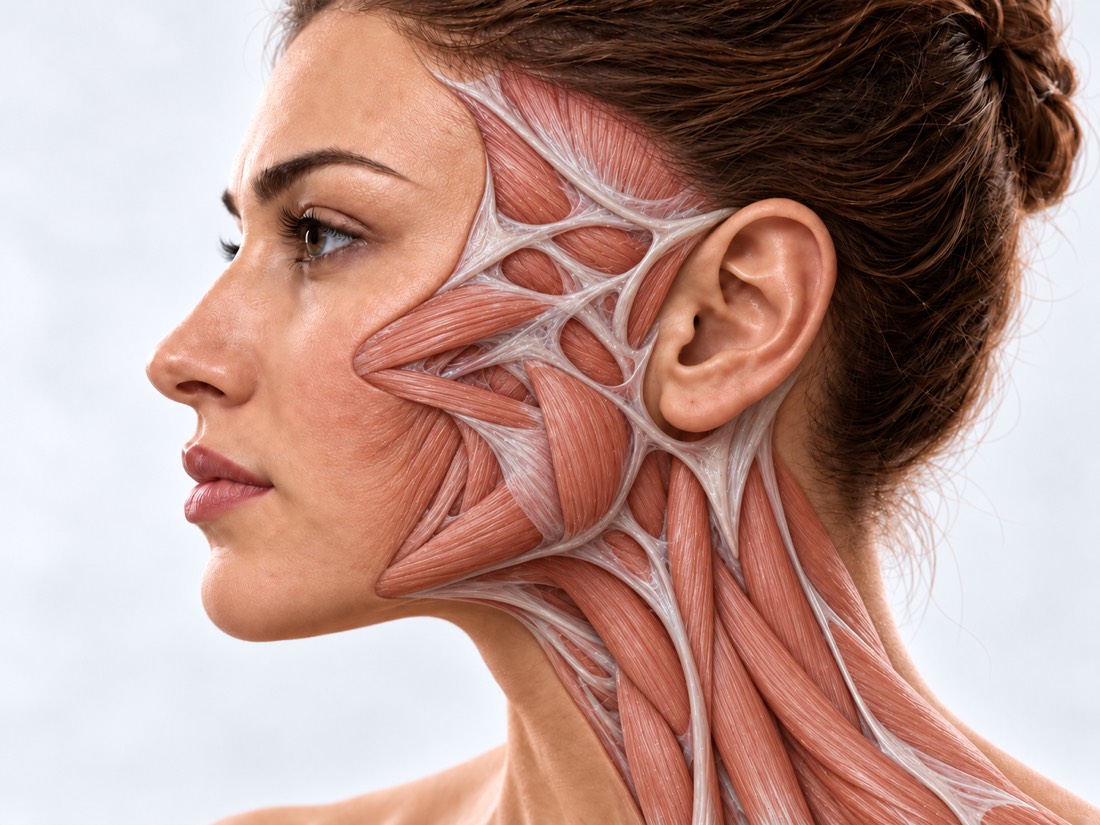 CONCEPTUAL VISUALIZATION
A scar is formed when damage to the skin reaches its deep layer - the reticular dermis. Scarring itself is a normal part of healing. But it can not only be noticeable on the face, but also change its shape.
Cicatricial deformity is said to occur when the scar tightens the skin and pulls nearby areas along with it: the eyelid moves away from the eye, the corner of the mouth drops or the mouth does not open wide, the wing of the nose tightens, a depression appears on the cheek or forehead. The face has many concave surfaces, so scars here are especially easy to tighten the skin.
Doctors distinguish between two different problems. If the scar is rough, but there is enough skin, treatment of the scar itself helps. If the skin is missing and the scar tightens the tissue, it must be relaxed or added to the skin - by surgery.
Facial scars also affect mood: in a review of 21 studies (2,394 participants), 26.1% of people with facial scars had anxiety, and 21.4% had depression.
This is general information. The doctor will tell you what will suit you after the examination.
Symptoms depend on where the scar is and how much it tightens the skin. Often, it's not the appearance that bothers you, but the fact that the scar makes it difficult to close the eye, eat or speak.
The lower eyelid moves away from the eye or turns out, the eye tears and dries, it is worse to close.
EctropionThe lip is everted or pulled up, the corner of the mouth is shifted, the mouth does not open wide.
MicrostomeAt the site of the scar, there is a depression or a step, the face has become asymmetrical.
The skin around the scar pulls, it is painful or difficult to move - this is how scar contracture behaves, most often after a burn.
Post-burn contractures of the faceThe scar is raised, dense, red, itchy. If it goes beyond the wound, it is a keloid.
Keloid scars on the faceA person avoids mirrors, photos and meetings. This is not a small matter: you should tell the doctor about it.
The cause depends on how much tissue is lost and whether there is enough local skin for correction.
A wound on the face can heal with a wide or indented scar, which drags the neighboring areas with it.
Scars after injuries and cutsA burn can cause scarring of the skin. On the face with its concave surfaces, it especially often deforms the features.
Scars after facial burnsAfter removal of a tumor or other operations on the face, the scar sometimes tightens the eyelid, lip or wing of the nose.
Scars after operations on the faceAfter wounds and bites, the wounds are lacerated, sometimes with tissue loss.
Consequences of animal bitesForehead scars are a separate topic with its own methods of correction.
Cicatricial deformation of the foreheadAn old scar that changes the shape of the face does not require emergency care: it is a planned situation. But if the injury or burn has just happened, help is needed immediately.
On the same day: a scar or wound is swollen, painful, hot to the touch or pus flows from them; you have been bitten by a person or an animal. In the coming days: the old scar cracks, becomes wet, or a non-healing wound has appeared on it; the scar twists the eyelid, and the eye becomes dry or watery. Planned: the scar pulls, interferes with movements, changes the contour or just bothers you - make an appointment for a consultation.
When and why did the scar appear, how was the wound treated, what operations have already been performed; photo of the face before the injury, if available.
How mature is the scar, does it pull the eyelid, lip or wing of the nose, how does the eye close and the mouth open, is there enough skin nearby.
For planning and to compare changes over time.
CT scan — if the bones are damaged under the scar; examination by an ophthalmologist - if the eye is affected.
It is impossible to completely remove the scar: the goal is to make it thinner, softer, less noticeable and relieve tension. According to international recommendations, the best chance is given by a combination of several methods, selected for a specific person.
While the scar matures, and together with the operation.
When the scar tightens the tissues or remains rough.
Cicatricial deformities of the face are treated at Dr. Valikhnovskyi's Institute of Surgery in the "New Face" direction, and the effects of burns are treated in the "Reconstruction after burns" direction. Scar care, laser and dermatologist support - in the clinic.
Plastic surgeon, candidate of medical sciences, founder of Dr. Valikhnovskyi Institute of Surgery.
Short answers. What is right for you, the doctor will tell you during the consultation.
No. Any treatment leaves a scar. The goal is to make it thinner, softer, less noticeable and remove the tension that changes the shape of the face.
Most scars take 2 years or longer to lighten and soften, so correction of persistent scars is usually planned later. If the scar twists the eyelid, treatment is not postponed.
Laser is one of the main methods for scars after injuries. But if the scar tightens the tissues and the skin is missing, surgery is needed; laser is often combined with it.
This is a balloon that is placed under healthy skin and gradually filled to obtain skin of the same color. In a review of 7,058 patients, 8.73% had head and neck complications.
Own fat under the scar improved its quality in a review of 23 studies. Whether it will suit you or not, the doctor will tell after the examination.
Show it to the doctor in the next few days. Skin cancer occasionally develops in old scars, most often after burns, and it is important not to miss it.
This is often the case: in a review of 21 studies, 26.1% of people with facial scars had anxiety. Tell the doctor about it - in addition to scar treatment, psychotherapy also helps.
The figures on the page are from these sources.
Submit a photo of your face straight on, from the side, and in motion. The doctor will tell you what can be fixed and where to start.
Leave your contact details and briefly describe the situation. A coordinator will contact you to agree on the next step.