Thick, red scar
Raised, dense scar within the boundaries of the former wound; may itch and hurt.
Hypertrophic scar Discuss your case
Body scar deformation — large, numerous, indented, or thick scars on the torso and limbs that change contours, pull the skin, hurt or itch. They remain after injuries and wounds, burns, multiple surgeries, or severe infections. They are treated with a combination of methods and often in stages.
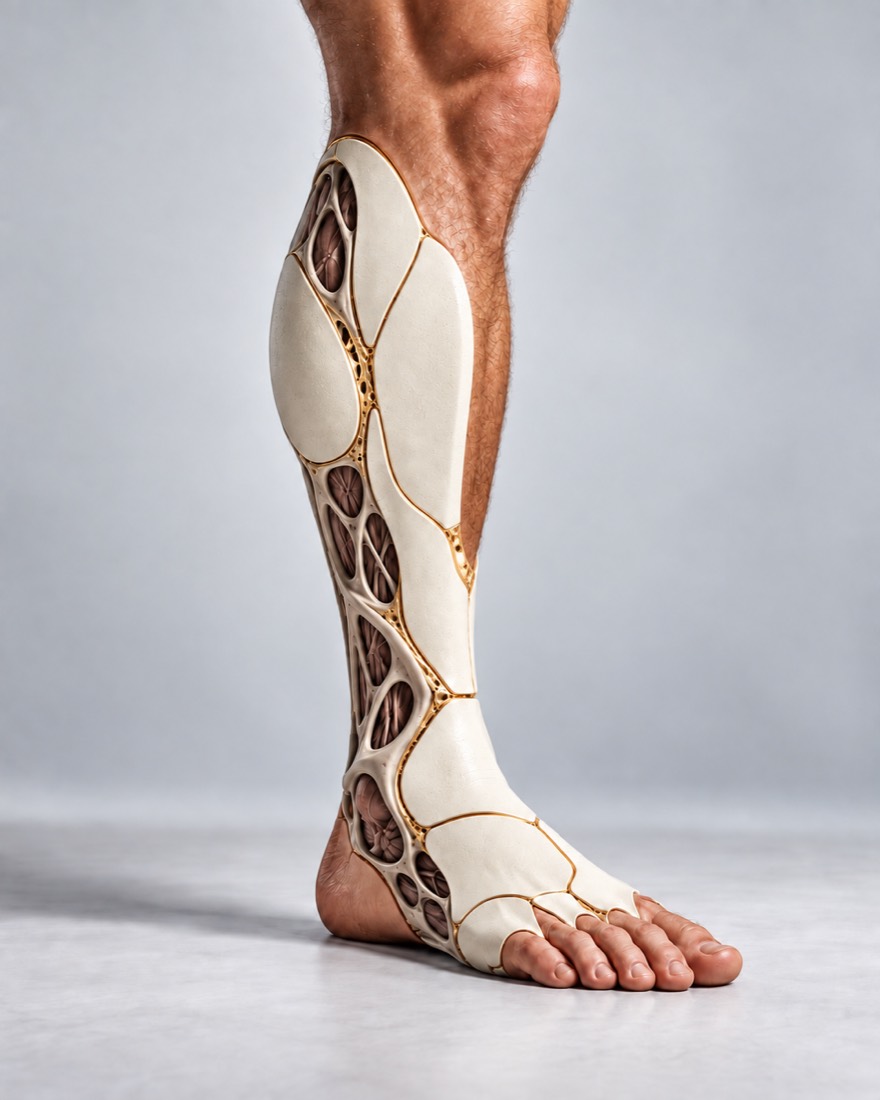 CONCEPTUAL VISUALIZATION
Any deep wound heals with a scar. A small scar gradually lightens and becomes flatter over time, while large or numerous scars can noticeably change the body: remain wide and thick, retract and 'adhere' to deeper tissues, tighten the skin, or alter contours — for example, after injuries, burns, repeated surgeries on the abdomen or limbs.
Scars can be different. According to the NHS, a hypertrophic scar is raised and firm, but does not extend beyond the wound and usually fades and flattens over time. A keloid grows larger than the wound and usually does not shrink without treatment. An atrophic scar is sunken. A contracture scar is tight, making movement in that area difficult or painful. Scars can itch, hurt, or cause discomfort.
This page is about large scars of the trunk and limbs in general and about how their correction is planned when there are many scars. About individual types of scars and contractures that limit movement — there are separate pages, links to them below.
This is general information. The doctor will tell you what will suit you after the examination.
Often several types of scars are combined in one person. This affects where to start treatment.
Raised, dense scar within the boundaries of the former wound; may itch and hurt.
Hypertrophic scarA hard smooth scar that extends beyond the wound and does not decrease on its own is a keloid.
Keloid scarThe scar sinks in or adheres to deeper tissues; nearby there is a lack of volume, and the body contour changes.
Soft tissue defectThe scar pulls the skin over a joint and prevents fully straightening the arm or leg.
Post-burn contractureThe scar cracks, oozes, or develops sores that do not heal — such an area should be shown to a doctor.
Unstable scarAccording to practical guidelines, hypertrophic and keloid scars can cause severe psychosocial problems. Based on reviews of burn scar studies, the perception of one’s own body was more influenced by how a person feels among others than by the characteristics of the burn.
Large scars remain after deep and large wounds — and where one area was operated on several times.
Torn, gunshot, or shrapnel wounds, wounds with tissue loss that healed slowly or were sutured multiple times.
According to a systematic review, risk factors for hypertrophic scars after burns include dark skin, female sex, young age, burns on the neck and arm, multiple surgeries, mesh skin grafts, long healing time, and burn severity.
Repeated incisions in the same area; in the same review, multiple surgeries were mentioned among the risk factors for hypertrophic scars.
After removal of dead tissue, large wounds remain, which heal with a scar.
Consequences of necrotizing fasciitisOld scars — a planned situation: they usually do not require urgent care. Emergency care is needed in case of signs of severe infection.
Immediately - to the surgeon who operated, and if it does not work - to the reception department: after surgery, pain or swelling at the operation site increases rapidly; the transplanted flap has changed color (pale, blue, or darkened) or has become cold. On the same day: If the scar or surrounding skin turns red, is painful, feels hot to the touch, or pus is oozing from the scar — see a doctor the same day. In the coming weeks: If the wound or area on the scar hurts, itches, bleeds, or forms a scab for more than 4 weeks, or if it grows and changes color — see a doctor. Planned: If the scar hurts, itches, limits movement, changes contours, or simply interferes with life — consult a plastic surgeon; if scars affect your mood, the doctor may recommend a psychotherapist.
Where the scars came from, when they healed, which surgeries have already been done, and what bothers the most: pain, itching, movement, or appearance.
The surgeon evaluates each scar: thickness, color, mobility, whether it is depressed, whether it tightens the skin, what the surrounding skin is like.
Hypertrophic, keloid, atrophic, or contracture — what to start with depends on the type.
First — scars that restrict movement or are constantly traumatized; appearance and contours — at later stages.
Dermatologist and physiotherapist, and if necessary — psychologist.
A scar cannot be completely removed: the goal is to make it thinner, softer, less noticeable, and more comfortable. According to international recommendations, for hypertrophic and keloid scars, the best chance comes from combining several methods.
This is often where they start.
Scarring deformation of the body is treated at the Valikhnovskyi Institute of Surgery under the program "New Body": when there are many scars, a single staged plan is developed. Burn scars and contractures are managed together with the program "Post-Burn Reconstruction," laser, light, and scar care fall under the program "Rehabilitation after Cosmetic Surgery."
Plastic surgeon, candidate of medical sciences, founder of Dr. Valikhnovskyi Institute of Surgery.
Short answers. What is right for you, the doctor will tell you during the consultation.
No. According to the NHS, it is not possible to get rid of a scar, but most scars fade over time. The goal of treatment is to make the scar thinner, softer, less noticeable, and more comfortable.
The scar changes gradually: according to the NHS, most scars fade over time, and this can take up to 2 years or more. If the scar limits movement or is constantly injured, treatment is sometimes started earlier. The timing is determined by the doctor after examination.
These are different tasks. Laser, according to reviews of studies, reduces itching and pain and improves function; depressed areas are filled with own fat, and a wide scar or contracture is corrected surgically. Often the methods are combined.
According to guidelines, they may be prescribed for large scar areas, especially after burns. A Cochrane review did not find sufficient evidence for the prevention of hypertrophic scars after a burn, so the decision is made together with the patient.
With own fat: according to a meta-analysis of 45 studies, after fat transplantation, scars became softer and more elastic, on average 1.4 procedures were needed.
It depends on the number and area of the scars: large scars are corrected in stages, with breaks for healing. The doctor specifies the number of stages after an examination.
Yes. According to the NHS, a doctor can refer you to talking therapy if the scar affects mental health. And scar correction can be discussed with a plastic surgeon.
The figures on the page are from these sources.
Send photos of scars and surgery records. The doctor will say what can be corrected and in what sequence.
Leave your contact details and briefly describe the situation. A coordinator will contact you to agree on the next step.