CONDITION / JAWS, MOUTH AND NECK

Salivary stone disease (sialolithiasis).

A salivary gland stone is a hard deposit in the gland or its duct that prevents saliva from leaving the mouth. Because of this, swelling and pain appear during eating. In most cases, the stone can be removed while preserving the gland.

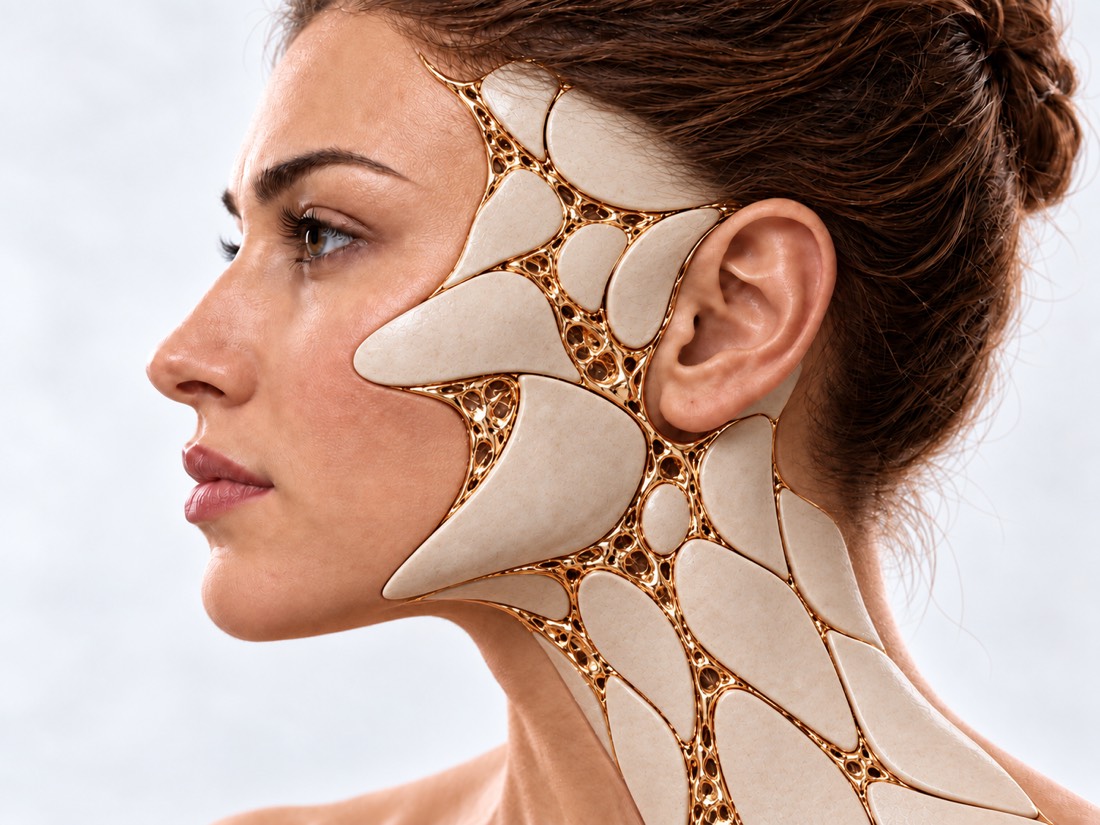
Conceptual visualization: face and area of salivary glandsCONCEPTUAL VISUALIZATION
What it is
A stone in the salivary gland or its duct that prevents saliva from leaving the mouth.
Where more often
In the submandibular gland (84%), less often — in the parotid gland (13%).
A typical sign
Pain while eating, which usually goes away in 1-2 hours, and swelling, which sometimes increases and then decreases.
Is the gland removed?
Rare: In a study of 4,691 patients, 2.9% had to have their gland removed.

What is
salivary stone disease.

Salivary glands produce saliva, and it flows into the mouth through thin ducts. Sometimes a stone is formed in the gland or duct — a hard mineral core covered with layers of organic and inorganic substances. A stone can block the path of saliva.

Stones are of different sizes, most often - from peas. They are white and hard, but it is not always possible to see them in the mouth. Every year, the stone is found in 60 people per million.

The stone is more often formed in the submandibular gland (84%) than in the parotid gland (13%). In the submandibular gland, it mostly sits in the duct (90%), and in the parotid gland, it is more often in the gland itself.

Salivary stone disease is usually not dangerous, and small stones sometimes pass on their own. Symptoms go away when the stone is out or removed.

This is general information. The doctor will tell you what will suit you after the examination.

How
a stone presents.

The symptoms are either weaker or stronger and may worsen during meals.

01

Pain while eating

Severe pain when you eat may mean that the stone has completely blocked the duct. It usually passes in 1-2 hours.

02

Swelling

Swelling in the mouth, under the jaw, or near the ear that comes and goes from time to time.

03

Dull pain

Aching pain in the mouth that comes and goes.

04

The stone is visible

Sometimes you can notice or feel a hard white stone under the tongue.

05

Inflammation

If an infection has started near the stone - pain, redness, pus, high temperature.

Chronic sialoadenitis

Why is it formed?
a stone

It is not known exactly why stones are formed, so there is no way to prevent them. Research is looking for what is involved.

Smoking

In a study of 5,100 patients with stones, smokers were more likely to have a stone (odds ratio 1.46). But in an American study of 540 patients, no connection with smoking was found.

Less saliva

In an American study, the stone occurred more often in Sjogren's syndrome and obesity. The authors explain this by the fact that in such conditions saliva is secreted less or its composition changes.

Kidneys and other organs

Salivary gland stones are usually not associated with other diseases. In a cohort of 24,038 people with kidney stones, salivary gland stones were no more common than in people without them.

Who is sick

In a study of 5,100 patients, women were more likely to have stones, and the average age at diagnosis was about 56.

When to seek medical advice?

The stone itself usually does not require emergency care. But infection near the stone can become complicated, and sepsis usually develops within a few hours.

103 immediately if:

  • it is difficult to breathe;
  • difficulty swallowing or speaking;
  • severe swelling in the mouth, in particular under the tongue;
  • swelling of the neck increases rapidly;
  • mouth suddenly difficult to open;
  • the eye is swollen or painful, vision has suddenly worsened;
  • breathing is very frequent;
  • the person is confused, speaks unclearly or illogically;
  • blue, pale, or mottled skin, lips, or tongue;
  • a rash that does not fade when pressed;
  • very high or very low temperature, the body is hot or cold to the touch, the person shakes from chills;
  • in a child under 5 years old - breathes very often or with difficulty, croaks, the stomach is drawn in under the ribs;
  • in a baby up to 3 months — a temperature of 38 °C and above, from 3 to 6 months — 39 °C and above;
  • a child under 5 years old has a temperature below 36 °C, is cold to the touch or shivers;
  • in a child under 5 years old - weak, shrill or continuous crying;
  • in a child under 5 years old - does not react as usual, does not eat, is difficult to wake up or is sleepier than usual;
  • in a child under 5 years of age, she did not urinate for 12 hours;
  • after the operation, the bleeding does not stop, although the wound is tightly pressed.

Other levels of urgency:

Immediately - to the surgeon who operated, and if it does not work - to the waiting room: pain or swelling increases after surgery. On the same day: pain, redness or pus appeared near the stone, the temperature rose - signs of infection; tell the surgeon if the wound is red or oozing pus after the operation. In the coming days: swelling and pain during eating are repeated. Planned: the stone interferes and does not come out by itself.

How to find
a stone

  1. Discussion and review

    The doctor asks when the swelling and pain appear, examines the mouth and feels the gland and the duct - the stone can sometimes be felt.

  2. ultrasound

    The first examination. In a meta-analysis of 10 studies (1,393 patients), ultrasound found a stone in 89.92% of cases, and if ultrasound showed a stone, it was actually present in 98.53% of cases.

  3. Cone-beam CT

    The authors of the review believe that it is more sensitive than ultrasound and may be a good choice to find the stone.

  4. Accurate data about the stone

    Before treatment, they find out exactly where the stone is, its size and whether it is one - the method of removal depends on this.

How we treat
salivary stone disease.

The goal of treatment is to remove the stone and preserve the gland. The method depends on the size of the stone and the place where it sits. Before the advent of modern methods that preserve the gland, it was removed in 40-50% of cases, now - in less than 5%.

01

at home

A small stone sometimes comes out on its own. You can alleviate the condition by increasing salivation.

Saliva
Drink plenty of water, chew sugar-free gum, or chew sugar-free lollipops.
Massage
Gently massage the area around the stone.
Pain and swelling
Paracetamol or ibuprofen, pieces of ice.
Don't do it
Do not try to remove the stone with something sharp - you can injure yourself and get an infection.
02

Removal with preservation of the gland

Methods that remove the stone and preserve the gland.

Sialendoscopy
A thin endoscope is inserted into the duct and the stone is removed. In a meta-analysis of 91 studies (8218 patients), the success rate for stones was 89.6%, and no serious complications were described. Most studies had a moderate or high risk of bias.
Section of the duct from the side of the mouth
If the stone cannot be removed with an endoscope. More often, a cut is needed for large stones and those that are felt; where the stone lies is also important. In a review of 23 studies (2520 participants), conventional oral removal was successful in 92.6%; temporary numbness of the tongue was present in 8.1%, persistent damage to the tongue nerve was not described.
Stones of the parotid gland
The facial nerve passes nearby. In a review of 42 studies (1,559 patients), removal with an endoscope freed 93% of the stone; the combination of an endoscope with a skin incision helped with complex stones, but there were more complications (24%). In general, the complications were mostly minor, permanent damage to the facial nerve was not described.
Stone crushing
The stone is broken by a shock wave from outside or inside the channel. With stones of the parotid gland, crushing from the outside freed 58% of the stone.
03

The result

Without removing the gland
In a study of 4,691 patients, the stone was completely removed in 80.5%, partially in 16.7%. The gland had to be removed in 2.9% of patients — those who had symptoms left after unsuccessful treatment.
A year later
In a study of 69 glands with stones after removal, symptoms disappeared completely in 95% of the glands after 3 months and in 85% after a year.
Will he return?
Once removed, stones usually do not form again. If they appear again and again, it may be necessary to remove the gland.

How
we treat it.

Salivary stone disease is evaluated by a surgeon from the "New Face" department at Dr. Valikhnovskyi's Institute of Surgery. The doctor determines how to remove the stone after an examination and photographs and discusses it with you during the consultation.

CLINIC SERVICE A new face Form, symmetry, facial expressions and functions after injuries, wounds, burns, removal of tumors and congenital changes. View service

What we do for this condition

  • Consultation of a surgeon — the doctor finds out what is troubling, examines the mouth and glands, assesses possible limitations.
  • CT of the facial skull — basic examination before operations in the direction; helps to see exactly where the stone is and what size it is.
  • Personal plan — the next steps and sequence of stages are discussed together with you.
  • Preparation for anesthesia — if an operation under general anesthesia is required — tests and examination by an anesthesiologist.

Rostislav Valikhnovskyi

Plastic surgeon, candidate of medical sciences, founder of Dr. Valikhnovskyi Institute of Surgery.

How treatment works with us

  1. Photos and pictures onlineSend the results of the ultrasound or CT scan, if available, and describe when the swelling and pain started.
  2. ConsultationExamining the mouth and glands, talking about how often attacks occur.
  3. ExaminationThe doctor prescribes ultrasound or CT to know where the stone is, what size it is and whether it is one.
  4. PlanThe way to remove the stone, and whether it is possible to save the gland.
  5. RecoveryWater, massage and examination after treatment.

Common
questions

Short answers. What is right for you, the doctor will tell you during the consultation.

Can the stone come out by itself?

Small - sometimes yes. Water, gland massage and sugar-free chewing gum or lollipops help. Until the stone passes or is removed, the symptoms will persist.

Is it necessary to remove the salivary gland?

Rarely. Modern methods remove the stone and preserve the gland: in a study of 4,691 patients, the gland was removed in 2.9%.

Will the stone return after removal?

Usually not. If the stones appear again and again, it may be necessary to remove the gland.

Is a salivary gland stone dangerous?

Usually not. But if an infection started near the stone - pain, redness, pus, temperature - see a doctor the same day. Swelling in the mouth or neck with difficulty breathing or swallowing is a reason to call 103.

Is a salivary gland stone related to kidney stones?

In a cohort of 24,038 people with kidney stones, salivary gland stones were no more common than in people without them. The authors do not recommend examining the salivary glands separately because of kidney stones.

Can you pull out the stone yourself?

You should not try to pull it out with something sharp: you can injure the duct and introduce an infection. Gentle massage and water are safer.

Sources

21 sources · AWMF guidelines, meta-analyses, reviews, research and NHS
showCollapse
  1. Updated S2k AWMF guideline on obstructive sialadenitis (Aktualisierte AWMF-S2k-Leitlinie zur obstruktiven Sialadenitis)Laryngo-Rhino-Otologie, 2021doi:10.1055/a-1298-4241 ↗
  2. Success rate of sialendoscopy. A systematic review and meta-analysisOral Diseases, 2024doi:10.1111/odi.14662 ↗
  3. Sialendoscopy for treatment of major salivary glands diseases: a comprehensive analysis of published systematic reviews and meta-analysesBrazilian Journal of Otorhinolaryngology, 2023doi:10.1016/j.bjorl.2023.101293 ↗
  4. Utility of Ultrasonography for Diagnosis of Salivary Gland Sialolithiasis: A Meta-AnalysisLaryngoscope, 2022doi:10.1002/lary.30020 ↗
  5. Thirty years of experience and current trends in the management of sialolithiasis: a narrative reviewBritish Journal of Oral and Maxillofacial Surgery, 2025doi:10.1016/j.bjoms.2025.02.011 ↗
  6. Salivary stones: symptoms, aetiology, biochemical composition and treatmentBritish Dental Journal, 2014doi:10.1038/sj.bdj.2014.1054 ↗
  7. Outcome of minimally invasive management of salivary calculi in 4,691 patientsLaryngoscope, 2009doi:10.1002/lary.20008 ↗
  8. Treatment of Sialolithiasis: What Has Changed? An Update of the Treatment Algorithms and a Review of the LiteratureJournal of Clinical Medicine, 2021doi:10.3390/jcm11010231 ↗
  9. Parotid gland sialolithiasis: a comprehensive systematic review and meta-analysisEuropean Archives of Oto-Rhino-Laryngology, 2026doi:10.1007/s00405-025-09697-y ↗
  10. Transoral robotic surgery versus conventional transoral surgery for submandibular stones: Systematic review and meta-analysisAmerican Journal of Otolaryngology, 2025doi:10.1016/j.amjoto.2025.104647 ↗
  11. Gland-preserving surgery for salivary stones and the utility of sialendoscopesHead & Neck, 2019doi:10.1002/hed.25560 ↗
  12. One-Year symptom outcomes after sialolithiasis treatment with sialendoscopy-assisted salivary duct surgeryLaryngoscope, 2019doi:10.1002/lary.27398 ↗
  13. Characteristics of sialolithiasis in Israel, a big-data retrospective study of 5100 casesOral Diseases, 2025doi:10.1111/odi.15095 ↗
  14. Identifying Risk Factors for SialolithiasisLaryngoscope, 2026doi:10.1002/lary.70333 ↗
  15. Lack of evidence that nephrolithiasis increases the risk of sialolithiasis: A longitudinal follow-up study using a national sample cohortPLOS ONE, 2018doi:10.1371/journal.pone.0196659 ↗
  16. Salivary gland stonesNHS, 2023nhs.uk/conditions/salivary-gland-stones ↗
  17. SepsisNHS, 2026nhs.uk/conditions/sepsis ↗
  18. Dental abscessNHS, 2026nhs.uk/conditions/dental-abscess ↗
  19. ToothacheNHS, 2024nhs.uk/symptoms/toothache ↗
  20. Shortness of breathNHS, 2024nhs.uk/symptoms/shortness-of-breath ↗
  21. Cuts and grazesNHS, 2026nhs.uk/conditions/cuts-and-grazes ↗

The figures on the page are from these sources.

VALIKHNOVSKI SURGERY PARTNERS

Swells under the jaw
while eating?

Send the results of the ultrasound or CT scan, if available, and describe the symptoms. The doctor will tell you if it looks like a stone and what can be done.

Call Send an enquiry
ONLINE ENQUIRY

Tell us how we can help.

Leave your contact details and briefly describe the situation. A coordinator will contact you to agree on the next step.

Preferred contact method