CONDITION / BREAST

State after mastectomy.

Post-mastectomy – when the breast has been removed because of cancer or to reduce the risk of cancer. Breasts can be reconstructed with your own tissue or with an implant - in the same operation or later. It is possible not to restore: it is a woman's decision.

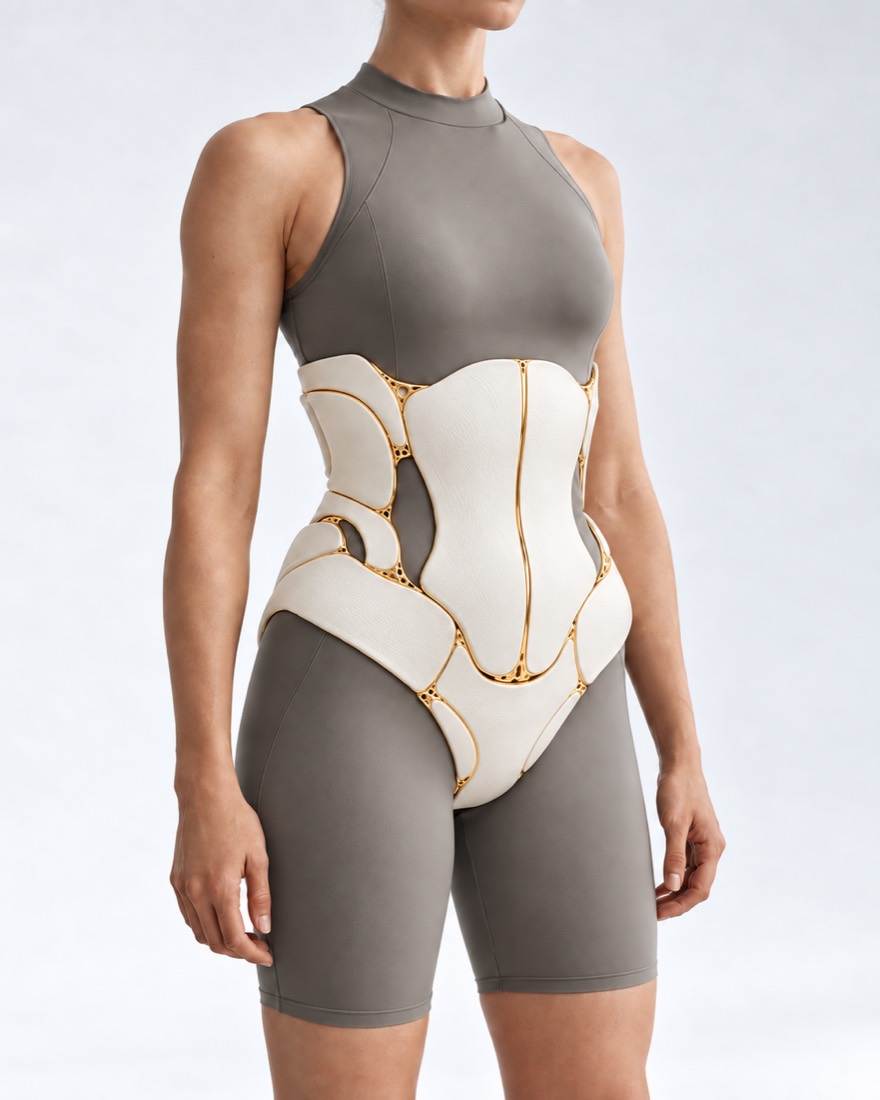
Conceptual visualization: restoration of breast shape after mastectomyCONCEPTUAL VISUALIZATION
What it is
Post-mastectomy status — due to cancer or to reduce hereditary risk.
Options
Breast reconstruction with own tissue, implant or fat — or not.
when
In the same operation as the mastectomy, or in a separate operation later.
Who treats it
Cancer treatment and supervision is conducted by an oncologist; the clinic is responsible for the reconstruction.

What does it mean?
life after mastectomy.

Mastectomy is an operation during which the mammary gland is removed. It is done to treat breast cancer or, with a high hereditary risk, to prevent it. A scar remains on the breast, and the shape of the chest changes.

Reconstruction — operations that restore the shape, volume and symmetry of the breast. The British NICE guideline advises offering reconstruction to everyone who has had a breast removed for cancer, while remembering that some women do not want these operations. The guideline advises to discuss the option without reconstruction in the same way.

Reconstruction does not cure cancer and does not replace oncological treatment. His plan is drawn up by an oncologist, and the time and method of reconstruction are selected according to this plan: whether there will be chemotherapy or whether radiation is needed.

It is not necessary to make a decision immediately. Breasts can be restored years after mastectomy, when treatment is complete.

This is general information. The doctor will tell you what will suit you after the examination.

With what
apply

They come at different stages - before the mastectomy, immediately after it or years later.

01

Mastectomy ahead

The surgery is just being planned and you want to know if you can reconstruct the breast in the same surgery.

02

There is no chest

You have had a mastectomy before: a scar remains, you wear a prosthesis in a bra and are thinking about reconstruction.

03

Asymmetry

After a mastectomy of one breast or after reconstruction, the breasts are different in shape or size.

04

Problems with the implant

The reconstructed breast with an implant has hardened, deformed or hurts.

Capsular contracture

It depends on what
choice of method.

The method and time of reconstruction are chosen according to the oncological plan, the woman's body and wishes.

Irradiation

According to NICE guidance, one-stage implant reconstruction may suffer more from radiation than one-stage flap reconstruction. In a meta-analysis of 15 studies (5,314 patients with single-stage implant reconstruction), the odds of capsular contracture were approximately 5 times higher after radiation.

Own fabrics

A flap requires a sufficient supply of skin and fat on the abdomen or thigh. If it is not enough, two flaps or a flap with an implant are combined.

Health and smoking

Concomitant diseases can make reconstruction impossible. Smoking, according to the NHS, interferes with wound healing.

Type of mastectomy

Whether the skin of the breast and nipple is preserved, what the size of the breast was and what the new one would like to see - according to the Canadian guidelines, the time of reconstruction also depends on this.

When to seek medical advice?

A long-standing mastectomy, after which everything has healed, is a planned situation: it usually does not require emergency care. In the first weeks after mastectomy or reconstruction, some symptoms require immediate care.

103 immediately if:

  • very difficult to breathe;
  • breathing is very frequent;
  • pain in the chest or upper back;
  • the heart beats very often;
  • the person fainted;
  • bleeding from a wound that cannot be stopped;
  • confusion, slurred speech;
  • the skin has become bluish, pale or mottled;
  • very high or very low temperature, chills.

Do not delay a visit to the surgeon:

Immediately - to the surgeon who operated: after the operation, the breasts quickly increase in size and become tight; sudden or increasingly severe pain or swelling; after flap reconstruction, the flap has changed color (darkened, bluish or pale) or has become cold; blood flows from the wound, but it can be stopped by pressing; the hand suddenly went numb. If you cannot contact the surgeon, go to the reception department. On the same day: the wound is swollen, red, or oozing pus. Planned: asymmetry, scars, a prosthesis that is uncomfortable to wear, the desire to restore the breast. If a new nodule, seal or ulcer appears on the chest, in the scar or in the armpit, tell the oncologist without waiting for the next control examination.

How to prepare
before reconstruction.

  1. Documents

    A statement about the operation, histology, treatment plan from the oncologist: whether there will be chemotherapy, hormonal therapy or radiation.

  2. Review

    The condition of the skin and scars, tissues after radiation, the second breast, tissue reserve on the abdomen, thighs or back.

  3. Examination

    Analyzes and visualization — those required for the chosen method; they are prescribed by a doctor.

  4. Coordination with the oncologist

    When it is possible to operate and how the reconstruction will be combined with further treatment.

How to restore
chest

According to NICE guidance, more than one operation is usually required to complete the reconstruction. The method is chosen together with the woman: the oncological plan, body, general health and wishes are weighed.

01

Immediately or later

Instantly
Reconstruction begins in the same operation as mastectomy; the surgeon can save the skin of the breast, and if the tumor does not affect the nipple, it too. According to Canadian guidelines, this may provide more psychological benefits.
Postponed
A separate operation, when the treatment is completed and the tissues have healed. More time for decisions; before the reconstruction, you can wear the prosthesis in a bra.
Complications
In a meta-analysis of 30 studies (14,034 patients), surgical complications occurred more often after immediate reconstruction than after delayed reconstruction (odds ratio 1.3).
Chemotherapy
According to a meta-analysis of 29 studies (156,000 patients), chemotherapy was started an average of 3.5 days later after single-stage reconstruction than after mastectomy without reconstruction; there were statistically no more deposits of more than 90 days.
Recurrence of cancer
In a meta-analysis of 55 studies (14,217 patients), the frequency of local recurrences after immediate and delayed reconstruction with own tissues did not differ. The authors emphasize that there is still little strong evidence.
02

Own fabrics

Breasts are soft to the touch and change with the body.

Abdominal flap
Skin and fat are taken from the lower abdomen, sparing the muscles, and the vessels are sutured together under a microscope. Other donor areas are the thigh or the back.
satisfaction
In a prospective study of 2013 women, after 2 years, those who had breast reconstruction with their own tissue were more satisfied with their breasts than after implants.
Risks
In a multicenter study of 2,343 patients, over 2 years, the chance of complications after flaps was higher than after an expander with an implant, but the reconstruction was lost less often: with DIEP in 1.3%, with an expander or implant in 7.1%.
03

Implants

A shorter operation, but the implant requires supervision.

Immediately or through an expander
If there is enough skin, the implant is placed immediately; otherwise, the tissues are first stretched with an expander.
Over the muscle or under the muscle
The Canadian guideline recognizes both options; the choice is made by the patient and the surgeon together.
After irradiation
In a meta-analysis of 15 studies, the odds of complications after radiation were about 3.5 times higher. According to NICE, single-stage implant reconstructions may suffer from more exposure than flaps.
04

Irradiation and time selection

There is no unequivocal answer.

What is known
According to a network meta-analysis, when radiation was needed, the one-moment flap was less likely to be lost; if an implant is chosen, there are fewer complications when it is exposed to radiation.
What is not known
An international consensus of experts recognized the evidence as weak: the optimal method and time of reconstruction during irradiation have not been agreed upon. NICE advises offering single-stage reconstruction to those who may need radiation.
05

Refinement

After a few months, when the form stabilizes.

Lipofilling
The Canadian guideline advises own fat to contour and improve tissue after radiation. In a meta-analysis of 9 cohorts (4247 patients), the frequency of local recurrence with and without lipofilling did not differ.
Nipple and areola
The nipple is formed from local tissues. According to a review of 75 articles, it loses 45-75% of its height over time, so it is made with a margin; complications after areola tattoo — 1.6%.
06

Without reconstruction

Prosthesis
An external prosthesis in a bra is both a permanent option and a temporary one before reconstruction.
Flat closure
The scar is formed flat, without volume. This option is chosen more and more often; women are concerned about asymmetry, excess skin and lack of communication with the surgeon. There is still little research.

How
we treat it.

Breasts after mastectomy at Dr. Valikhnovskyi's Institute of Surgery are restored in the direction of "Mammary gland reconstruction" - with own tissues, implants or fat, immediately or delayed. The plan is drawn up together with the oncologist. The clinic is responsible for the reconstruction; chemotherapy, hormonal and radiation therapy and oncological supervision are conducted by an oncologist.

CLINIC SERVICE Breast reconstruction Breasts after mastectomy - with own tissues, implants or fat, immediately or later. View service

What we do for this condition

  • DIEP flap — skin and fat from the lower part of the abdomen, rectus abdominis muscles remain; vessels are sutured under a microscope.
  • PAP flap — tissues from the back-inner surface of the thigh, a scar — in the fold under the buttock; an option when DIEP is not available or desirable.
  • Two flaps or a flap with an implant - if there is not enough body fat, and the breasts were large.
  • Restoration of sensitivity — the nerve of the flap is sutured with the intercostal nerve.
  • Implants and expanders — an implant immediately or an expander first; over or under the muscle, with dermal matrix or mesh as needed.
  • Lipofilling — volume and contour with own fat; several sessions are usually required after a mastectomy.
  • Nipple, areola and symmetry — nipple from local tissues, medical tattooing of the areola, correction of the second breast.

Rostislav Valikhnovskyi

Plastic surgeon, candidate of medical sciences, founder of Dr. Valikhnovskyi Institute of Surgery.

How treatment works with us

  1. Photos and documents onlineSend the discharge, histology, treatment plan from the oncologist and, if you can, a photo.
  2. ConsultationExamination of tissues and donor areas, discussion of wishes and possible methods.
  3. PlanTogether with an oncologist: method, time, number of stages.
  4. ReconstructionFlap, implant or fat - depending on the plan.
  5. Recovery and stagesThe first days — monitoring of the flap; after a few months — nipple, symmetry, lipofilling. The oncologist guides you further.

Common
questions

Short answers. What is right for you, the doctor will tell you during the consultation.

Is it necessary to do reconstruction?

No. This is a woman's decision. The NICE guideline advises to offer reconstruction, but also to discuss an option without it: a prosthesis in a bra or a flat closure.

Can breasts be restored years after a mastectomy?

Yes. Delayed reconstruction is done as a separate operation when the treatment is complete and the tissues have healed.

Is it possible to do reconstruction after radiation?

Yes, but the risk of complications is higher. According to NICE, single-stage implant reconstructions may suffer more radiation exposure than autologous tissue flaps. The method is chosen after examining the tissues.

Does the timing of reconstruction affect the risk of cancer recurrence?

In a meta-analysis of 55 studies, the rate of local recurrence after immediate and delayed autologous reconstruction did not differ, although there was little strong evidence. In a meta-analysis of lipofilling, the frequency of local recurrence with and without lipofilling did not differ either. Supervision by an oncologist continues even after reconstruction.

Will reconstruction delay chemotherapy?

According to a meta-analysis of 29 studies, chemotherapy after single-stage reconstruction was started an average of 3.5 days later than after mastectomy without reconstruction; there were statistically no more deposits of more than 90 days. The time of the operation is agreed with the oncologist.

Own tissues or an implant?

It depends on the body, oncological plan and wishes. Own tissues — a longer operation and a scar in the donor area; an implant is a shorter operation, but may tolerate radiation less well. The decision is made together with the doctor.

How many operations will be needed?

Usually more than one: nipple, symmetry and lipofilling are done in separate stages after several months.

Sources

16 sources · NICE and Ontario guidelines, consensus, meta-analyses, cohorts and NHS
showCollapse
  1. Early and locally advanced breast cancer: diagnosis and management (NG101) — RecommendationsNICE, 2025nice.org.uk/guidance/ng101/chapter/Recommendations ↗
  2. Postmastectomy Breast Reconstruction in Patients with Non-Metastatic Breast Cancer: An Ontario Health (Cancer Care Ontario) Clinical Practice GuidelineCurrent Oncology, 2025doi:10.3390/curroncol32060357 ↗
  3. International multidisciplinary expert panel consensus on breast reconstruction and radiotherapyBritish Journal of Surgery, 2019doi:10.1002/bjs.11256 ↗
  4. Long-term Patient-Reported Outcomes in Postmastectomy Breast ReconstructionJAMA Surgery, 2018doi:10.1001/jamasurg.2018.1677 ↗
  5. Comparison of 2-Year Complication Rates Among Common Techniques for Postmastectomy Breast ReconstructionJAMA Surgery, 2018doi:10.1001/jamasurg.2018.1687 ↗
  6. Breast cancer recurrence after immediate and delayed postmastectomy breast reconstruction — A systematic review and meta-analysisCancer, 2022doi:10.1002/cncr.34393 ↗
  7. Surgical complications in immediate and delayed breast reconstruction: A systematic review and meta-analysisJournal of Plastic, Reconstructive & Aesthetic Surgery, 2022doi:10.1016/j.bjps.2022.08.029 ↗
  8. Does Immediate Breast Reconstruction Lead to a Delay in Adjuvant Chemotherapy for Breast Cancer? A Meta-Analysis and Systematic ReviewClinical Breast Cancer, 2023doi:10.1016/j.clbc.2023.03.014 ↗
  9. The role of postmastectomy radiation therapy in patients with immediate prosthetic breast reconstruction: A meta-analysisMedicine, 2018doi:10.1097/MD.0000000000009548 ↗
  10. Optimal reconstructive strategies in the setting of post-mastectomy radiotherapy — A systematic review and network meta-analysisEuropean Journal of Surgical Oncology, 2021doi:10.1016/j.ejso.2021.07.001 ↗
  11. Oncologic safety of breast reconstruction with autologous fat grafting: A systematic review and meta-analysisEuropean Journal of Surgical Oncology, 2022doi:10.1016/j.ejso.2021.12.017 ↗
  12. Nipple-areola complex reconstruction techniques: A literature reviewEuropean Journal of Surgical Oncology, 2016doi:10.1016/j.ejso.2016.01.003 ↗
  13. Aesthetic Flat Closure Following Mastectomy: A Systematic Review of Techniques, Outcomes, and Patient PerspectivesAesthetic Plastic Surgery, 2026doi:10.1007/s00266-025-05180-5 ↗
  14. MastectomyNHS, 2025nhs.uk/tests-and-treatments/mastectomy ↗
  15. SepsisNHS, 2026nhs.uk/conditions/sepsis ↗
  16. Cuts and grazesNHS, 2026nhs.uk/conditions/cuts-and-grazes ↗

The figures on the page are from these sources.

VALIKHNOVSKI SURGERY PARTNERS

Thinking about recovery
chest?

Submit the discharge, histology and treatment plan from the oncologist. The doctor will tell you which reconstruction options are possible for you.

Call Send an enquiry
ONLINE ENQUIRY

Tell us how we can help.

Leave your contact details and briefly describe the situation. A coordinator will contact you to agree on the next step.

Preferred contact method