CONDITION / WOUNDS AND INJURIES

Fire wound.

Gunshot wound — an injury from a bullet, shrapnel, or explosion fragments. A fresh wound always requires calling 103 and first aid, and then staged treatment: the wound is cleaned several times and closed when it becomes clean.

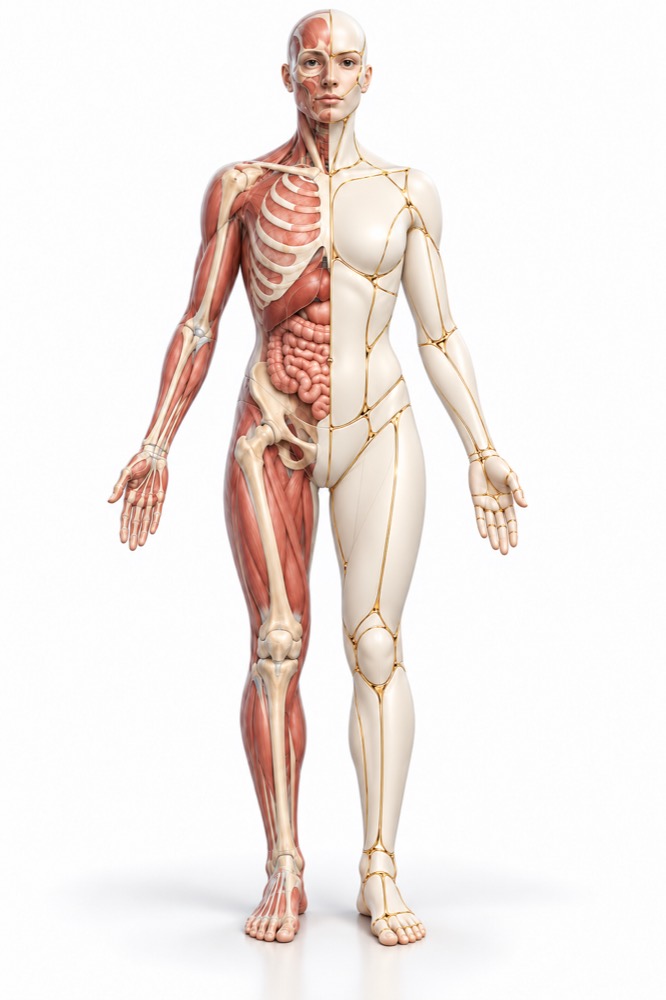
Conceptual visualization: gunshot wound and stages of its healingCONCEPTUAL VISUALIZATION
What it is
A wound from a bullet, shrapnel, or explosion fragments: tissues are torn, and the wound may contain fragments and dirt.
The first thing to do
Call 103 and press the wound tightly until help arrives.
How we treat
In stages: the wound is cleaned, if necessary several times, and closed when it becomes clean.
Who treats it
Surgeon, and if necessary — vascular surgeon, traumatologist, infectious disease specialist, and psychologist.

How a gunshot wound
differs from a cut.

A bullet or fragment does not just cut the skin, it transfers energy to the tissues. A review of injury mechanisms explains: a rifle bullet, which tumbles or deforms in the body, damages the tissues around the channel, whereas a pistol bullet that does not deform affects mainly along its path. In high-energy injuries, part of the muscles may die later.

At the same time, not everything displaced by a bullet is doomed: a review by military surgeons advises to forget the myth of the inevitable death of all tissues around the channel. Therefore, the surgeon removes only what is already dead and, if necessary, re-examines the wound.

Among blast injuries, wounds from fragments and shrapnel predominate, so foreign bodies and dirt often remain in the wound. This increases the risk of infection, including tetanus, if vaccination is incomplete.

This page is about both fresh wounds and wounds that do not heal for weeks. This is general information. What is suitable for you specifically will be told by the doctor after examination.

What one sees
wounded.

The appearance of the wound does not always correspond to the depth of the injury: a small hole in the skin may hide damaged muscles, blood vessels, or bone.

01

A fresh wound

Bullet or shrapnel hole, sometimes two — entrance and exit; bleeding, pain. Any fresh injury is a reason to call 103.

02

Fragment in the wound

If a fragment is visible in a fresh wound, do not remove it: call 103 and press the tissues on both sides. Fragments remaining after healing are discussed on a planned basis.

Debris and foreign bodies in tissues
03

Signs of infection

The wound is swollen, red, increasingly painful, and there is pus — see a doctor the same day.

04

Numbness or weakness

Loss of sensation near the wound or difficulty moving the limb — this happens when a nerve or blood vessel is affected. If this appears suddenly — call 103.

05

The wound does not heal

The wound oozes for weeks, and tendons or bone are visible inside. The cause can be a bone infection, a fragment, or lack of tissue.

06

Lack of tissue

After cleaning, there remains a defect of skin, fat, or muscle that will not close on its own.

Soft tissue defect

It depends on what
Severity of the wound.

How a wound heals is determined not only by its size but also by the mechanism of injury and what entered it.

Energy of the injury

High-energy injuries damage tissues far beyond the visible channel; such wounds require repeated examinations.

Fragments and dirt

In the examination of 53 wounded individuals from Ukraine, infection of the skin, soft tissues, or joint was present in 17; it was associated with bone injury, skin defect, and foreign bodies in the wound.

Resistant bacteria

In a study of 73 wounded soldiers in hospitals in Ukraine, bacteria were found in 56.16% of wound samples; the frequency of multidrug resistance was 84.6%.

What is involved

A wound over a vessel, nerve, bone, or joint is more difficult to treat than a wound involving only skin and fat.

Bone defect after injury

When to seek medical advice?

A fresh gunshot or shrapnel wound — always call 103. Before help arrives, firmly press the wound with a bandage or a clean folded cloth; if blood soaks through, place a new layer on top without removing the first. Raise the injured arm above the head, for a leg — lay the person down and lift the leg above the level of the heart. Do not remove a fragment from the wound: press the tissue on both sides of it. If the 103 dispatcher gives instructions — follow them. Do not drive yourself.

103 immediately if:

  • any fresh bullet or shrapnel wound;
  • bleeding does not stop despite pressure;
  • the blood is gushing, bright red;
  • a fragment is stuck in a fresh wound;
  • sudden loss of sensation near the wound or inability to move the limb;
  • sudden severe pain in the injured limb;
  • breathing is very frequent;
  • confusion or slurred speech;
  • blue, pale, or mottled skin or lips;
  • jaw is clenching or difficulty swallowing;
  • painful cramps or muscle stiffness;
  • difficulty breathing.

Do not delay a visit to the doctor:

On the same day: the wound is swollen, red, increasingly painful, or oozing pus; you generally feel unwell or have a fever; the wound still has soil or dirt after washing; you are unsure if your tetanus vaccination is complete. In the coming weeks: the wound is not healing or is weeping; a fragment hurts; it is hard to cope with what happened. Planned: scars, tissue defects, fragments that are not bothering — for consultation with a surgeon.

How to evaluate
the wound.

  1. Conversation and documents

    When and with what you were wounded, what has already been done, what medications you are taking, whether you have a tetanus vaccination; discharge papers and operation descriptions if the wound has already been treated.

  2. Review

    The surgeon assesses the wound, circulation, sensitivity, and movements below the injury, as well as signs of infection.

  3. Pictures

    X-ray or CT shows fragments, fractures, and how close a fragment is to a joint, vessel, or nerve.

  4. Wound culture

    If there are signs of infection, material is taken from the wound to identify bacteria and their sensitivity to antibiotics.

How we treat
gunshot wound.

The ballistic wound review describes general principles: cleaning the wound without primary closure, medication treatment, immobilization, repeated surgeries, and delayed closure. The specific plan depends on the wound and what is affected.

01

A fresh wound

The first days.

Cleansing
The wound is washed and dead tissue, dirt, and accessible fragments are removed; if necessary, several times.
Why it is not sutured immediately
A wound that is infected or may become infected is usually not closed immediately so as not to trap bacteria inside.
Without surgery
For low-energy civilian soft tissue injuries of the legs, the examination suggests observation without surgery if the bullet is not bothering; this is the opinion of experts, and the decision is made by the surgeon after examination.
02

Infection

Medications and vaccinations.

Antibiotics
Whether antibiotics are needed and which ones, is decided by the doctor. For civilian injuries from low-velocity bullets treated without surgery, there is little quality research supporting prophylactic antibiotics, and in combat wounds, according to studies from Ukraine, bacteria resistant to many antibiotics occur. Do not take antibiotics on your own and do not stop prescribed ones.
Tetanus
Large, deep, or dirty wounds increase the risk of tetanus; if vaccination is incomplete or unknown, the doctor may prescribe the vaccine or a booster.
03

Vacuum dressing

How it works
A sponge is placed in the wound, covered with a film, and the device creates negative pressure and suctions out wound contents; the dressing is changed every few days.
What is known
In a randomized study of 174 patients with fresh combat limb injuries, vacuum therapy did not produce better results than conventional dressings: within 5 days, wounds closed in 49% and 60% of cases, respectively, and the difference was not statistically significant. Therefore, the surgeon chooses it based on indications.
Experience in Ukraine
In a study of 69 military personnel with vascular limb injuries and large wounds, under vacuum therapy, wounds were eventually sutured in 75.4%, closed with a skin graft in 17.4%, and with a flap in 4.3%. Complications occurred in 27.5%, including bleeding in 13%.
04

Wound closure

Suture or skin
A clean wound is sutured, and if there is a lack of skin — it is closed with a skin graft.
Flap
When bone, tendons, or vessels are exposed, the wound is covered with a flap — either local or transferred from another part of the body with microsurgical vessel suturing. In a systematic review of 11 studies on combat extremity injuries (501 flaps), the average flap survival rate was 95.5%.
05

Fragments and lead

Whether to delete
According to a systematic review, there is no reason to remove all bullets. Fragments are removed immediately if in a joint, hand, or sole; later — if a fragment causes chronic infection, pain, or lead poisoning.
Lead
Lead poisoning from a retained bullet is rare but can appear months or years later; the risk is higher if the bullet is in a joint. The review recommends periodically checking blood lead levels.
06

Psychological help

The first three months
According to a meta-analysis, psychological support based on exposure and cognitive-behavioral therapy, initiated within three months after trauma, most effectively reduced symptoms of post-traumatic stress and depression; simply providing information had almost no effect.

How
we treat it.

Gunshot wounds at the Dr. Valikhnovskyi Institute of Surgery are treated under the 'Surgery of Gunshot Injuries' department. A fresh bullet or shrapnel wound — initially 103; the clinic accepts patients both with fresh wounds and post-hospitalization. Call before arriving so that they can expect you.

CLINIC SERVICE Surgery of gunshot injuries Bullet, shrapnel, and landmine injuries — from a fresh wound to restoration of tissue, form, and function. View service

What we do for this condition

  • Surgical treatment and closure of wounds — the wound is re-cleaned and actively managed to closure, rather than waiting for it to heal on its own.
  • Tissue-sparing debridement — if necessary — using a hydro-surgical system: a stream of saline removes dead tissue layer by layer while preserving living tissue.
  • Vacuum dressings (NPWT) — between cleaning stages, as indicated.
  • Removal of foreign bodies — if the fragment hurts, causes an infection, or lies in a joint; the decision is made after examination and CT.
  • Closure with skin or flap — skin graft, local flaps, free microsurgical flaps — ALT flap of the thigh, latissimus dorsi flap.
  • Vascular and nerve suture under a microscope — restoration of blood flow with venous grafts, nerve suture, or autologous nerve graft.
  • Bone — induced membrane method, individual 3D-printed titanium implants.

Rostislav Valikhnovskyi

Plastic surgeon, candidate of medical sciences, founder of Dr. Valikhnovskyi Institute of Surgery.

How treatment works with us

  1. Call or photoCall before arrival; after hospitalization — send a photo of the wound, medical records, and scans.
  2. ReviewThe surgeon assesses the wound, blood circulation, and sensitivity; if necessary — CT scan and wound culture.
  3. PlanWhat to do now, and what — after wound cleaning, approximately how many stages.
  4. OperationsCleaning, vacuum dressings if needed, wound closure; fragments — as indicated.
  5. RecoveryDressings, suture removal, rehabilitation; if needed — psychological support.

Common
questions

Short answers. What is right for you, the doctor will tell you during the consultation.

Is it possible to come to the clinic with a fresh wound?

Fresh gunshot or shrapnel wound — call 103 first: a small hole in the skin may hide damaged blood vessels, bones, or organs. The clinic accepts patients both with fresh wounds and after hospitalization; call before coming so they are expecting you.

How to stop bleeding before 103 arrives?

Press the wound tightly with a bandage or clean folded cloth; if it seeps through — add a new layer on top. Raise the arm above the head, the leg — above heart level. Do not remove the fragment, press on both sides. Follow the dispatcher’s instructions.

Why wasn’t the wound stitched immediately?

A gunshot wound is usually cleaned first and not stitched until the risk of infection is gone. It is closed when it has become clean.

Should the bullet or fragment be removed?

Not always. Fragments in a joint, on the palm, or on the sole are removed immediately; later — if the fragment causes infection, pain, or lead poisoning. The decision is made after an examination and CT scan.

The wound does not heal for months — what should be done?

See a surgeon. The cause may be a bone infection, a fragment, or tissue loss. After examination, the cause is treated, and the wound is cleaned and closed.

Is a vacuum dressing mandatory?

No. In a randomized study of fresh combat limb wounds, it did not yield better results than regular dressings, so the surgeon applies it based on indications.

Can a bullet in the body poison with lead?

Rarely, but it can — after months or years, more often when the bullet is in a joint. Therefore, an examination recommends periodically checking blood lead levels for retained bullets.

After the injury, I sleep poorly and constantly remember what happened. Is this normal?

This happens after trauma, and it is worth seeking help for it. According to a meta-analysis, psychological help based on cognitive-behavioral therapy, started in the first three months after trauma, reduced symptoms of post-traumatic stress and depression — tell your doctor about this.

Sources

17 sources · systematic reviews, randomized study, experience of the war in Ukraine and NHS
showCollapse
  1. Wound ballistics 101: the mechanisms of soft tissue wounding by bulletsEuropean Journal of Trauma and Emergency Surgery, 2015doi:10.1007/s00068-015-0581-1 ↗
  2. Wound ballistics and blast injuriesJournal of Visceral Surgery, 2017doi:10.1016/j.jviscsurg.2017.07.005 ↗
  3. Management of Civilian Low-Velocity Gunshot Injuries to an ExtremityJournal of Bone and Joint Surgery, 2021doi:10.2106/JBJS.20.01544 ↗
  4. Gunshot injuries to the lower extremities: Issues, controversies and algorithm of managementInjury, 2020doi:10.1016/j.injury.2020.05.024 ↗
  5. Antibiotics in the Treatment of Low-velocity Gunshot-induced Fractures: A Systematic Literature ReviewClinical Orthopaedics and Related Research, 2013doi:10.1007/s11999-013-2884-z ↗
  6. Negative pressure wound therapy versus standard treatment in patients with acute conflict-related extremity wounds: a pragmatic, multisite, randomised controlled trialThe Lancet Global Health, 2020doi:10.1016/S2214-109X(19)30547-9 ↗
  7. Negative pressure wound therapy for combat-related extremity vascular injuries: clinical experience from the war in UkraineScandinavian Journal of Trauma, Resuscitation and Emergency Medicine, 2025doi:10.1186/s13049-025-01502-3 ↗
  8. War impact on antimicrobial resistance and bacteriological profile of wound infections in UkraineCommunications Medicine, 2025doi:10.1038/s43856-025-01056-6 ↗
  9. Characterization of wound infections among patients injured during the Ruso-Ukrainian war in a Role 4 hospitalEnfermedades Infecciosas y Microbiología Clínica (English ed.), 2024doi:10.1016/j.eimce.2024.06.002 ↗
  10. Retained Bullet Removal in Civilian Pelvis and Extremity Gunshot Injuries: A Systematic ReviewClinical Orthopaedics and Related Research, 2013doi:10.1007/s11999-013-3260-8 ↗
  11. Retained bullets and lead toxicity: a systematic reviewClinical Toxicology, 2022doi:10.1080/15563650.2022.2116336 ↗
  12. Free-Tissue Transfer for the Reconstruction of War-Related Extremity Injuries: A Systematic Review of Current PracticeMilitary Medicine, 2016doi:10.7205/MILMED-D-15-00059 ↗
  13. Early psychological interventions for posttraumatic stress, depression and anxiety after traumatic injury: A systematic review and meta-analysisClinical Psychology Review, 2018doi:10.1016/j.cpr.2018.05.001 ↗
  14. Cuts and grazesNHS, 2026nhs.uk/conditions/cuts-and-grazes ↗
  15. SepsisNHS, 2026nhs.uk/conditions/sepsis ↗
  16. TetanusNHS, 2026nhs.uk/conditions/tetanus ↗
  17. Compartment syndromeNHS, 2026nhs.uk/conditions/compartment-syndrome ↗

The figures on the page are from these sources.

VALIKHNOVSKI SURGERY PARTNERS

Wound after injury
doesn't heal?

Send photos of the wound, discharge summaries, and scans. The doctor will say what can be done and in what sequence. With a fresh wound — first call 103.

Call Send an enquiry
ONLINE ENQUIRY

Tell us how we can help.

Leave your contact details and briefly describe the situation. A coordinator will contact you to agree on the next step.

Preferred contact method