CONDITION / ARMS AND LEGS

Loss of a finger and hand restoration.

Loss of a finger — when a finger or part of it was cut off or torn off during an injury. Fresh injuries are treated immediately: the severed part is cooled and taken along with the injured person so the surgeon can decide whether it can be reattached. If the finger was lost a long time ago, hand function can be restored electively.

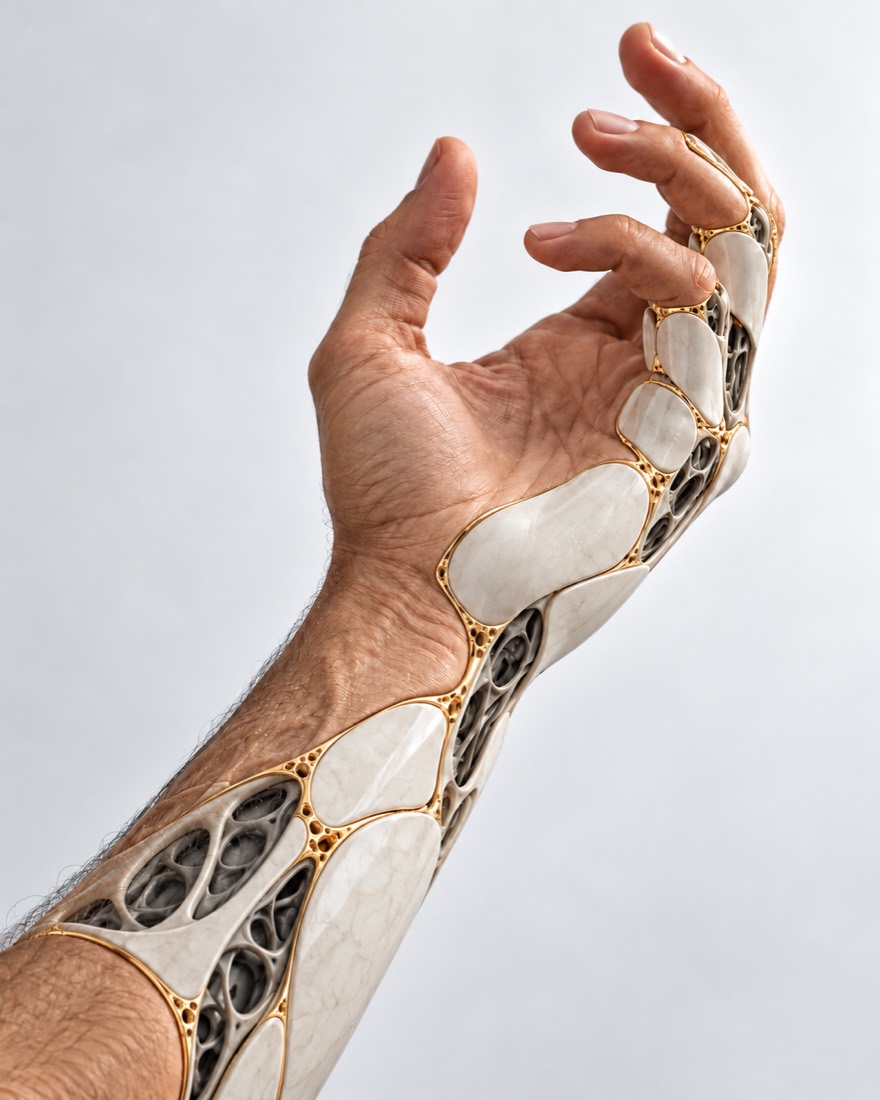
Conceptual visualization: restoration of fingers and hand after injuryCONCEPTUAL VISUALIZATION
What it is
A finger or part of it was cut off or torn off during an injury.
What to do immediately
Stop the bleeding with pressure, wrap the severed part, cool it without freezing, and call 103.
Can it be reattached?
It depends on the level, type of injury, and condition of the part; in a systematic review of 2273 fingertip replantations, an average of 86% survived.
If it was not successful
The wound is closed and a stump is formed, and later grip can be restored — in particular, by transplanting a toe.

What is
Loss of a finger.

Loss of a finger is a traumatic amputation: the finger or part of it was cut off, torn off, or crushed so that it was separated from the hand. Sometimes the finger remains attached by a strip of skin, but blood no longer flows to it.

The severed part can sometimes be reattached — this is replantation: the surgeon fixes the bone and, under a microscope, sutures the tendons, blood vessels, and nerves. Therefore, the severed finger must be properly preserved and brought along with the patient.

If it cannot be reattached or the finger does not survive, the wound is closed and a stump is formed. Once the wound has healed, grip can be restored: the thumb — by transplanting a toe to the hand, the others — by lengthening the stump or transferring an adjacent finger.

This is general information. The doctor will tell you what will suit you after the examination.

How
Loss of a finger presents.

Immediately after the injury, the main concerns are bleeding and the condition of the severed part. Later, how well the hand can grasp and feel comes to the forefront.

01

Bleeding

A finger wound is bleeding heavily. If the blood spurts or does not stop under a tight bandage — call 103.

02

The finger has been severed

A finger or its tip has been cut off or completely torn off.

03

Finger is "hanging"

The finger is hanging by a strip of skin, pale or bluish and cold — almost no blood reaches it. This is also a reason to call 103.

04

Weak grip

Without the thumb or index finger, it is difficult to hold objects, fasten a button, or write.

05

Stump gets cold

After stump formation, cold intolerance was reported by 77% of patients in the review of studies.

06

Stump pain

Pain or a tender spot on the stump may be associated with a neuroma — a thickening at the end of a damaged nerve.

Stump neuroma

Why do they lose?
finger.

Whether the finger can be reattached depends on how exactly the finger was injured.

Clean cut

Saw, knife, sharp blade. After a clean cut, fingers reattach better than after crushing or amputation.

Crushing

Press, door, heavy object. After crushing, fingers reattach worse than after a clean cut.

Avulsion

The finger is tightened by a rope, mechanism, or ring. Such injuries are also more difficult to replant.

Injury

Gunshot and mine-explosion injuries, severe crushing — among the injuries after which it is impossible to save the finger or limb.

Fire wound

What else affects it

In a meta-analysis of 2,641 patients, engraftment was affected by age, hand, type of injury, level, and how the finger was preserved; worse — in children, with crushing or avulsion, on the little finger. Smoking also worsens engraftment.

When to seek medical advice?

A severed finger is an urgent condition: the sooner the severed part is cooled and brought to a surgeon, the higher the chances of saving it. While waiting for help: press the wound with clean cloth or bandage, raise the hand up, remove rings from that hand.

103 immediately if:

  • blood gushes, bright red, it is difficult to stop;
  • bleeding does not stop despite a tight bandage;
  • the finger or part of it has been cut off or torn;
  • the finger is hanging by the skin, pale or bluish.

How to preserve the severed part and what to do next:

The severed part: wrap it in gauze or a clean cloth, slightly moistened with saline, place it in a bag and seal tightly, then put this bag into a second bag or container with water and ice. Ice and water should not touch the finger: it needs to be cooled, not frozen. Bring the part along with the injured person. Immediately - to the reception department: deep cut of the finger or palm, numbness near the wound, finger does not bend or straighten, bone is visible. Do not drive — get someone to take you or call 103. Immediately - to the surgeon who operated, and if it does not work - to the waiting room: after replantation the finger has turned pale, blue, or cold, or pain and swelling are increasing. On the same day: The wound after injury is red, swollen, increasingly painful, pus is coming out, fever has appeared. Planned: If the finger was lost a long time ago and the hand grips poorly, the stump hurts or feels cold, — make an appointment for a consultation.

How they determine,
whether a finger can be reattached.

  1. Examination of the wound and the part

    How the injury happened, how much time has passed, how the amputated part was preserved; a clean cut or crushing.

  2. X-ray

    An image of the hand and the amputated part shows at what level the bone is damaged.

  3. Level of injury

    Fingertip, middle part, or base. Replantation of a single finger (not the thumb), amputated closer to the palm than the middle of the finger, is considered a relative contraindication, but in certain cases, it is performed.

  4. Sensitivity and movements

    The doctor checks whether the neighboring fingers feel and move, and whether the tendons and nerves are intact.

  5. For late reconstruction

    Examination of the hand and stump, X-ray or CT, discussion about work and dominant hand — the plan depends on this.

How we treat
loss of a finger.

The decision is made by the surgeon on site: whether the finger can be reattached or if it is better to close the wound. If the finger is lost, hand function is restored later, in a planned manner.

01

Replantation

Reattachment of a severed finger.

How
The bone is fixed, and under a microscope, tendons, arteries, veins, and nerves are sutured.
How long it takes to take
In a systematic review of 2273 fingertip replantations, on average 86% survived; in 31 studies on return to work — 86.8% of fingers. In children, according to a review of 814 replantations, on average 76%.
Time and cold
In a meta-analysis, the chances of survival after replantation within the first 6 hours were approximately 40% higher than after 6–12 hours. If the finger was immediately cooled properly, this difference almost disappeared.
After surgery
After fingertip replantation, patients on average could distinguish two-point touch at a distance of 7 mm. The fingertip pad thins in 14% of patients, and the nail becomes deformed in 23%.
Work
In a review of 31 studies involving 1,087 patients, 82.9% returned to work after replantation attempts, on average in 4.7 months.
02

Stump formation

If suturing is not possible or the finger did not survive.

What are they doing?
The wound is closed with the patient's own skin, a local flap, or a dressing, and the bone is shortened.
Compared with replantation
In a meta-analysis of 12 studies after thumb replantation, patients rated hand function higher than after stump formation (low-quality evidence). For another finger, the difference was small and likely not clinically significant.
The result
After various methods of wound closure, 91% of patients (217 out of 238) rated the outcome as satisfactory, good, or excellent; 77% after stump formation reported cold intolerance.
03

Delayed reconstruction

When the wounds had healed and the swelling had subsided.

Toe-to-hand transfer
The big or second toe, along with vessels and nerves, is transferred to the site of the thumb. In a review of 450 such transplants, an average of 96.4% survived.
How the foot feels
In a review of 802 toe transfers, gait disturbances according to functional analysis occurred in 23.7% (97 transfers), and re-intervention on the foot was 11.8%. The big toe and the second toe have different risks — the surgeon discusses this before the surgery.
Other options
Lengthening of the toe stump or transferring a neighboring toe to replace the lost one.

How
we treat it.

In case of a fresh injury, do not wait for a consultation — call 103 or go to the nearest emergency department. At the Valikhnovskyi Institute of Surgery, they restore the hand after finger loss in the direction of "Hand and Foot Reconstruction": they close wounds that do not heal and restore grip.

CLINIC SERVICE Hand and foot rehabilitation Grasping, sensitivity, support, and movement after injuries, wounds, and burns: fingers, tendons, nerves, and bones. View service

What we do for this condition

  • Transplantation of a toe to the hand — to restore the thumb or index finger and bring back grip; vessels and nerves are sutured under a microscope.
  • Toe stump lengthening — another way to restore the hand's grip.
  • Transferring a neighboring finger — to the place of the lost one — another option to restore hand function.
  • Local and microsurgical flaps — if the wound on the finger or hand cannot be closed, if tendons or bones are exposed.
  • Suture and tendon and nerve reconstruction — if adjacent fingers are damaged along with the finger; a nerve defect is covered with a graft from the patient’s own nerve.
  • Splints and hand rehabilitation — exercises with a rehabilitation specialist are part of the treatment after hand surgery.

Rostislav Valikhnovskyi

Plastic surgeon, candidate of medical sciences, founder of Dr. Valikhnovskyi Institute of Surgery.

How treatment works with us

  1. Photos and pictures onlineSend a photo of the hand, X-ray, and discharge summaries — the doctor will preliminarily assess the situation.
  2. ConsultationExamination of the hand and stump, sensitivity and movements; discussion about work and dominant hand.
  3. PlanWhich recovery method is suitable, how many stages; for toe-to-finger transplantation — assessment of the foot.
  4. SurgeryFinger transplantation, stump lengthening, or wound closure with a flap.
  5. RecoverySplint and exercises with a rehabilitation specialist according to the surgeon’s plan.

Common
questions

Short answers. What is right for you, the doctor will tell you during the consultation.

What to do with a severed finger?

Press the wound, raise the arm, and call 103. Wrap the finger in gauze soaked in saline, place it in a closed bag, and put the bag in a container with water and ice. The finger should not touch the ice or water.

How much time is there to reattach the finger?

The sooner, the better, especially while the finger is still not cooled. If it was immediately cooled correctly, meta-analysis shows higher chances of being able to reattach. Whether your specific finger can be reattached is decided by the surgeon.

Can a finger always be reattached?

No. Crushed and torn-off fingers survive worse, and replantation of a single finger severed closer to the palm than the middle of the finger is performed only in special cases.

Will the replanted finger move and feel?

If the finger takes, the hand works acceptably, but replantation does not restore function as it was before the injury — this is the conclusion of a review of single-finger replantation studies.

The finger was lost a long time ago. Is there anything that can be done?

Yes, on a planned basis. The thumb can be restored by transplanting a toe to the hand, others — by lengthening the stump or transferring an adjacent finger.

Will the foot be affected if a toe is taken from it?

In a review of 802 toe-to-finger transplants, gait disturbances according to functional analysis occurred in 23.7% (97 transplants). The surgeon discusses the risks for the foot before the operation.

Why does a stub hurt or feel cold?

Cold intolerance after forming a stub is common. A painful spot may be a neuroma — it can be treated, so see a surgeon.

Sources

15 sources · ILCOR consensus, systematic reviews, meta-analyses, and NHS
showCollapse
  1. Preservation of Traumatic Completely Amputated or Avulsed Body Parts in the First Aid Setting: A Scoping ReviewCureus, 2025doi:10.7759/cureus.81998 ↗
  2. Amputated Digit Replantations: Critical Digit Ischemia Timing, Temperature, and Other Predictors of SurvivalAnnals of Plastic Surgery, 2024doi:10.1097/SAP.0000000000003944 ↗
  3. Effects of non-surgical factors on digital replantation survival rate: a meta-analysisJournal of Hand Surgery (European Volume), 2015doi:10.1177/1753193415594572 ↗
  4. A Systematic Review of the Outcomes of Replantation of Distal Digital AmputationPlastic and Reconstructive Surgery, 2011doi:10.1097/PRS.0b013e318221dc83 ↗
  5. Comparing digital replantation versus revision amputation patient reported outcomes for traumatic digital amputations of the hand: A systematic review and meta-analysisMicrosurgery, 2021doi:10.1002/micr.30738 ↗
  6. Functional and patient-reported outcomes following single digit replantation: A systematic literature reviewHand Surgery and Rehabilitation, 2023doi:10.1016/j.hansur.2023.07.002 ↗
  7. Outcomes of single digit replantation for amputation proximal to the flexor digitorum superficialis insertion: A systematic review with meta-analysisMicrosurgery, 2022doi:10.1002/micr.30980 ↗
  8. Outcomes of Digit Replantation in Children: A Systematic ReviewPlastic and Reconstructive Surgery - Global Open, 2023doi:10.1097/GOX.0000000000005482 ↗
  9. Return-to-Work After Attempted Digit Replantation: A Systematic Review of 31 StudiesHAND, 2024doi:10.1177/15589447241279445 ↗
  10. A Systematic Review of Outcomes after Revision Amputation for Treatment of Traumatic Finger AmputationPlastic and Reconstructive Surgery, 2015doi:10.1097/PRS.0000000000001487 ↗
  11. A Systematic Review of Outcomes of Toe-to-Thumb Transfers for Isolated Traumatic Thumb AmputationHAND, 2011doi:10.1007/s11552-011-9340-x ↗
  12. Functional Donor Site Morbidity After Vascularized Toe Transfer Procedures: A Review of the Literature and Biomechanical Consideration for Surgical Site SelectionAnnals of Plastic Surgery, 2016doi:10.1097/SAP.0000000000000591 ↗
  13. Cuts and grazesNHS, 2026nhs.uk/conditions/cuts-and-grazes ↗
  14. Broken finger or thumbNHS, 2025nhs.uk/conditions/broken-finger ↗
  15. AmputationNHS, 2023nhs.uk/tests-and-treatments/amputation ↗

The figures on the page are from these sources.

VALIKHNOVSKI SURGERY PARTNERS

Have you lost a finger
and does the hand grasp poorly?

Send a photo of the hand and an X-ray. The doctor will tell you which method of recovery is possible in your case.

Call Send an enquiry
ONLINE ENQUIRY

Tell us how we can help.

Leave your contact details and briefly describe the situation. A coordinator will contact you to agree on the next step.

Preferred contact method