CONDITION / EARS

Loss of auricle.

The loss of the auricle, whether partial or complete, is most often caused by a bite, tear, or burn. A fresh injury is a reason to immediately go to the reception department, and the lost part is later restored with cartilage or a prosthesis.

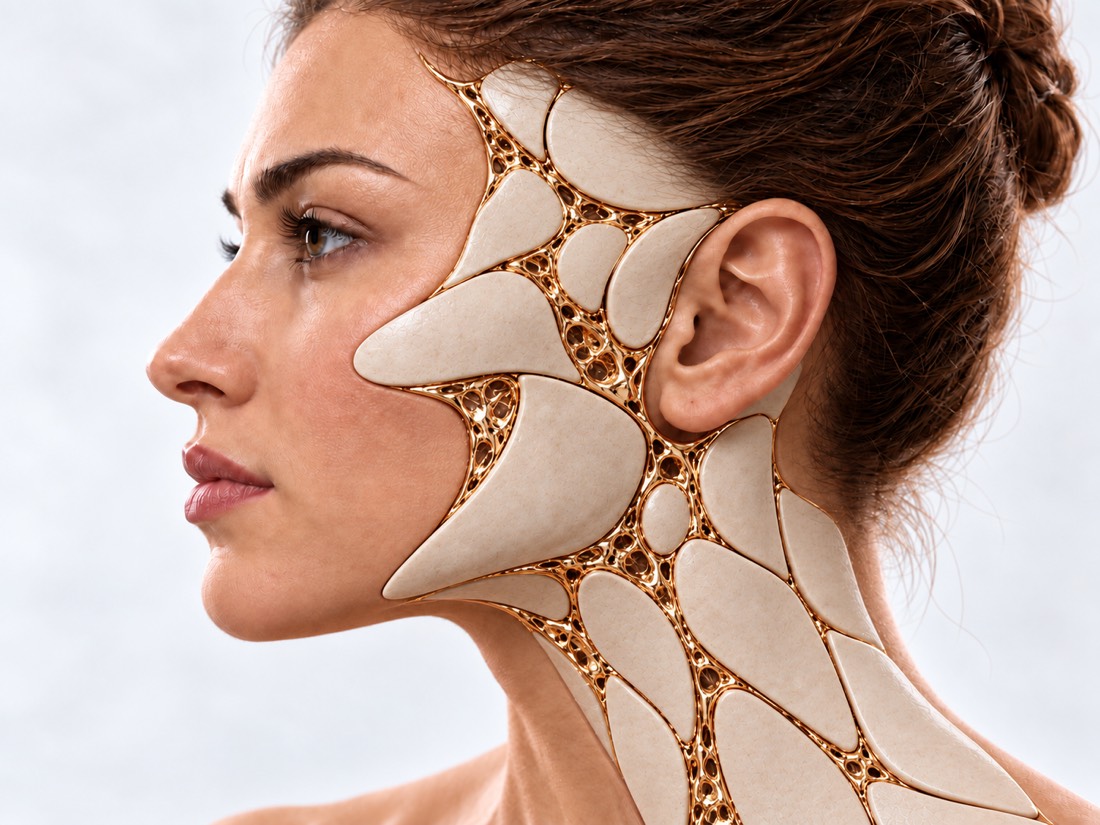
Conceptual visualization: restoration of the auricle after traumaCONCEPTUAL VISUALIZATION
What it is
Part or all of an ear has been lost due to trauma, a bite, a burn, or the removal of a tumor.
Immediately
Put the torn part in a clean napkin and a bag, cover the bag with ice and take it with you to the hospital.
The bite
Vaccination against rabies — on the same day: head bites are dangerous.
Later on
What is lost is restored with cartilage — for large defects with ribs — or with a prosthesis.

What is
loss of auricle.

The auricle protrudes from the head, so it is easily injured. The loss can be partial — the edge, upper, middle, or lower third of the ear — or complete. The reasons are lacerations, human and animal bites, burns, electric shock, frostbite, removal of skin tumors.

Cartilage gives the shape of the ear. According to a review in the burn journal, damaged cartilage does not regenerate itself, so the lost part is restored surgically - with its the patient's own cartilage or a prosthesis.

The first hours are important: sometimes it is possible to sew the torn part. And the way a fresh wound was treated depends on whether the skin around the ear will remain, necessary for recovery later.

Losing an ear can be difficult psychologically, and this is also a reason to seek help.

This is general information. The doctor will tell you what will suit you after the examination.

How is it
looks

The doctor assesses what part of the ear is lost, whether the cartilage is preserved and what the surrounding skin is like - the method of recovery depends on this.

01

A torn part

A partially or completely torn off ear is a fresh injury that requires immediate help.

02

Edge or third defect

A curl or upper, middle, or lower third of the ear is missing.

03

Total loss

There is no ear at all; restoration is similar to reconstruction in congenital absence of the ear.

Microtia
04

Ear burn

The skin on the ear is thin, so the burn can reach the cartilage. A dangerous complication is purulent inflammation of the cartilage (chondritis), which can melt the cartilage.

05

Scars all around

After burns, bites, or failed attempts to regenerate, the skin around the ear is missing or scarred, making reconstruction difficult.

06

Torn lobe

A lobe torn by an earring or during an injury is a separate, simpler condition.

Torn earlobe

Why do they lose?
the ear

The ear protrudes from the head, so it is easily injured - both in everyday life, during an animal attack, and during a fire.

Human and animal bites

After an animal bite, in addition to the wound, there is a risk of rabies and tetanus, so vaccinations begin on the same day.

Consequences of animal bites

Burns

In a burn center study, out of 593 facial burns, the ear was affected in 132 cases (22%).

Tears, electric shock, frostbite

The ear can be torn off completely or partially, leaving a thin bridge of tissue.

When to seek medical advice?

A recent ear injury is a reason to seek help immediately. Press a clean napkin to the wound, wash the bite with soap and water for 15 minutes or longer, keep the burn under cool running water for 20 minutes and do not apply creams or oils. A long-standing defect is a planned situation, it does not need urgent help.

103 or immediately to the reception department, if:

  • part of the ear or the whole ear is torn off - wrap it in a clean napkin, put it in a bag, cover the bag with ice and take it with you;
  • the bleeding does not stop or the blood is gushing;
  • the wound is large or deep;
  • the burn is large or deep;
  • burn of the face, in particular the ears;
  • acid, other chemical, or electrical burns.

Do not delay:

Immediately - to the surgeon who operated; if it is not possible to contact - to the reception department: after ear surgery, pain or swelling increases rapidly. As soon as possible, on the same day: after any bite, scratch or sloughing of damaged skin by an animal - to the trauma center or anti-rabies office to start vaccination against rabies and check protection against tetanus. On the same day - and after a human bite, and if there may be teeth, dirt or hair in the wound, the wound is hot, swollen, fluid flows from it, the temperature has risen or it is freezing. Planned: long-standing defect, scars, unsuccessfully sewn part - consultation on restoration; the doctor will tell you when you can operate.

How to evaluate
the loss

  1. A fresh wound

    What happened, who was bitten, what vaccinations are already in place; the size of the torn part, whether it is intact, whether there are foreign bodies in the wound.

  2. Defect

    What part of the ear is lost - the edge, a third or the whole ear - and whether the cartilage is preserved.

  3. Skin around

    Scars after burns or previous operations: it depends on them whether the framework can be closed with the skin behind the ear or whether a temporal fascia flap is needed.

  4. A healthy ear

    Photo and dimensions of the second ear - a sample for the new frame.

How we treat
trauma and consequences.

First, they save the torn part and treat the wound, then - when necessary - restore what is missing. The first stage cannot be postponed.

01

A fresh injury

The first hours, in the reception department.

Suturing on vessels
The microsurgeon stitches the vessels of the severed part. In a review of 148 cases, this method had a significantly higher success rate than others. But, according to another examination (60 cases), after it there is often blood stagnation in the sutured part, often with blood transfusion.
Direct sewing
Small or incompletely torn fragments are sewn up without suturing the vessels. Based on a review of 28 cases, this can give a good appearance and preserves the area around the ear for later reconstruction if the fragment does not heal.
What are they avoiding?
The authors of the reviews do not advise hiding the torn cartilage under the skin and using the skin around the ear: this can prevent further reconstruction with costal cartilage.
Infections
After an animal bite, vaccination against rabies on the same day and a check of protection against tetanus. After a human bite, they may offer an analysis for hepatitis B and C and HIV.
02

Ear burn

To protect the cartilage.

No pressure on the ear
In a review of 10 studies (1,369 patients), sets of interventions that included avoidance of pressure on the ear produced an incidence of chondritis of less than 6%. It is also advised to clean the wound, use local antibiotics and antiseptics, and prevent it from drying out.
Without surgery
In a burn center study, of 89 patients followed until healing, one (1.1%) required skin grafting, but healing can take a long time.
03

Recovery later

Planned.

Small defect
It is closed with local flaps with cartilage from the auricle itself.
Big defect
A frame made of costal cartilage is placed under the skin behind the ear - in one or two operations; if the skin there is scarred, the frame is covered with the fascia of the temple. In a series of 60 patients with partial defects, 55 were satisfied with the result.
Breasts
Taking costal cartilage can change the shape of the chest: in a review of studies in congenital microtia — from 0% to 50%; preservation of the cartilage membrane reduced the risk.
After the burn
Recovery is more difficult because the surrounding skin and tissue are of poorer quality.
Prosthesis
Silicone prosthesis on titanium implants in the bone. In a study of 27 patients, the success rate was 86%; previous radiation and bone surgery increased the risk of implant loss. Older patients more often choose a prosthesis.

How
we treat it.

A fresh injury — tear, bleeding, bite — is first treated in the reception department or trauma center; vaccinations against rabies and tetanus also begin there. At Dr. Valikhnovskyi's Institute of Surgery, the lost part of the ear is restored in the direction "Growing the ear".

CLINIC SERVICE We grow an ear Auricle with microtia and anotia, after injuries, burns and removal of tumors, consequences of unsuccessful otoplasty. View service

What we do for this condition

  • Local flaps and cartilage — for small defects of the edge or part of the ear.
  • Rib cartilage framework — for large defects — under the skin or fascia, as in microtia.
  • 3D templates and mirror modeling — a healthy ear is scanned and a mirror model is printed, with which the frame is compared.
  • Epiprosthesis on titanium implants — when there is a lack of own tissues after severe burns or radiation therapy.

Rostislav Valikhnovskyi

Plastic surgeon, candidate of medical sciences, founder of Dr. Valikhnovskyi Institute of Surgery.

How treatment works with us

  1. Photo onlineSend a photo of both ears, straight and side, and, if available, a hospital or emergency room discharge.
  2. ConsultationInspection of the defect, cartilage and skin around it, scars after burns or previous operations.
  3. PlanFlaps, costal cartilage or prosthesis, the number of stages and terms.
  4. SurgeryThe frame is compared to a 3D model of a healthy ear.
  5. RecoveryProtection of the ear from pressure and control examinations until complete healing.

Common
questions

Short answers. What is right for you, the doctor will tell you during the consultation.

What to do with the detached part of the ear?

Wrap it in a clean napkin, put it in a bag, cover the bag with ice and immediately go to the reception department with the victim.

Is it possible to sew a torn ear?

Sometimes yes. According to reviews, suturing on vessels has a higher success rate, and small fragments are sewn up without this. The surgeon decides on the spot whether it is possible to sew your part.

The dog bit his ear. Do I need a rabies vaccination?

The decision is made by the doctor of the trauma center or the anti-rabies office - go there as soon as possible, on the same day. Head bites are dangerous: in addition to the vaccine, anti-rabies immunoglobulin is usually administered.

I am offered to hide the cartilage under the skin. Is this an option?

Authors of reviews advise to refrain from this: the skin around the ear is needed for further reconstruction, and attempts to preserve the cartilage under the skin can spoil it. Discuss this with your surgeon.

When can the ear be restored after an injury?

After the wounds have healed. The exact timing is determined by the doctor based on the condition of the skin and scars around the ear.

What restores the lost part?

A small defect — with local flaps with auricle cartilage, a large one — with a framework of costal cartilage. If there is a lack of own tissues, a prosthesis based on titanium implants is possible.

Is it possible to do without surgery?

Yes. Some people choose not to restore the ear or wear a prosthesis. The decision is yours after the consultation.

Sources

20 sources · systematic reviews, reviews, studies, NHS, WHO and CHG MOH
showCollapse
  1. Auricular avulsion injuries and reattachment techniques: A systematic reviewLaryngoscope Investigative Otolaryngology, 2020doi:10.1002/lio2.372 ↗
  2. Auricular avulsion injuries: Literature review and management algorithmTurkish Journal of Emergency Medicine, 2022doi:10.4103/2452-2473.342811 ↗
  3. Management of traumatic auricular avulsion injury – partial and completeCurrent Opinion in Otolaryngology & Head & Neck Surgery, 2025doi:10.1097/MOO.0000000000001054 ↗
  4. A Comparison of Ear Reattachment Methods: A Review of 25 Years since PenningtonPlastic and Reconstructive Surgery, 2006doi:10.1097/01.prs.0000239539.98956.b0 ↗
  5. Microsurgical ear replantation—is venous repair necessary?—A systematic reviewMicrosurgery, 2016doi:10.1002/micr.22411 ↗
  6. Microvascular Replantation Following Facial Dog Bites in Children: Systematic Review and Management AlgorithmAnnals of Plastic Surgery, 2018doi:10.1097/SAP.0000000000001485 ↗
  7. Strategies to prevent suppurative chondritis following auricular burns: a systematic reviewJournal of Wound Care, 2022doi:10.12968/jowc.2022.31.5.394 ↗
  8. The burned ear; possibilities and challenges in framework reconstruction and coverageBurns, 2016doi:10.1016/j.burns.2016.02.006 ↗
  9. Epidemiology and Outcomes of Auricular Burn InjuriesJournal of Burn Care & Research, 2018doi:10.1097/BCR.0000000000000586 ↗
  10. Auricular ReconstructionFacial Plastic Surgery, 2025doi:10.1055/a-2437-1107 ↗
  11. Injury Patterns and Reconstruction in Acquired Ear DeformitiesFacial Plastic Surgery, 2015doi:10.1055/s-0035-1568140 ↗
  12. Surgical Reconstruction of Traumatic Partial Ear Defects Based on a Novel Classification of Defect Sizes and Surrounding Skin ConditionsPlastic and Reconstructive Surgery, 2016doi:10.1097/PRS.0000000000002408 ↗
  13. Ear Reconstruction following Mohs Micrographic SurgerySeminars in Plastic Surgery, 2024doi:10.1055/s-0044-1791830 ↗
  14. General and Treatment-Specific Outcomes with Osseointegrated Implants in Auricular, Nasal, and Orbital Prosthetic ReconstructionCraniomaxillofacial Trauma & Reconstruction, 2025doi:10.3390/cmtr18010016 ↗
  15. Comprehensive analysis of donor-site chest deformities after autologous costal cartilage microtia reconstruction: A systematic reviewJournal of Plastic, Reconstructive & Aesthetic Surgery, 2024doi:10.1016/j.bjps.2024.05.005 ↗
  16. Animal and human bitesNHS, 2025nhs.uk/conditions/animal-and-human-bites ↗
  17. Cuts and grazesNHS, 2026nhs.uk/conditions/cuts-and-grazes ↗
  18. Burns and scaldsNHS, 2026nhs.uk/conditions/burns-and-scalds ↗
  19. Rabies (fact sheet)WHO, 2026who.int/news-room/fact-sheets/detail/rabies ↗
  20. RabiesPublic Health Center of the Ministry of Health of Ukraine, 2026phc.org.ua/kontrol-zakhvoryuvan/inshi-infekciyni-zakhvoryuvannya/osoblivo-nebezpechni-infekcii/skaz ↗

The figures on the page are from these sources.

VALIKHNOVSKI SURGERY PARTNERS

Lost a part
ears?

Send a photo of both ears. The doctor will tell you how to restore what has been lost and when it is better to do it.

Call Send an enquiry
ONLINE ENQUIRY

Tell us how we can help.

Leave your contact details and briefly describe the situation. A coordinator will contact you to agree on the next step.

Preferred contact method