CONDITION / JAWS, MOUTH AND NECK

Habitual dislocation of the lower jaw.

Habitual dislocation of the jaw is a condition when the lower jaw repeatedly jumps forward from the joint and the mouth freezes open. An acute dislocation is treated by a doctor immediately, and repeated dislocations are treated in a planned manner: first with injections, and if necessary, with surgery.

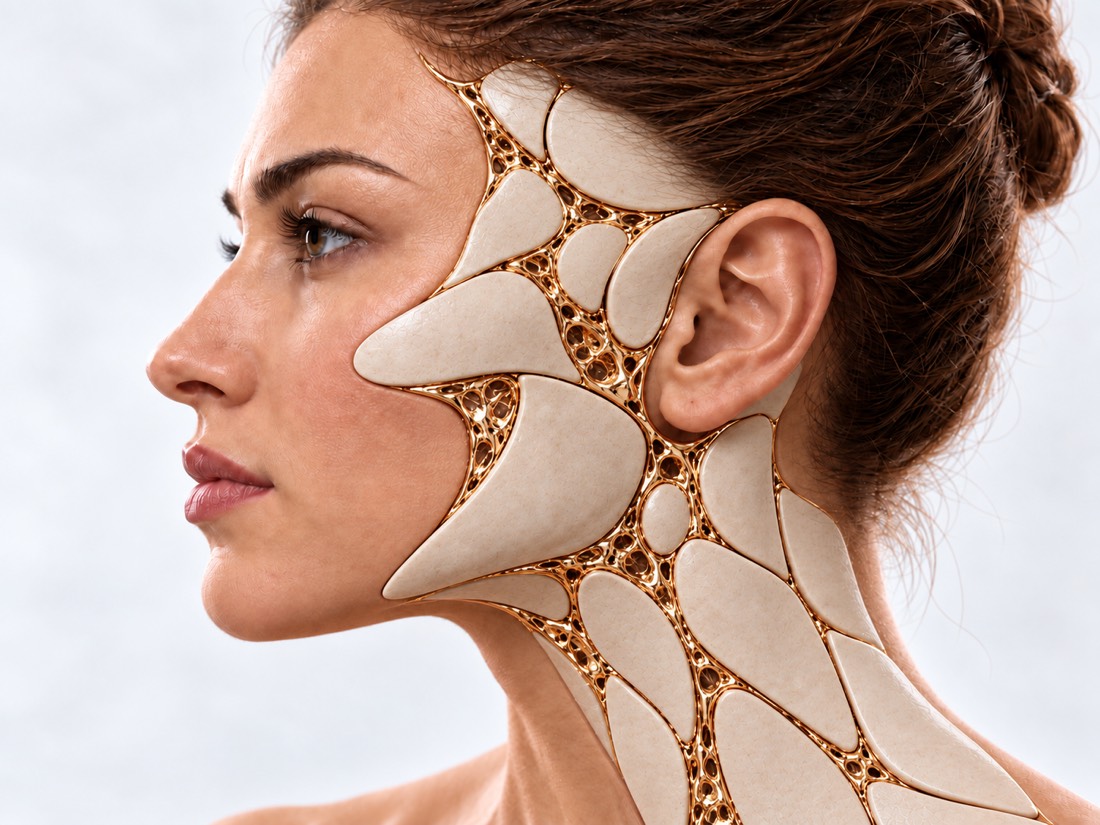
Conceptual visualization: temporomandibular joint and lower jawCONCEPTUAL VISUALIZATION
What it is
The lower jaw repeatedly comes out of the joint forward, and the mouth does not close.
How common
In Germany, it is estimated that there are at least 25 joint dislocations per 100,000 people per year; how many of them are repeated is not known for sure.
what to do
Do not exercise yourself. If the jaw is not in place, go to the reception room immediately.
How we treat
Repeated dislocations — first with injections into the joint area; if they do not help - by surgery.

What is
usual dislocation

The lower jaw is connected to the skull by two temporomandibular joints - they are located just in front of the ears. A dislocation is when the head of the jaw protrudes too far forward from its socket. The muscles with which we chew reflexively contract in response and prevent it from returning, so the mouth freezes open.

Habitual, or recurrent, dislocation — when it happens again and again. It is distinguished from a one-time acute dislocation and from an old one that has not been exercised for more than a month. Repeated dislocations cause pain, interfere with the use of the jaw and significantly impair the quality of life.

Acute dislocation is performed immediately. The longer the jaw remains out of place, the harder it is to return it without surgery, so you should not wait for it to "go away".

This is general information. The doctor will tell you what will suit you after the examination.

How
dislocation of the jaw presents.

Dislocation is usually visible immediately: the jaw freezes open. If the jaw only clicks or briefly "snaps" and the mouth closes, this is more likely a different condition of the joint.

01

The mouth does not close

The jaw is frozen in the open position, because of this, saliva can flow.

02

The jaw is out

The chin protrudes forward, the teeth do not meet, the bite seems "crooked".

03

Pain in front of the ear

Pain in the joint on one or both sides, the pain increases when trying to move the jaw.

04

It's hard to say

The words come out unintelligible because the mouth does not close.

05

Repeated

The jaw has already popped out before - during yawning, laughing or opening the mouth wide.

06

Clicking without dislocation

Clicking, pain and limited opening of the mouth without dislocation are signs of joint dysfunction.

Dysfunction of the joint

Why the jaw
pops up again.

The exact causes of habitual dislocation have been studied little: in a systematic review, the authors note that ideas about them are based mainly on the opinion of experts. Among 32 patients from the emergency department in Bern, 93.7% of dislocations were without trauma, and 62.5% had recurrent dislocations.

Wide open mouth

In a study of 96 cases of dislocation, the most common cause was excessive opening of the mouth during yawning in 44 cases.

Movable joints

In a study of 34 patients with a common dislocation, 47% had increased joint mobility (4 points or more on the Beighton scale), and 58.8% met the criteria for hypermobility syndrome; none of the 34 people in the control group met these criteria.

Diseases and muscles

Among 96 cases, 10.4% had a concomitant disease, most often epilepsy (4 cases). In a series of 14 patients, some of the causes were dystonia — involuntary contraction of one of the masticatory muscles.

When to seek medical advice?

If the jaw has popped out and the mouth does not close, do not wait: the longer the dislocation remains untreated, the harder it is to return the jaw without surgery. Do not practice it yourself or with the help of acquaintances - this is done by a doctor.

103 immediately if:

  • it is difficult to breathe;
  • heavy bleeding from the mouth does not stop;
  • after a blow to the head, a person faints and does not regain consciousness;
  • after a blow, a person falls asleep all the time or cannot keep his eyes open;
  • convulsions began after the impact;
  • after a blow, a clear liquid flows from the nose or ear or blood flows from the ear;
  • vision or hearing worsened after the impact;
  • numbness or weakness in any part of the body appeared after the blow;
  • after a stroke, a person does not speak well, does not understand words or does not keep his balance.

Other levels of urgency:

Immediately, in the reception: the jaw popped out, the mouth does not close, and it did not go back into place on its own - even if this had already happened and passed before. Along the way, gently support your jaw with your hand or a bandage under the chin and across the top of the head—one that's easy to remove if you get bored. Just as immediately - if after a blow to the face the jaw hurts and the teeth do not close as before. On the same day - to the doctor: the jaw fell into place, but the mouth does not open fully or the jaw jams ever since. Planned: the jaw pops out repeatedly, even if it exercises itself every time - make an appointment with a maxillofacial surgeon.

As defined,
what to do next

  1. Review

    Dislocation is usually visible during examination: the jaw is fixed in an open position.

  2. Questioning

    How often does the jaw pop out, under what circumstances, did she practice on her own, what are the diseases and medications.

  3. Assessment of joints

    The doctor checks how the jaw moves and whether there is increased mobility of other joints.

  4. CT scan if necessary

    If there was an injury, the dislocation is long-standing, or an operation is planned - to assess the bones of the joint and not to miss a fracture.

How we treat
dislocation of the jaw.

There are few randomized trials, especially for surgery, so conclusions about methods are limited. They usually move from simple to complex: acute dislocations are treated, with repeated ones they start with injections, and surgery is left for those who were not helped by them.

01

Dislocation management

It is done by the doctor - as soon as the patient has applied.

Hands
The doctor puts his thumbs on the side of the teeth and presses on the jaw first downward, then back. Sometimes painkillers and muscle relaxants are needed.
Different techniques
In a randomized study of 90 patients, 86.7% of the jaws were adjusted by the conventional method, 96.7% by the "wrist rotation" method, and 66.7% by the extraoral method.
Without surgery
In a study of 32 emergency department patients, 31 jaws were adjusted without surgery: 61.3% — without anesthesia, 38.7% — under anesthesia with light medicated sleep.
Chronic dislocation
If the dislocation was not corrected for more than a month, in a review of 229 such cases, closed correction was achieved in 21.4%, and in 76.4%, the jaw was corrected during surgery.
After adjustment
Do not open your mouth wide for at least 6 weeks; when yawning or sneezing, support your jaw with your hand.
02

Injections

The first step if dislocations are repeated.

Own blood
The patient's blood is injected into the joint and the tissues around it. In a systematic review (data mostly from case series), success at 12 months was 80%; in a review of randomized trials (they did not compare operations), this method, along with temporary jaw fixation, appears to have the strongest scientific support to date.
Warning
The authors of another review note that questions remain: how does blood affect the cartilage of the joint and does it cause fusion of the joint - ankylosis.
Botulinum toxin
It is injected into the muscle that pushes the jaw forward. In a randomized study of people with subluxation of the jaw (mouth stuck painfully open during yawning; 25 of 30 reached the end of follow-up), 7 of 11 had no complaints of jamming at the end after botulinum toxin and 8 of 14 after dextrose injections; no difference between the methods was found.
Other substances
Dextrose, sclerosing substances. Most studies have reported fewer re-dislocations, but the samples are small and no one method can be said to be superior to the others.
03

Surgery

If the injections did not help.

Which are
Reduction of the articular tubercle (eminectomy), its enlargement (eminoplasty), suturing of the articular disc, strengthening of the joint capsule. In a systematic review, the success of these operations was similar, but the patients in the studies were small.
What is known
There is no good quality data on which method most reliably prevents recurrent dislocations. Eminectomy is often done if the dislocation has returned after another operation. In a series of 14 patients, the combination of eminectomy with disc suturing resulted in long-term relief of symptoms.

How
we treat it.

With repeated dislocations of the lower jaw, at Dr. Valikhnovskyi's Institute of Surgery, you can contact a surgeon from the "New Face" department who operates on the lower jaw and joint. An acute dislocation does not wait for a consultation - it is taken to the nearest reception department. What to offer you, the surgeon decides after the examination and CT scan.

CLINIC SERVICE A new face Form, symmetry, facial expressions and functions after injuries, wounds, burns, removal of tumors and congenital changes. View service

What we do for this condition

  • Consultation of a surgeon - examination, questioning about how and how often the jaw pops out, assessment of joints and bite.
  • CT and 3D planning — based on CT, a three-dimensional model of the jaw and joint is built in order to plan the operation, if it is needed.
  • Operations on the lower jaw and joint — restoration of the joint and bite — a separate area of direct work.
  • Individual plates — made of titanium or PEEK according to a 3D model — if during surgery the shape of the bone needs to be restored.

Rostislav Valikhnovskyi

Plastic surgeon, candidate of medical sciences, founder of Dr. Valikhnovskyi Institute of Surgery.

How treatment works with us

  1. Pictures onlineSubmit a CT scan, if available, and briefly describe how often and under what circumstances the jaw pops out.
  2. ConsultationExamination of joints, bite and jaw movements; if necessary — CT.
  3. PlanAre injections enough, is surgery necessary, and what exactly should be done with the joint.
  4. TreatmentJoint surgery, if needed; what to do without surgery, the surgeon will explain in the plan.
  5. RecoveryFor some time - soft food and restriction of wide opening of the mouth; the surgeon will tell you when you can chew as before.

Common
questions

Short answers. What is right for you, the doctor will tell you during the consultation.

Can you adjust the jaw yourself?

No, do not try to adjust the jaw yourself - a doctor does it. If the jaw pops out and does not fall into place by itself, go to the emergency department immediately.

Why does the jaw pop out again?

After a dislocation, the jaw can pop out again. This is facilitated by a wide opening of the mouth and increased mobility of the joints; sometimes - trauma, epilepsy or involuntary contraction of the masticatory muscle.

How to avoid a new dislocation?

For at least 6 weeks after the dislocation, do not open your mouth wide, yawn or sneeze, and support your jaw with your hand. Try not to yawn too wide in the future.

Is it necessary to do surgery?

No. Acute dislocation is usually treated without surgery. With repeated dislocations, injections are first tried, and surgery is offered if they do not help.

Are injections of one's own blood safe?

In a systematic review, success after one year was 80%. But questions remain: how blood affects the joint cartilage and whether it causes its fusion. Your doctor will explain the benefits and risks to you.

How does a dislocation differ from a jaw click?

With a dislocation, the mouth does not close, and the jaw may not fit into place without help. Clicking, pain and limited opening of the mouth without dislocation are signs of joint dysfunction, it is treated differently.

What will happen if repeated sprains are not treated?

Sprains can recur and interfere with eating and speaking. If the dislocation has not been exercised for a long time, it becomes more difficult to return the jaw to its place without surgery.

Sources

18 sources · reviews, guidelines and research
showCollapse
  1. The Treatment of Temporomandibular Joint DislocationDeutsches Ärzteblatt International, 2018doi:10.3238/arztebl.2018.0059 ↗
  2. Surgical management of recurrent TMJ dislocation — a systematic reviewOral and Maxillofacial Surgery, 2019doi:10.1007/s10006-019-00746-5 ↗
  3. Treatment of temporomandibular joint luxation: a systematic literature reviewClinical Oral Investigations, 2020doi:10.1007/s00784-019-03126-1 ↗
  4. Stability of treatments for recurrent temporomandibular joint luxation: a systematic reviewInternational Journal of Oral and Maxillofacial Surgery, 2016doi:10.1016/j.ijom.2015.10.022 ↗
  5. Autologous blood injection for treatment of chronic recurrent TMJ dislocation: is it successful? Is it safe enough? A systematic reviewOral and Maxillofacial Surgery, 2015doi:10.1007/s10006-015-0500-y ↗
  6. Injectable Agents Versus Surgery for Recurrent Temporomandibular Joint DislocationOral and Maxillofacial Surgery Clinics of North America, 2018doi:10.1016/j.coms.2018.04.009 ↗
  7. Peri- and Intraarticular Injections with Isolable Treatment Effects in Recurrent Mandibular Dislocation: A Mapping Review of the Current EvidenceJournal of Clinical Medicine, 2026doi:10.3390/jcm15145589 ↗
  8. Comparison of different approaches to the reduction of anterior temporomandibular joint dislocation: a randomized clinical trialInternational Journal of Oral and Maxillofacial Surgery, 2016doi:10.1016/j.ijom.2016.04.015 ↗
  9. Botulinum Toxin Versus Dextrose Prolotherapy: Which is More Effective for Temporomandibular Joint Subluxation? A Randomized Clinical TrialJournal of Oral and Maxillofacial Surgery, 2023doi:10.1016/j.joms.2022.12.023 ↗
  10. A prospective assessment of outcomes following the use of autologous blood for the management of recurrent temporomandibular joint dislocationOral and Maxillofacial Surgery, 2018doi:10.1007/s10006-017-0666-6 ↗
  11. Temporomandibular joint dislocation: a retrospective study from a Swiss urban emergency departmentOpen Access Emergency Medicine, 2018doi:10.2147/OAEM.S174116 ↗
  12. Long-Standing Temporomandibular Joint Dislocation: A Comprehensive Review and Proposal of a Treatment AlgorithmMedicina, 2025doi:10.3390/medicina61091505 ↗
  13. Surgical management of recurrent dislocation of the temporomandibular joint: a new treatment protocolBritish Journal of Oral and Maxillofacial Surgery, 2018doi:10.1016/j.bjoms.2018.10.274 ↗
  14. Increased Prevalence of Generalized Joint Hypermobility Observed in Patients With Recurrent Temporomandibular Joint DislocationJournal of Oral and Maxillofacial Surgery, 2023doi:10.1016/j.joms.2023.04.006 ↗
  15. A survey of temporomandibular joint dislocation: aetiology, demographics, risk factors and management in 96 Nigerian casesInternational Journal of Oral and Maxillofacial Surgery, 2005doi:10.1016/j.ijom.2004.10.025 ↗
  16. Broken or dislocated jawMedlinePlus (U.S. National Library of Medicine), 2025medlineplus.gov/ency/article/000019.htm ↗
  17. Head injury and concussionNHS, 2025nhs.uk/conditions/head-injury-and-concussion ↗
  18. Temporomandibular disorder (TMD)NHS, 2023nhs.uk/conditions/temporomandibular-disorder-tmd ↗

The figures on the page are from these sources.

VALIKHNOVSKI SURGERY PARTNERS

The jaw pops out
over and over again?

Please describe how often this occurs and send CT scans if available. The doctor will tell you where to start.

Call Send an enquiry
ONLINE ENQUIRY

Tell us how we can help.

Leave your contact details and briefly describe the situation. A coordinator will contact you to agree on the next step.

Preferred contact method