The bite has changed
The teeth do not come together as before, or a step or gap has appeared between them.
 Discuss your case
A fracture of the lower jaw in the area of the body or corner is an injury to the part of the jaw where the teeth stand, or the place behind them, where the jaw turns upwards towards the ear. After it, the teeth close incorrectly, it hurts when chewing, the lower lip is often numb. Some of these fractures are treated without surgery, some - with titanium plates.
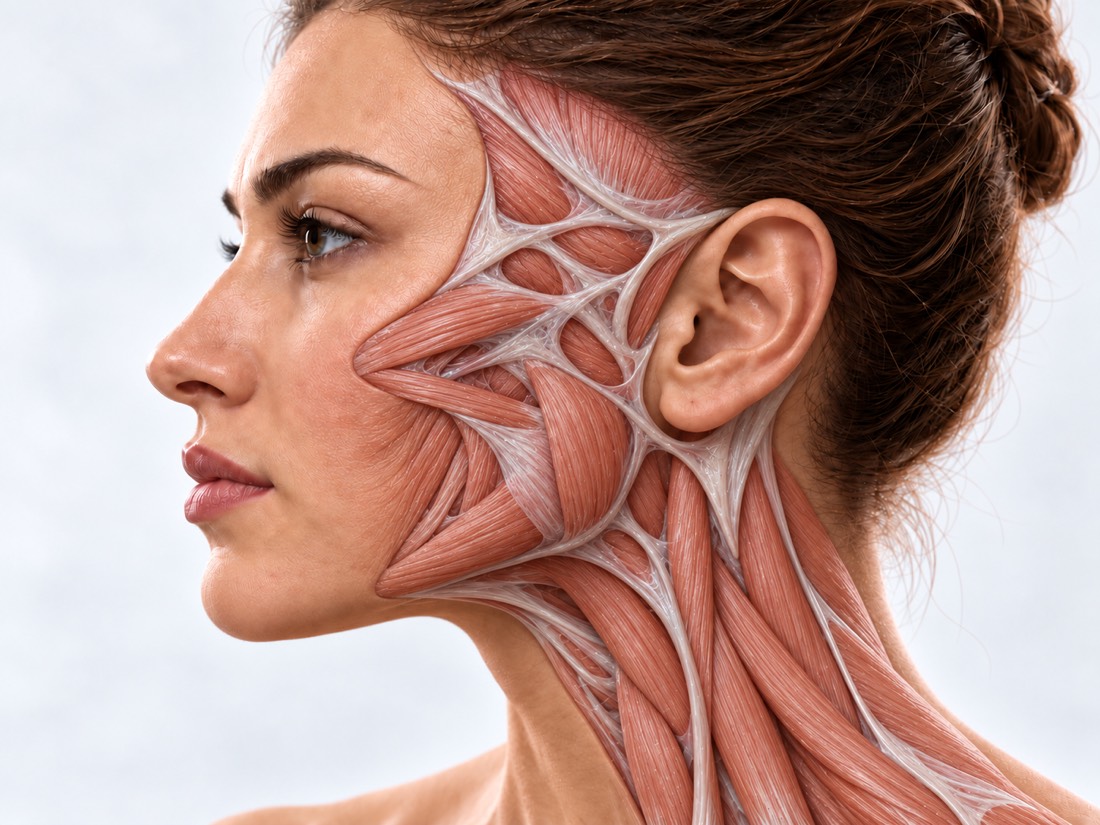 CONCEPTUAL VISUALIZATION
The lower jaw is like a horseshoe. Doctors call the part of it where the teeth stand as the body, and the corner is the area behind the last corner teeth, where the jaw bends up to the joint. Jaw fractures are the most common facial fractures requiring surgery.
The nerve responsible for the sensitivity of the lower lip, chin and teeth passes inside the body of the jaw. Therefore, with these fractures, the lip is often numb: in a prospective study of 257 patients, numbness was present in 95.9% of body fractures and 90.1% of angle fractures.
The jaw often breaks in two places at once. In a series of 565 adult patients, 14.2% had simultaneous fractures of the angle and the front, chin part of the jaw. A fracture of the articular (condylar) process near the ear is treated according to other rules - there is a separate page about it.
This is general information. The doctor will tell you what will suit you after the examination.
The main symptom is that the teeth do not close as before the injury. Swelling can hide the rest, so after a strong blow to the jaw, you should see a doctor.
The teeth do not come together as before, or a step or gap has appeared between them.
It hurts when you open your mouth, bite or speak; chewing is difficult.
The lower lip or chin on the side of the blow became like someone else's - this is how the nerve inside the jaw suffers.
Part of the jaw, together with the teeth, moves separately; the tooth at the fracture site wobbles.
The cheek or area under the angle of the jaw swells, the gum between the teeth bleeds, the mucous membrane is bruised.
Which part of the jaw is broken often depends on how the injury occurred.
In a series of 565 adult patients from South Australia, 58.2% of patients fractured their jaw during an attack; such blows more often broke the corner and the chin. There were 4.5 times more men than women.
In the same series, almost all fractures after falls and road accidents occurred in the condylar or coronal process, and not in the body.
Fractures of the condylar processAn angular fracture can pass through the socket of a wisdom tooth. Such a tooth in the fracture line is associated with a higher risk of infection after surgery.
In elderly people without teeth, the jaw becomes thinner and loses bite resistance - such fractures are more difficult to treat.
A quarter of patients in a series of 565 adults reported drinking alcohol.
A fresh fracture of the jaw needs help on the same day, and according to some indications, immediately. First, head and neck injuries are ruled out. If you hit your head, do not drive to the hospital. Call 103 if at least one of the following signs is present after the impact:
On the same day - to the reception department or to the maxillofacial surgeon: after a blow, the teeth close incorrectly, part of the jaw moves separately, the lower lip or chin is numb, it is not possible to chew. If a person loses consciousness for a short time after a blow, immediately go to the reception room (let them take you away). On the same day - if there was vomiting after the blow to the head, dizziness in the head, you are taking blood-thinning drugs, or the injury occurred while intoxicated. After the operation - immediately to the surgeon who operated, and if it does not work - to the waiting room: increasing pain or swelling of the cheek and jaw. If the swelling grows rapidly in the mouth or neck and it becomes difficult to breathe or swallow, it is already 103. The same day to the surgeon: high temperature, pus or unpleasant taste from the wound in the mouth, the plate protrudes through the gums. Planned: the fracture has long since healed, but the bite has changed, asymmetry or numbness of the lip remains - make an appointment for a consultation.
First they check breathing, consciousness, neck and signs of head injury: they are more important than the fracture itself.
The doctor looks at how the teeth close, whether the debris moves, whether there is a wound on the gums, and checks the sensitivity of the lip and chin.
Computed tomography shows the fracture line, the displacement of the fragments, the teeth in the fracture line, and the second fracture, if present.
They decide whether it is possible to save a tooth in the fracture line, especially a wisdom tooth.
After the treatment — repeat examinations of the bite and a control picture.
One method does not fit all: a Cochrane review of 12 studies (689 participants) did not find sufficient evidence in favor of any one approach. The plan is made based on how much the fragments are displaced, how the teeth close and how many fractures there are.
The fragments are not displaced, the bite is correct.
Displaced fragments, broken bite, several fractures.
What affects the result.
Fractures of the lower jaw and their consequences are treated at the Institute of Surgery of Dr. Valikhnovskyi in the "New Face" direction. The clinic is responsible for the bones, bite and contour of the face; a head injury is handled by a neurosurgeon, restoration of teeth after an injury by a dentist.
Plastic surgeon, candidate of medical sciences, founder of Dr. Valikhnovskyi Institute of Surgery.
Short answers. What is right for you, the doctor will tell you during the consultation.
No. If the fragments are not displaced and the teeth close correctly, some fractures are treated without surgery. But this is done rarely and only after examination and CT scan.
You should go to the doctor on the same day. Whether surgery is needed right away is up to the surgeon: Data on the effect of delay are mixed, but in one large study, the risk of malunion increased if surgery was delayed for up to a week.
The nerve responsible for the sensitivity of the lip and chin passes through the jaw, and a fracture injures it. In a study of 257 patients, the numbness noticeably weakened from the 1st to the 6th month, but after half a year, some disturbance of sensitivity still remained in 23.9% of cases.
Not always. A tooth in the fracture line is associated with a higher risk of infection, but the decision is made by the surgeon on a tooth-by-tooth basis.
For some time — only soft or liquid food, as the surgeon advises. Reviews recommend a bland diet and not smoking among things the patient can do on their own to reduce the risk of complications.
Where possible, the body and angle of the jaws are approached through an incision in the mouth, and there is no incision on the face. When the angle is broken, a small puncture is sometimes added on the cheek.
Not always. Sometimes the plate has to be removed; in a network meta-analysis, the risk of this depended on where it was placed.
The figures on the page are from these sources.
Submit CT scans, discharges, and facial photos. The doctor will tell if an operation is needed and which one.
Leave your contact details and briefly describe the situation. A coordinator will contact you to agree on the next step.